



Most corporate gifts fail for the same reason: they are generic, branded, and forgettable. The logo mug goes in a drawer. The stress ball ends up in the trash. The gift basket gets split among a team that does not remember who sent it. Companies pour real money into this. The global corporate gifting market reached $886.56 billion in 2025 and is on track for $956.93 billion in 2026, according to The Business Research Company, yet a large share of that spend lands with a thud.
The gifts employees and clients actually love are different. They are personal, useful, memorable, and they work for a roomful of people with nothing in common except a paycheck or a contract. That is exactly what an experience gift box from Tinggly delivers: instead of one more object, you give someone the freedom to choose a spa day, a hot air balloon ride, a fine-dining tasting, or a weekend away, from 150,000+ experiences across 100+ countries. The recipient picks what excites them, the voucher never expires, and you skip the warehouse of swag nobody asked for.
This is the broad guide to corporate gifting done right, for both employees and clients, across every occasion you will face this year: appreciation days, holidays, work anniversaries, onboarding, milestones, sales incentives, and client relationships. (Retirement is its own deep dive; we link to it below.) Here are 10 unique corporate gift ideas that land, why they work, and how to send them at scale without losing your weekend.
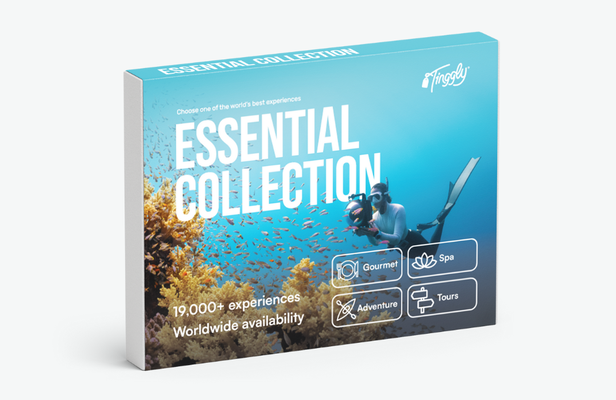
- 19,000+ experiences to choose from
- Redeemable in 100+ countries
- $79.20 gift value
- Rated 4.9/5 from 88 reviews
- Free digital delivery, or printed box
- Recipient picks their own experience
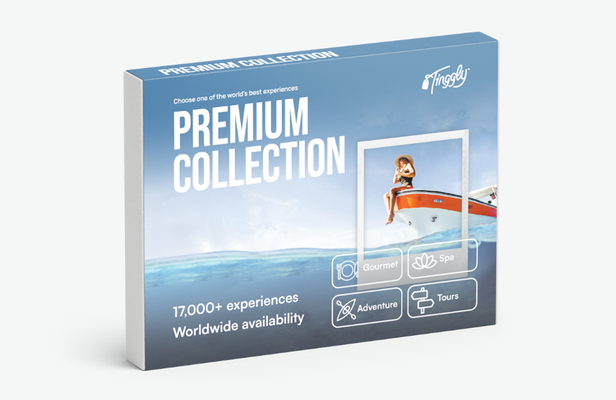
- 22,000+ experiences to choose from
- Redeemable in 100+ countries
- $111.20 gift value
- Rated 4.6/5 from 93 reviews
- Free digital delivery, or printed box
- Recipient picks their own experience
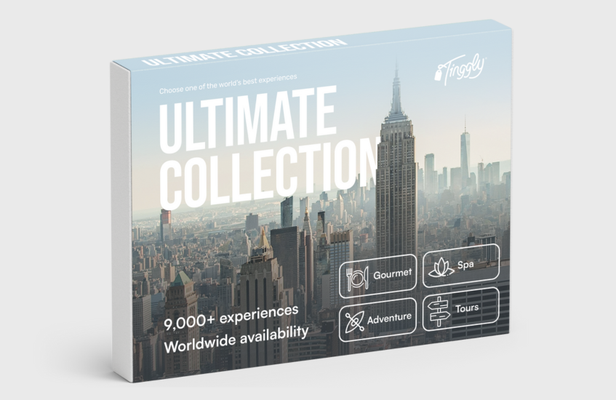
- 13,000+ experiences to choose from
- Redeemable in 100+ countries
- $263.20 gift value
- Rated 5.0/5 from 148 reviews
- Free digital delivery, or printed box
- Recipient picks their own experience
Key Takeaways
- The corporate gifting market hit $886.56 billion in 2025 and is forecast to reach $956.93 billion in 2026 (The Business Research Company), so the question is not whether to gift but how to do it well.
- Branded swag only survives when it is useful. ASI’s 2026 Global Advertising Impressions Study found that 78% of consumers keep promotional products because they find them useful, with practicality the single biggest reason items are kept rather than tossed.
- Recognition drives retention. Gallup and Workhuman’s 2024 report tracked 3,447 employees from 2022 to 2024 and found well-recognized employees were 45% less likely to have turned over two years later, yet just 22% of employees say they get the right amount of recognition.
- Experiences beat objects for lasting happiness and connection. Leaf Van Boven and Thomas Gilovich’s “To Do or to Have? That Is the Question” (Journal of Personality and Social Psychology, 2003) found that experiential purchases made people happier than material ones, and later work shows they spark less deflating social comparison.
- Cash and gift cards are convenient but taxable. The IRS treats gift cards as cash equivalents and taxable wages regardless of amount, so a “$100 gift” can shrink fast.
- One vendor can cover every occasion and a distributed team. With roughly 32.6 million Americans (about 22% of the workforce) working remotely in 2025, a gift that redeems in 100+ countries beats shipping branded boxes around the world.
What Makes a Corporate Gift One Employees Actually Love
Before the list, the criteria. A corporate gift that genuinely lands tends to check these boxes:
- It feels personal, not generic. A gift tied to the recipient’s interests beats a one-size-fits-all logo item every time.
- It is useful or genuinely wanted. Usefulness is the single biggest reason people keep what they are given; the rest gets recycled or trashed.
- It is memorable. People remember a skydive or a tasting menu years later. They do not remember the branded pen.
- It is not obvious branded swag. A subtle, high-quality gift says “we value you.” A cheap logo trinket says “you are a walking billboard.”
- It is inclusive. A single gift should work across dietary, cultural, religious, and personal differences. Food baskets and branded apparel often do not; choice-based gifts do.
- It is easy to send at scale. If gifting 5 or 5,000 people eats a week of your time, the program will not last.
Experience gifts hit all six, which is why they anchor most of the ideas below. A few non-experience ideas made the list too, because a credible guide should give you options, not just a sales pitch.
10 Corporate Gift Ideas Compared
| Idea | Tinggly Product | Best For | |
| 1 | Global Experience Gift Box | Experience gift boxes | Employee appreciation, team rewards |
| 2 | Spa Day or Wellness Experience | Spa and wellbeing experiences | Appreciation days, stressed-out clients |
| 3 | Weekend Getaway or Hotel Stay | Weekend getaway for two / luxurious getaway box | Work anniversaries, top performers, client thank-yous |
| 4 | Dining or Food-and-Drink Experience | Food and drink experiences / private dining | Client appreciation, team celebrations |
| 5 | Adventure or Bucket-List Experience | Bucket list experiences box | Sales incentives, bold recognition moments |
| 6 | Choose-Your-Own Experience Gift Card | Experience gift card | Bulk employee gifting, client choice gifts |
| 7 | Charitable Donation in Their Name | Values-driven, end-of-year | |
| 8 | Professional Development Stipend | Classes and workshops experience | High-potential employees, onboarding |
| 9 | Extra Day Off or a Long Lunch | Anniversaries, team morale | |
| 10 | Once-in-a-Lifetime Experience | Once-in-a-lifetime experiences box | Retirements, executive recognition, major milestones |
1. A Global Experience Gift Box
The single best answer to the “what do employees actually want” problem is to stop guessing and let them choose. A Tinggly experience gift box gives the recipient access to a curated set of experiences at a fixed value, then lets them pick the one that fits their life, their city, and their schedule. One person redeems it for a couples’ cooking class; another books a solo photography walk; another saves it for a trip abroad.
Why it works: It is inclusive by design, requires no sizing or shipping guesswork, and the voucher never expires, which is perfect for busy people. Browse the full range of experience gift boxes to match a theme and budget to the occasion.
Best for: Employee appreciation, team rewards, and any group where you cannot predict individual taste.
2. A Spa Day or Wellness Experience

Wellbeing gifts consistently rank among the most appreciated corporate gifts, and for good reason: they signal that the company sees the person, not just the role. Rather than a branded water bottle, give the real thing, a massage, a thermal spa session, a guided meditation or yoga experience.
Why it works: It is restorative, near-universally welcome, and works for in-office, hybrid, and fully remote staff. Point recipients to spa and wellbeing experiences and let them book near home.
Best for: Employee appreciation days, post-crunch recovery, wellness initiatives, and stressed-out clients.
3. A Weekend Getaway or Hotel Stay
For milestones that deserve real weight, a hotel getaway is the gift that gets talked about. A getaway voucher covers a stay for two at one of 100,000+ hotels worldwide, and the recipient chooses the destination and dates.
Why it works: It turns recognition into a story the recipient shares for months. For a high-impact reward, the luxurious getaway box covers a two-night stay for two in higher-end hotels, while a weekend getaway for two suits a strong-quarter reward.
Best for: Work anniversaries, top-performer incentives, executive recognition, and standout client thank-yous.
Explore all hotel getaway gifts to match the budget.
4. A Dining or Food-and-Drink Experience
A gourmet meal out beats a gift basket that arrives with mystery snacks and a dietary minefield. Give a tasting menu, a chef’s table, a cocktail-making class, or a wine flight, and let the recipient bring someone along.
Why it works: Shared meals create connection, and an experience sidesteps the allergy and preference problems that sink food hampers. Send a food and drink experience or, for the oenophiles, wine and gourmet gifts.
Best for: Client appreciation, team celebrations, holiday gifts, and foodie employees.
For a polished client touch, a private dining experience reads as genuinely considered.
5. An Adventure or Bucket-List Experience

For the employee or client who has everything, give them something to do. Think a hot air balloon flight, a racing-circuit driving session, a sailing trip, or a scenic helicopter ride, the kind of thing people rarely book for themselves.
Why it works: Novel, high-arousal experiences are the most memorable and the least likely to feel like a corporate obligation. Steer recipients to adventure experiences, a hot air balloon ride, or flying experiences for a true bucket-list moment.
Best for: Sales incentives, leaderboard prizes, and bold recognition moments.
A bucket list experiences box bundles the best of them.
6. A Choose-Your-Own Experience Gift Card
When you are gifting a large or diverse group and personalization time is short, a gift card built around experiences gives every recipient full control without the impersonal feel of a generic prepaid card. They redeem it against any experience that suits them.
Why it works: It solves the “one gift for hundreds of different people” problem and is fast to send in bulk. A Tinggly experience gift card delivers in a minute, never expires, and lets the recipient choose from the full catalog. It is far more engaging than a store card, and unlike cash it comes wrapped as a moment, not a line item.
Best for: Bulk employee gifting, end-of-year appreciation, and client choice gifts.
7. A Charitable Donation in Their Name
Not every great corporate gift is an experience. For socially conscious teams, a donation made in the recipient’s name, ideally to a cause they choose, can land harder than any object. It says the company shares their values.
Why it works: It aligns with corporate social responsibility goals and appeals to employees who would rather see impact than accumulate stuff. Pair it with a note explaining why, and let the recipient pick the charity where possible.
Best for: End-of-year gifts, company-wide recognition, and values-driven cultures. (No vendor link here, because the best version of this gift is the one your team chooses.)
8. A Professional Development Stipend
Investing in someone’s growth is a gift that pays them back for years. A budget for an online course, a certification, a conference, a workshop, or a coaching session shows you are invested in their future, not just this quarter’s output.
Why it works: Growth opportunities rank among the strongest drivers of loyalty, especially for younger employees. If you want to keep it in the experience family, a classes and workshops experience covers creative and skill-building sessions, from pottery to photography.
Best for: High-potential employees, onboarding, and continuous-learning cultures.
9. An Extra Day Off or a Long Lunch on the Company
Sometimes the most loved gift costs the least. An extra paid day to recharge, or a genuinely unhurried team lunch on the company, can mean more than another object. Time and attention are scarce, and people notice when a company gives them freely.
Why it works: It directly supports work-life balance, costs less than a cash bonus, and treats employees like whole people. Pair a team lunch with a shared experience, like a fun together box, to turn a reward into a memory.
Best for: Work anniversaries, high-performance stretches, and team morale.
10. A Once-in-a-Lifetime Experience for Major Milestones
For the moments that matter most, a long anniversary, a career milestone, a retirement, the gift should feel proportionate. A premium experience says “this mattered” in a way a plaque never will.
Why it works: Big milestones deserve a gift people will remember for the rest of their lives. A once-in-a-lifetime experiences box unlocks rare, high-value adventures.
Best for: Retirements, executive recognition, decade-plus anniversaries, and your most valued clients.
For the specific occasion of someone leaving on a high note, our deep dive on corporate retirement gifts covers how to do it right.
Corporate Gifts for Employees vs. Clients

The two audiences overlap but are not identical.
For employees, the goal is recognition and retention. This matters more than most leaders realize: Gallup and Workhuman found that well-recognized employees were 45% less likely to have turned over two years later, yet just 22% of employees say they get the right amount of recognition. That gap is an opportunity. Personalize where you can, recognize promptly, and tie gifts to specific moments, an anniversary, a finished project, a tough push. For men and women on your team, recipient-themed boxes like experience gifts for him and experience gifts for her add a personal touch without forcing you to guess specifics.
For clients, the goal is relationship and recall. A thoughtful gift keeps you top of mind and signals that the partnership is more than transactional. Presentation matters more here, which is where a physical gift box earns its keep: it arrives as an event, not an email. A polished experience like tours and sightseeing or a relaxing stay for two reads as considered and premium. Avoid anything that doubles as advertising; a client gift covered in your logo feels like marketing, not gratitude.
Matching Gifts to the Occasion
- Holidays and end-of-year: The peak season. Lean on choice-based gifts so a single send works across a diverse group.
- Work anniversaries: Scale the gift to the tenure. A one-year anniversary and a ten-year anniversary should not get the same thing.
- Onboarding and welcome gifts: A warm, useful welcome beats a logo starter pack. Make new hires feel like people from day one.
- Milestones and recognition: Tie the gift to the achievement and deliver it promptly while the moment is fresh.
- Sales incentives and team rewards: Experiences make memorable prizes and create healthy competition.
- Client appreciation: Time gifts outside the holiday rush so they stand out, and choose presentation-forward options.
For a full playbook on running this across the year, see our corporate gifting guide, and to prove the program is working, our piece on measuring an employee recognition program.
Sending Gifts at Scale: The Logistics That Make or Break a Program
A gift idea is only as good as your ability to deliver it to everyone, on time, without a logistics headache. This is where most swag programs collapse and where experience gifting pulls ahead.
The corporate gifting program from Tinggly is built for exactly this. It runs on pay-as-you-go billing with no minimum starting budget and zero onboarding fees, with the option to be billed monthly or annually. Physical gift boxes can be fully branded with your company’s artwork, or you can send cost-saving e-vouchers in bulk. A dedicated concierge team can manage the program for you. And because gifts redeem in 100+ countries, you can recognize a distributed, hybrid, or fully remote team, relevant when roughly 32.6 million Americans work remotely, with the same gift, instead of shipping boxes around the globe.
The program offers tiered recognition collections so you can match spend to the moment:
- A Token of Thanks: $150, redeemable in 123 countries, for quick expressions of gratitude.
- A Time to Celebrate: $250, redeemable in 120 countries, for birthdays, anniversaries, and milestones.
- The Extra Mile: $500, redeemable in 111 countries, for exceptional performance and sales incentives.
- Above & Beyond: $1,000, redeemable in 98 countries, for retirements, executive recognition, and major milestones.
There is also a genuine sustainability story here that branded swag cannot match: every Tinggly gift helps fund tree planting through the Eden Reforestation Project and offsets 200% of its CO2 footprint, and physical boxes are made from recycled, recyclable materials. For ESG-minded procurement teams, that is a real differentiator, the opposite of pallets of plastic trinkets headed for landfill.
How Much Should You Spend?
Budgets vary by relationship and occasion, but useful benchmarks exist:
- Mass employee appreciation: roughly $25–$75 per person per moment.
- Annual per-employee gifting budget: commonly $25–$150 across the year.
- Milestones and anniversaries: step up to $150–$500 to mark the occasion.
- High-value clients and executive recognition: $150 and up, scaled to the value of the relationship.
- A common rule of thumb for client gifts is roughly 1% of the annual revenue that relationship generates, capped at a level that never feels awkward.
The principle that matters more than the number: spend a little more on fewer, better gifts rather than spreading a thin budget across forgettable items. People remember the quality, not the quantity.
Etiquette and a Light Note on Taxes
A few guardrails keep corporate gifting appropriate. Keep gifts professional and avoid anything overly personal. Be mindful of any recipient company’s policies and any industry rules limiting gift value, especially in finance, healthcare, and government. And consider inclusivity in every send.
On taxes, one note worth flagging, and this is general information, not tax or legal advice: the IRS treats cash and gift cards as cash equivalents and taxable wages to employees, regardless of how small the amount. A turkey or a specific, low-value in-kind item can qualify as a non-taxable de minimis fringe benefit, but a general-purpose gift card almost never does.
There are also separate rules and dollar limits for length-of-service and safety achievement awards, and a $25-per-recipient annual deduction cap on business gifts. The practical takeaway: how a gift is structured can change its tax treatment, so loop in your finance or HR team, and confirm specifics with a qualified tax professional before you build a program.
Make Every Corporate Gift One They Actually Remember
The companies that get gifting right are not the ones who spend the most. They are the ones who stop sending forgettable swag and start giving people something worth remembering. Experiences are personal, inclusive, memorable, and easy to send at scale, exactly what a modern, distributed workforce and your most valued clients respond to.
Ready to upgrade your program? Explore the corporate experience gifts that fit your budget, or talk to the corporate team about a tailored recognition program. Give stories, not stuff, and watch what your people remember.
Frequently Asked Questions
What is a good corporate gift?
A good corporate gift is personal, useful or genuinely wanted, memorable, and inclusive enough to work across a diverse group. Experience gifts check all four boxes, which is why a Tinggly experience gift box outperforms branded swag and generic baskets for most teams.
What are unique corporate gifts?
Unique corporate gifts go beyond mugs, pens, and gift baskets to give something people remember, like a spa day, a hot air balloon ride, a dinner out, or a weekend away. Letting the recipient choose their own experience makes the gift feel both unique and personal.
How much should you spend on a corporate gift?
Plan on roughly $25–$75 per person for broad employee appreciation, $150–$500 for milestones and anniversaries, and $150 and up for high-value clients. Tiered options like A Token of Thanks ($150) through Above & Beyond ($1,000) make it easy to match spend to the moment.
What do employees actually want as gifts?
Employees want to feel seen as individuals, not given another logo item. Choice-based gifts, wellbeing experiences, time off, and growth opportunities consistently outperform generic swag, because they are useful and personal.
Are corporate gifts taxable?
For employees, cash and gift cards are treated by the IRS as taxable wages regardless of amount. Some small in-kind gifts may qualify as non-taxable de minimis benefits. This is general information, not tax advice; confirm with your finance team or a tax professional.
What is a good client appreciation gift?
For clients, choose presentation-forward, premium gifts that strengthen the relationship without doubling as advertising. A branded physical experience box or a getaway voucher reads as considered and memorable, far better than a logo-covered trinket.
What should you not give as a corporate gift?
Avoid cheap branded trinkets, anything overly personal, gifts that ignore dietary or cultural differences, and anything that violates a recipient’s company policy. When in doubt, give choice.
Can one vendor cover employees and clients across every occasion?
Yes. An experience platform with tiered collections, branded boxes, bulk e-vouchers, and 100+ country redemption can handle appreciation, holidays, anniversaries, onboarding, milestones, incentives, client gifts, and retirement from one place.