



A friend of mine spent eleven months obsessing over centerpieces and forty-five minutes booking her honeymoon. They flew out three days after the wedding and spent the first afternoon arguing in a hotel lobby in San Juan because nobody had checked whether the resort was actually adults-only. They love that trip now. They also openly admit they should have spent the same energy on the honeymoon that they spent on the seating chart.
If you only take one thing from this guide, take that. The honeymoon is not the dessert course after the wedding. It is the actual beginning of married life, and the couples who treat it that way tend to come home rested instead of frazzled. According to The Knot 2025 Real Weddings Study (16,956 US couples married in 2024), 69% of couples take a honeymoon, and they spend an average of $5,300 on it. That is a meaningful trip by any measure, and it deserves a real plan.
This is a step-by-step playbook for couples planning their own honeymoon in 2026: budget, timeline, booking order, registry options, the new EU border rules that catch a lot of Americans off-guard, and the small choices that make a big difference once you are actually on the trip.
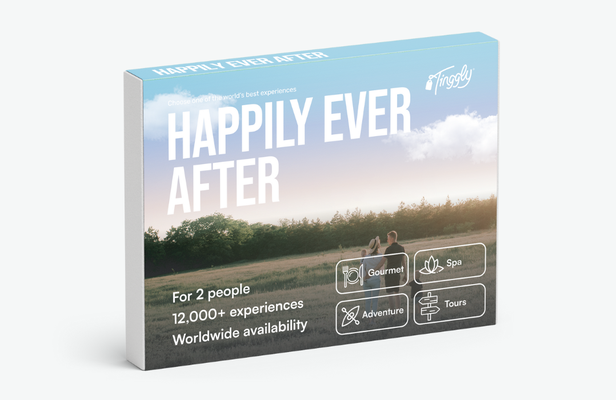
- 15,000+ experiences to choose from
- Redeemable in 100+ countries
- $111.20 gift value
- Rated 5.0/5 from 219 reviews
- Free digital delivery, or printed box
- Recipient picks their own experience
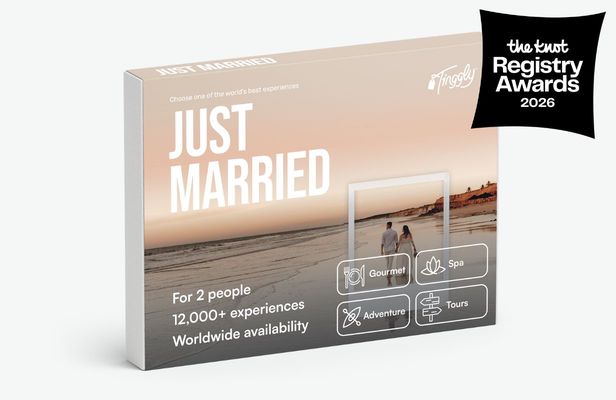
- 19,000+ experiences to choose from
- Redeemable in 100+ countries
- $207.20 gift value
- Rated 5.0/5 from 230 reviews
- Awarded by The Knot
- Free digital delivery, or printed box
- Recipient picks their own experience
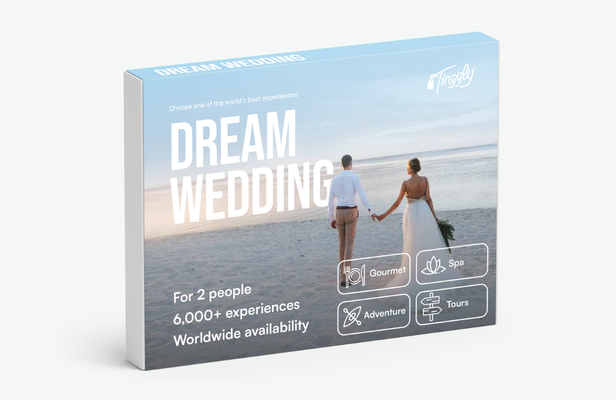
- 6,000+ experiences to choose from
- Redeemable in 100+ countries
- $319.20 gift value
- Rated 4.7/5 from 110 reviews
- Free digital delivery, or printed box
- Recipient picks their own experience
Key takeaways
- The average US honeymoon in 2024 cost $5,300 and lasted seven days, according to The Knot 2024 Honeymoon Study.
- Start planning 8 to 12 months out. Craig Zapatka of honeymoon planning company Elsewhere, quoted by The Knot, recommends locking in the major pieces of the trip “six months in advance.”
- 69% of US couples take a honeymoon, 24% now take a mini-moon, and only 14% leave immediately after the wedding (down from 42% in 2022), per The Knot 2024 Honeymoon Study.
- If you are headed to Europe, the EU’s Entry/Exit System (EES) has been fully operational since 10 April 2026, and ETIAS pre-authorization launches in Q4 2026 at €20 per adult.
- US passport processing in 2026 runs 4 to 6 weeks routine and 2 to 3 weeks expedited, before mailing. Apply at least four to six months before travel.
- 87% of couples include a cash fund on their wedding registry, and 88% of that money goes toward the honeymoon, according to Zola’s 2025 data. Your guests can genuinely help pay for the trip.
Step 1: Talk about the honeymoon you both actually want (before you spend a dollar)

The single biggest mistake in honeymoon planning is one partner running ahead and booking before the conversation happens. Travel experts at Brides put it bluntly: “honeymoon planning should be a joint effort.” If you do not have alignment on pace and vibe, no destination will fix it.
Sit down with a drink and answer four questions together:
- Pace. Are we doing three excursions a day, or one swim and a long lunch? Craig Zapatka of honeymoon planning company Elsewhere told The Knot the most useful framing is, “What kind of a rhythm do we want for our honeymoon?”
- Vibe. Beach lounger, mountain hike, city wander, safari, road trip, or some combination? The Knot 2024 Honeymoon Study found 48% of couples planned a beach honeymoon, 31% city and sightseeing, and 30% adventure, so beach is most common but is far from automatic.
- Length. Most US honeymoons last about a week. The Knot found 70% of couples took one week or less, with seven days the single most common length (33% of couples). 28% stretched it to one or two weeks.
- Timing. Right after the wedding or later? Only 14% of couples now leave immediately, down from 42% in 2022, per The Knot. A “mini-moon” right after followed by a fuller “later-moon” a few months on has become the dominant pattern. 24% of 2024 couples planned a mini-moon.
Get this conversation on paper. It will save you from booking something only one of you actually wanted.
Step 2: Set a realistic 2026 honeymoon budget
The Knot’s 2024 Honeymoon Study, which captured responses from 662 US couples, put the average honeymoon spend at $5,300. The same study found a stark domestic/international split: couples staying inside the US averaged $3,400, while couples going abroad averaged $6,800.
A few sanity-check numbers for 2026:
- Average couple: $5,000 to $6,000 all-in for a one-week trip.
- US domestic (Hawaii, Florida, California, national parks): $3,000 to $5,000.
- Caribbean and Mexico all-inclusive: $4,000 to $7,000 depending on season and resort tier.
- Europe (Italy, Greece, Portugal, France): $6,000 to $10,000 for two weeks, more in peak summer.
- Bucket-list long-haul (Bali, Japan, Maldives, French Polynesia): $10,000 to $25,000+.
The Knot recommends splitting your honeymoon budget into rough thirds (accommodations, transportation, and food/activities) then prioritizing the two categories that matter most to you and trimming the third.
A 2026 reality check on costs. Honeymoon spend has crept up alongside wedding spend. The Knot’s 2024 average of $5,300 is up from a pre-pandemic $5,000, and travel insurance payouts jumped 37% in 2024, with the average paid claim hitting $2,609, per Squaremouth. That is a sign that the cost of anything going wrong has gone up too. Budget for the trip, then budget for the trip insurance separately.
Step 3: Pick a destination that fits the budget and the calendar
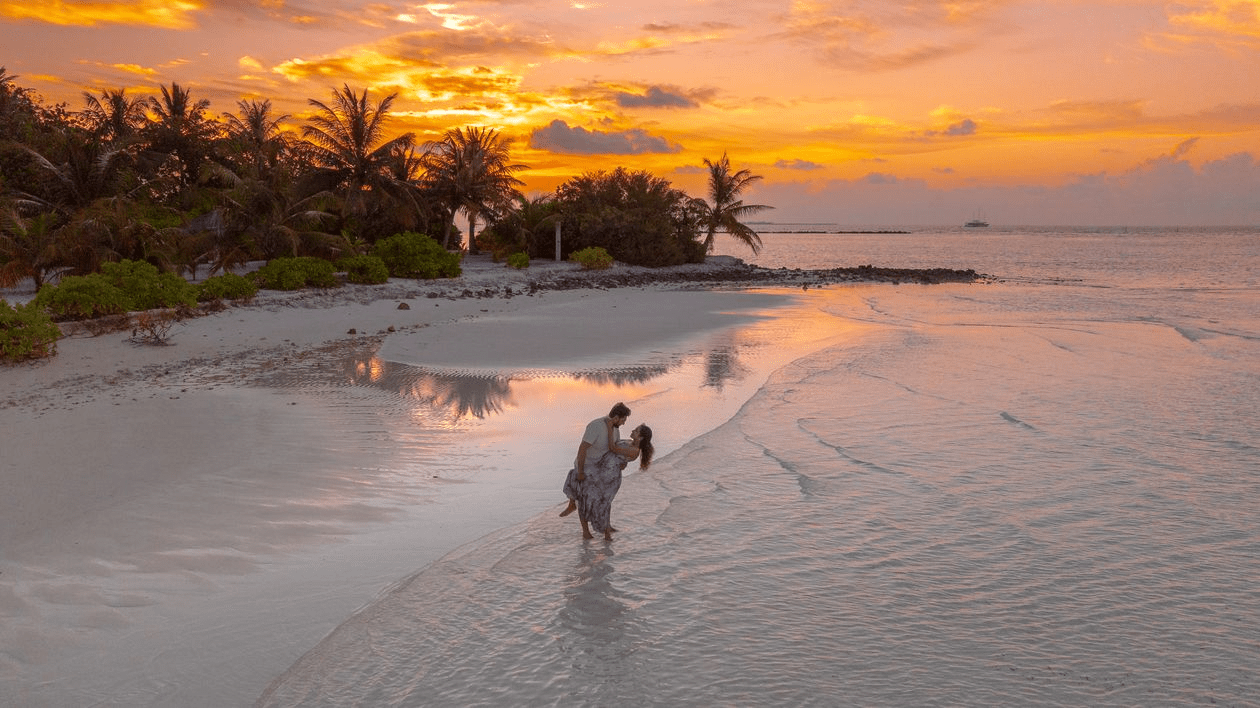
Choosing a destination is where most couples stall. A few rules of thumb:
- Let the weather drive the destination, not the other way around. If you are getting married in August, a Caribbean honeymoon during peak hurricane season (June to November) is a real risk. The Knot’s by-month guide flags this clearly. A Greek-islands honeymoon, on the other hand, is glorious in late September.
- Shoulder seasons are cheaper and quieter. Hawaii’s shoulder runs April to June and September to mid-December. Mediterranean Europe is best in May, June, September, and October. The Caribbean’s prime stretch is December through April.
- Time zones matter more than people expect. If your wedding is on Saturday and you are flying ten time zones the next morning, the first three days of your honeymoon will be a jet-lag fog. Add a buffer day at home, or pick a closer destination.
A few SERP-validated 2026 favorites for US couples, with links to deeper Tinggly journal guides where they exist:
- Italy: Amalfi Coast, Florence, Sicily. See our tips on saving on a honeymoon in Italy.
- Portugal: Lisbon and the Algarve. Read our seven tips for a Lisbon honeymoon.
- France: Paris and Provence. Our Paris honeymoon tips cover the small mistakes most couples make.
- Australia: Sydney, the Great Ocean Road, the Great Barrier Reef. Our Australia honeymoon guide breaks it down by city.
- Asia: Japan, Bali, Thailand. Our Asia honeymoon ideas cover the romantic ones.
- Europe more broadly: see the best European cities for a romantic getaway for inspiration.
If you cannot agree, narrow it down to three contenders and price each one out before you decide. Cost almost always breaks the tie.
Step 4: The honeymoon planning timeline (12 months to 1 day out)
The Knot’s published timeline is the dominant model in the US SERP, and it is solid. Their lead expert, Craig Zapatka of Elsewhere, told them: “We always recommend booking six months in advance.” Here is the practical, slightly extended version we use, with the 2026 administrative additions Americans now have to deal with.
12+ months out (or as soon as you’re engaged)
- Have the “what kind of honeymoon” conversation above.
- Open a dedicated savings account. Even $200 a month for a year covers most of the average trip.
- Check your passports. US routine processing in 2026 runs 4 to 6 weeks at the agency plus up to 2 weeks of mailing each way, per the US Department of State. Most countries require at least six months of validity past your return date. If either of you has under nine months on your passport, renew now.
8 to 10 months out
- Pick a destination and lock in rough dates.
- Research flights and accommodations. According to CheapAir, “most airlines allow passengers to book flights roughly 330 days in advance, or about 11 months before the departure date.” Major US carriers (American, Delta, United, Spirit) all open booking at 330 days; budget carriers like Southwest and Allegiant open 6 to 8 months out. Hotels typically release rates 8 to 12 months ahead. If you’re using miles, book the moment award seats open.
- Decide whether you’re using a travel agent. For destinations with complex logistics (multi-island hops, safaris, anything in French Polynesia) they often pay for themselves in upgrades and avoided mistakes.
6 months out (the real “book it” moment)
- Book flights, hotels, and any specialty rooms (overwater bungalows, plunge-pool suites, boutique B&Bs with eight rooms). These go first.
- Reserve marquee restaurants and any activities that require advance booking (private dinners, dive certification, helicopter tours).
- If you’re going to Europe in late 2026 or 2027, note the official ETIAS launch in Q4 2026: €20, valid three years, takes minutes to apply online.
- Set up your wedding registry, including a cash or experience fund. (More on this in Step 5.)
3 to 4 months out
- Apply for or renew passports if you haven’t yet. This is the latest reasonable window without paying for expedited service.
- Check vaccination requirements at the CDC’s Travelers’ Health site. Yellow fever and similar shots need to be scheduled.
- Buy travel insurance. Squaremouth’s 2024 data shows emergency medical became the single most common claim type for the first time in over a decade, at 27% of all paid claims.
- If you’re driving any portion of the trip, sort out international driving permits.
2 months out
- Book the smaller stuff: spa appointments, day tours, transit between cities, airport transfers.
- If you want a serious camera (vs. just your phone), buy it now and learn it.
- Confirm any required language or activity prep, like basic Italian phrases or scuba certification.
1 month out
- Make a packing list together. Pack the wedding stuff and the honeymoon stuff in different bags. You do not want to be hunting for your passport at 11pm on your wedding night.
- Reconfirm every reservation.
- Notify your bank and credit card companies about international travel; check foreign transaction fees.
- Order $100 to $200 in local currency to have on arrival.
1 to 2 weeks out
- Make two or three sets of photocopies of your passport, credit cards, and travel insurance details. Leave one set with a family member, keep one in your luggage, and store one digitally somewhere you can access from anywhere.
- Set up an international phone plan or buy local eSIMs.
- Hold mail, arrange pet care, set out-of-office replies.
- Refill any prescriptions and carry them in their original bottles.
1 to 3 days out
- Reconfirm flights and check in online.
- Charge everything, including the spare battery pack.
- If you’re leaving the day after the wedding, brief a parent or wedding planner on what to do with gifts, rentals, and leftover cake. You should not be running this logistics mid-flight.
Step 5: Fund the honeymoon (registries, cash funds, and where Tinggly fits)

This is the part most planning guides gloss over, so we will not.
The Knot’s 2024 Real Weddings Study found that honeymoon funds, new home funds, and round-trip airfare are the top three registered cash funds on The Knot Registry. Zola reports that 87% of couples include cash funds in their registries, and 88% of those funds go toward the honeymoon. Asking your guests to chip in is officially no longer awkward. Zola’s 2026 First Look Report, based on a survey of more than 11,500 couples getting married in 2026 (the company’s largest such survey), states plainly: “91% of our couples believe that asking for cash is totally acceptable.”
There are three legitimate ways to let guests help pay:
- A traditional honeymoon registry or cash fund. Most couples use Zola, Honeyfund, The Knot Registry, or Joy. Zola charges a 2.5% credit-card fee that either you or the guest can absorb; Honeyfund offers zero-fee cashout options via prepaid Mastercard or gift cards. Tip from Samantha Kobrin, Director of Brand at Zola: instead of one giant “Honeymoon Fund,” break it into specific moments. A $75 dinner in Florence, a $200 sunset sailing trip, a $300 spa day. Guests love giving you something they can picture.
- Experience-gift vouchers as registry items. This is where Tinggly fits cleanly. Instead of a generic cash transfer, a guest can buy you a curated experience gift box that you redeem for a real activity on your honeymoon: a cooking class in Tuscany, a couples spa day, a vineyard tour, a hot-air balloon ride. Tinggly’s catalog covers more than 150,000 experiences in 100+ countries, the vouchers never expire, can be exchanged freely, and ship as a physical box or instant eVoucher. For honeymoon-specific picks, the Just Married, Happily Ever After, Weekend Getaway for Two, Once in a Lifetime, and Relaxing Stay for Two collections all sit on the honeymoon experience gifts hub. The research underneath this approach is solid: Van Boven, L., & Gilovich, T. (2003). “To do or to have? That is the question.” Journal of Personality and Social Psychology, 85(6), 1193–1202. Their finding, replicated many times since, was that “respondents from various demographic groups indicated that experiential purchases made them happier than material purchases.” Honeymoons are essentially the textbook example.
- Direct contributions to specific bookings. Some couples list specific upgrades (a single night at a nicer hotel, a particular dinner) and ask close family to cover them. This is more old-school but still works.
A practical mix that works for most couples: a small traditional registry for the home (sheets, knife block, the one nice thing you actually want), a cash fund for big-ticket honeymoon items like flights and lodging, and a few experience-gift options so guests who want to give something tangible can.ts who want to give something tangible can.
Step 6: 2026 US travel admin (the boring part that ruins honeymoons)
If your honeymoon stays inside the US, skip this section. If it doesn’t, read it twice.
- US passports. Routine processing in 2026 is 4 to 6 weeks at the agency; expedited (with the $60 fee) is 2 to 3 weeks. Add up to two weeks for mailing each direction. Apply at least four months before you fly. Online renewal is now fully available for most adults via travel.state.gov. Many countries enforce a six-month validity rule past your return date, including Italy and most of the Schengen zone.
- EU Entry/Exit System (EES). Live as of 10 April 2026 across all Schengen external borders. The first time you enter, you’ll have your fingerprints and a facial image captured at the border instead of getting a passport stamp. First entries take longer than they used to; expect longer queues at major airports through summer 2026. European Commission spokesperson Markus Lammert has confirmed that “member states can partially suspend EES checks for up to 90 days after the 10 April rollout, with a possible 60-day extension,” meaning some countries may slow-roll during peak season.
- ETIAS. The European Commission has confirmed a Q4 2026 launch. ETIAS is a pre-travel authorization, not a visa: €20 for adults 18 to 70, free for under-18 and over-70, valid three years or until your passport expires. Apply online at travel-europe.europa.eu/etias (and only there. Fraudulent sites already exist). Most approvals are automatic in minutes; some go to manual review and take up to 30 days, so apply at least a month before you fly.
- CDC vaccination requirements. Some destinations (parts of sub-Saharan Africa, the Amazon) require yellow fever proof. Allow eight weeks for full vaccine schedules.
- Travel insurance. Worth it for any international honeymoon. According to Squaremouth, the average emergency medical claim paid out $1,654 in 2024, with the highest single payout reaching $61,976. Cancel-for-any-reason coverage usually costs 5% to 10% of trip cost and is the only policy that lets you walk away for any reason.
Step 7: Decide on logistics that actually matter on the ground

- All-inclusive vs. DIY. All-inclusives in Mexico, the Caribbean, and parts of Hawaii are easier: one bill, food and drinks covered, kid-free options. DIY (cities, road trips, multi-stop Europe) is more work but usually deeper and more memorable. Match it to your honeymoon vibe.
- One stop or two? Trying to do three countries in ten days is almost always a mistake. Two locations max for a one-week trip; up to three for two weeks.
- Tell every hotel it’s your honeymoon. Most properties will note it in your reservation. You will not always get a free upgrade, but you will reliably get a card, a treat, a little something. Mention it again at check-in.
- Build in one full do-nothing day per destination. You just got married. You are exhausted. Resist the urge to schedule every hour.
- Photos. You will not look at your wedding photos as often as you look at your honeymoon photos. Bring a real camera if you can, or commit to taking 10 minutes a day with phones in good light.
Step 8: The post-honeymoon stuff nobody warns you about
- Thank-you notes. Send within three months of the wedding, ideally with a photo from the honeymoon for anyone who contributed to the fund.
- Document changes. Updating a passport with a new name takes another 4 to 6 weeks. If you’re changing your name, do it after the honeymoon, not before. Your passport must match your ticket.
- The “now what” feeling. Almost every couple gets a low after the honeymoon. Plan one small thing (a date night, a weekend trip, an experience voucher saved for month three of marriage) so the year does not flatline after the trip.
Make experiences part of your honeymoon, not stuff
A honeymoon is the one trip where the rule “experiences over things” is essentially mandatory. You will not remember the toaster from the registry. You will remember the cooking class in Lisbon, the catamaran in St. Lucia, the cable-car ride in Cape Town.
If you’re building your registry and want a clean way to receive experience gifts that you actually use on the honeymoon, Tinggly’s honeymoon experience gifts cover the full range: spa & wellbeing, food & drink, tours & sightseeing, cruises & sailing, adventures, and classes & workshops. Every gift box plants trees through the Eden Reforestation Project (334,938 trees planted since 2022), and Tinggly is a member of 1% for the Planet. Vouchers never expire and can be freely exchanged. Browse the full collections page, the wedding experiences hub, or the gifts for couples page if you want a curated starting point. Or send the link to a relative who keeps asking what to get you.
Give stories, not stuff. Especially on the honeymoon.
Frequently asked questions
When should you start planning your honeymoon?
Eight to twelve months before the wedding for international trips; six months minimum for domestic. The Knot’s lead source on this, Craig Zapatka of honeymoon planning company Elsewhere, recommends booking the major pieces (flights, hotels) at least six months out, both because availability tightens and because airfare is usually better. If you’re going somewhere with limited specialty rooms (overwater bungalows, plunge-pool suites, boutique 8-room properties in Tuscany), start earlier.
How much does the average honeymoon cost in 2026?
The Knot’s 2024 Honeymoon Study put the US average at $5,300. Domestic honeymoons averaged $3,400; international averaged $6,800. Expect those numbers to be roughly 5% to 10% higher in 2026 given general travel inflation. Budgets in the $3,000 to $10,000 range cover the vast majority of US couples.
Who pays for the honeymoon?
Whoever wants to. The Knot’s etiquette experts are clear that the traditional “groom’s family pays” rule is gone. Most modern couples cover the honeymoon themselves, with help from a wedding registry cash fund or honeymoon fund. Zola’s 2026 First Look Report, surveying more than 11,500 couples, found that “91% of our couples believe that asking for cash is totally acceptable,” and 88% of registry cash gifts go toward the honeymoon.
How long should a honeymoon be?
Seven days is the most common length in the US: 33% of couples picked exactly that, per The Knot 2024 Honeymoon Study, and 70% kept it to one week or less. About 28% take a one-to-two-week trip. If you can’t take that much time off, a 3 to 4 day mini-moon now plus a longer “later-moon” three to six months from now is the dominant 2024 to 2026 pattern. Only 14% of couples now leave immediately after the wedding, down from 42% in 2022.
What’s the best month for a honeymoon?
Whichever month aligns with your destination’s shoulder season. For the Caribbean and Mexico, December to April is prime. For the Mediterranean, May to June and September to October are ideal. For Southeast Asia, November to February is the dry season. Avoid Caribbean and Gulf destinations June to November (hurricane season) and most of Europe in August (it’s hot, crowded, and locals are on holiday).
Should we use a travel agent?
Worth it for multi-stop Europe, safaris, French Polynesia, the Maldives, anywhere with complex logistics, or anyone whose time is more valuable than the agent fee. Not worth it for a single all-inclusive, a domestic road trip, or any destination you’ve researched obsessively yourself. Couples reading every Reddit thread on their destination are usually fine going DIY.
Do we need ETIAS for our European honeymoon in 2026?
Not yet. As of May 2026, ETIAS is not in effect. The European Commission has confirmed a Q4 2026 launch (October to December 2026), with a transitional grace period through 2027 during which it will be “recommended but not refused at boarding.” For trips through the end of 2026, the existing visa-free rules apply. You will, however, go through the new EES biometric border process (fingerprints and a face scan instead of a stamp), which has been fully operational since 10 April 2026.
Is travel insurance worth it for a honeymoon?
For international honeymoons, yes. According to Squaremouth’s 2024 claims data, paid claims rose 18% year-over-year and average payouts jumped 37% to $2,609. The most common claims in 2024 were emergency medical (27%), trip cancellation (26%), and travel delay (15%). On a $6,800 international honeymoon, a comprehensive policy typically costs $250 to $400 and covers cancellations, medical, evacuation, and lost baggage. Cancel-for-any-reason add-ons cost more but are the only way to be reimbursed for non-covered reasons, like changing your mind or a destination becoming unappealing.