

No expiration date
Easy refund
Free exchange
Easy booking
Private Tour: Colonial and Revolutionary New York
 New York City, New York, USA
$400
This is an experience gift voucher. The recipient will book the experience after
they redeem the gift voucher.
Overview
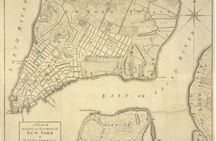
New York wasn’t a sideshow to the American Revolution—it was the center of it. This tour follows the city’s transformation from a divided colonial port to the first capital of the United States.
Before independence was declared, violence had already erupted here—months before Boston. From that moment, we trace the Revolution across New York: where resistance formed, where Washington’s army struggled to hold the city, and where the Declaration of Independence was first read to the troops on July 9, 1776.
We follow the collapse and survival of the American cause—from the escape from Brooklyn to seven years of British occupation—and end where it all came full circle, with the evacuation of British forces in 1783.
This is the Revolution as a continuous story—exactly where it happened.
Before independence was declared, violence had already erupted here—months before Boston. From that moment, we trace the Revolution across New York: where resistance formed, where Washington’s army struggled to hold the city, and where the Declaration of Independence was first read to the troops on July 9, 1776.
We follow the collapse and survival of the American cause—from the escape from Brooklyn to seven years of British occupation—and end where it all came full circle, with the evacuation of British forces in 1783.
This is the Revolution as a continuous story—exactly where it happened.
—
Private Tour: Colonial and Revolutionary New York
Tour guide
Language: English
Human tour guide
Duration: 2 hours 30 minutes
- Guided Tour
- Gratuity
Meeting point
Steps of Tweed Courthouse, 52 Chambers St.
Return details
Ends at Bowling Green, steps from multiple subway lines, the Staten Island Ferry terminal, and ferries to the Statue of Liberty.
-
Tweed CourthouseWe begin at the steps of the Tweed Courthouse, on ground once surrounded by British barracks, a jail, and the city’s poorhouse. This was a center of unrest in the years leading to the Revolution. Here, the Sons of Liberty defied British authority, raised liberty poles, and clashed with soldiers. We’ll focus on the lesser-known New Yorkers—artisans, laborers, and merchants—who organized resistance before independence was even imagined.
-
The Municipal BuildingBehind one of the most imposing government buildings in New York lies one of the darkest chapters of the Revolution. This area was tied to the prison system where thousands of American prisoners died during the British occupation—on land and in the waters of the East River. We’ll also identify the site of the first Presidential Mansion and the original location of the Bank of New York, linking the suffering of the war to the foundations of the new nation.
-
St. Paul's ChapelAt this colonial-era church, we step into both the personal and national consequences of the Revolution. We’ll visit the resting place of a key figure from the 1775 campaign in Quebec and examine how the war forced both patriots and loyalists into exile at different moments. The chapel also witnessed one of the most symbolic early events of the new republic, tying the Revolution directly to the creation of the United States government.
- Founded in 1766, this is the oldest Methodist congregation in North America and one of the most important religious sites of early New York. While Anglicanism was the established church, the city was already religiously diverse, especially in areas like the North Ward. Here, we focus on the everyday New Yorkers—artisans, laborers, and immigrants—whose lives shaped the city during the Revolution. Just behind the church stood the house Thomas Jefferson leased while serving as Secretary of State under George Washington. This stop marks a shift in the story—from revolution to nation-building—where the future of the United States was shaped not only by war, but by negotiation, compromise, and political conflict. (pass by)
-
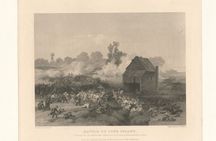
South Street Seaport Historic DistrictColonial New York was deeply tied to Britain—commercially, financially, and culturally—but resistance took shape along the waterfront. Here, merchants and sailors pushed back against imperial control. We’ll cover the early violence that erupted in New York before the Boston Massacre, as well as the strategic retreat that preserved Washington’s army and kept the Revolution alive in its earliest days.
-
Wall StreetWall Street was already a place of power before the Revolution—home to a slave market, a growing financial center, and some of the city’s most prominent residences. At its core lies one of the most consequential intersections in American history, where we encounter the site that became the birthplace of the United States government. Here, the Revolution, finance, and politics converge. We’ll explore how money, power, and information—sometimes through formal institutions, sometimes through informal networks and espionage—shaped both the war and the nation that followed, on one of the most influential streets in the world.
-
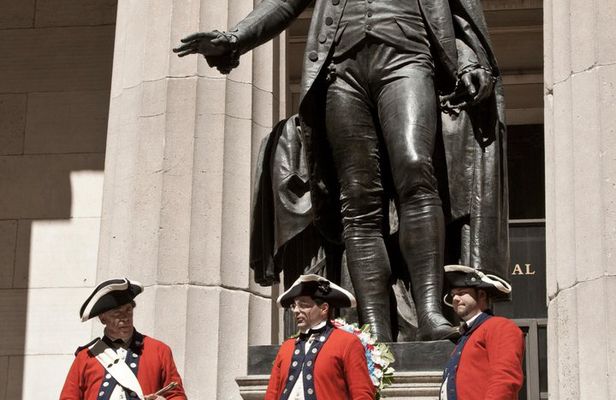
Federal HallAt this site, the Revolution transitions into government. Here, George Washington was inaugurated in 1789, and the first Congress met under the new Constitution. We’ll examine how a fragile confederation became a functioning federal system—through financial policy, political compromise, and the early structures that still define the United States today.
-
Trinity Church Cemetery & MausoleumTrinity Church stood at the center of colonial New York’s religious and political life. Severely damaged during the Great Fire of 1776, it became a symbol of the city’s destruction during the British occupation. Its reconstruction after the war mirrors New York’s broader recovery. In its churchyard, we connect the Revolution to the early republic through the people who shaped it—founding figures, signers of the Declaration of Independence, financiers, judges, and Treasury officials who moved between commerce, law, and government. Alexander Hamilton, buried here, anchors that story. This is where power consolidated after the war, as the same networks that supported resistance helped build the institutions of the new nation.
-
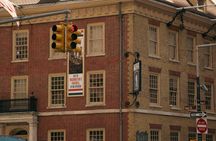
Fraunces Tavern MuseumOne of the most important surviving sites of the Revolutionary era, Fraunces Tavern served as a hub of political and military activity. Here, Washington delivered his farewell to his officers in 1783, marking the end of the war. The tavern also operated as a center of communication and intelligence, where merchants, officers, and revolutionaries exchanged information that shaped the conflict.
-
Bowling GreenWe end where British power once stood strongest—at the site of Fort George, overlooking Bowling Green. From here, the British controlled New York for seven years, turning it into the military and political center of their North American operations. What began on July 9, 1776—when Washington’s troops first heard the Declaration of Independence—finds its conclusion here. On November 25, 1783, British forces evacuated the city, and American troops returned. The war in New York had come full circle. At this final stop, we examine what that transition actually meant: the return of patriot refugees, the departure of loyalists, and the transfer of power from empire to republic. From occupation to independence, the story that began at our first stop ends here.
If it’s canceled due to poor weather, you’ll be offered a different date or a full refund.
How it works?
01
—
You choose from 10,000+ experience gifts
02
—
We deliver the eVoucher or the Physical box to the recipient
03
—
Recipient books the experience and creates unforgettable memories!
Private Tour: Colonial and Revolutionary New York
New York City, New York, USA
$400
This is an experience gift voucher. The recipient will book the experience after
they redeem the gift voucher.
How it works?
01
—
You choose from 10,000+ experience gifts
02
—
We deliver the eVoucher or the Physical box to the recipient
03
—
Recipient books the experience and creates unforgettable memories!