



Q4 is when two things happen at once for most HR teams. Christmas gifting planning is in full swing, and 2027 budgets are being drafted and signed off. The first gets all the attention. The second quietly decides whether your employee recognition strategy for next year gets a real budget line or a vague promise to “sort it out in Q1.”
In practice, Q1 usually means March. The Christmas gifts go out, everyone takes a well-earned break, and by the time recognition is back on the agenda, January work anniversaries have passed with nothing, new starters have been onboarded without a welcome gift, and the recognition budget has been folded into a spreadsheet with no clear owner.
Employee recognition planning works much better if you secure the budget now, while 2027 numbers are still open, and review 2026 straight after the Christmas send-out, while you still remember what worked, what didn’t and how many hours it all took. This piece looks back at the employee rewards and recognition trends that defined 2026, then lays out a simple three-step plan for getting your 2027 employee recognition program running in January instead of March.
What changed in employee rewards and recognition in 2026
For years, corporate gifting meant one thing: a Christmas box. In 2026 that definition broke open. Across Snappy’s 2026 Workforce Study, the Incentive Research Foundation (IRF), Achievers and other industry research, five shifts stood out. Together they shape the employee recognition trends for 2027.
1. Employees want to choose
When 1,500 U.S. employees were asked what makes recognition feel genuine, 73% named personalization as the biggest factor, well ahead of thoughtfulness (57%), public acknowledgement (36%) and timing (29%). The problem is that personalization doesn’t scale when HR is guessing. Only 32% of employees think companies consistently get employee appreciation right, and 34.2% of employees at 250+ person companies say gift-givers have little or no understanding of what they actually want.
The fix that emerged in 2026 is structural rather than a matter of style. HR sets the occasion, budget, message and audience, and the employee picks the actual reward.

2. Gifting became recognition infrastructure
Recognition and rewards are projected to make up roughly 29% of all 2026 corporate gifting occasions, the largest single category. Birthdays, milestone recognition such as work anniversaries, onboarding, performance recognition, sales incentives and peer-to-peer recognition are increasingly run through one ongoing employee rewards program rather than bought one at a time.
Frequency matters too. Companies that recognize employees monthly see a 51% positive response rate, compared with 29% for companies that recognize only once a year. A single December gift can’t carry a year of employee engagement on its own, and 88% of employees say employer gifts increase engagement and collaboration.
3. Buyers started shopping for platforms, not suppliers
62% of North American organizations expected their reward-program technology budgets to increase in 2026 (IRF). HRIS integrations, automated triggers, self-service redemption and built-in reporting went from “nice to have” to baseline expectations. Buyers still want a good catalog, but they also want the admin work gone: no spreadsheets, no chasing addresses, no manually approving every recipient.
4. Rewards budgets concentrated into fewer, better rewards
Budget pressure was everywhere in 2026, but it didn’t shrink employee rewards budgets. It concentrated them. IRF reports that the average North American merchandise reward rose to around $276 per instance, nearly $100 more than in prior years, and on-site gift spend rose from roughly $170 to $243, even as overall per-person event-gifting spend fell. Companies moved away from ten $20 gifts toward one meaningful $150–$300 reward.
5. Gift cards stayed huge, and experiences filled the emotional gap
About 70% of organizations expected to use gift cards even more in 2026, which shows how much buyers value choice, simplicity and instant delivery. But a $100 gift card still just says “here is $100.” Experiences keep the same freedom and instant delivery while giving people something to remember, which is why they sit at the centre of the shift toward more meaningful employee incentives.
Two quieter trends supported all of this. Hybrid and international teams exposed the limits of single-warehouse gifting. And sustainability became a procurement filter rather than the headline: 70% of employees aged 25–34 say sustainably made company gifts improve their impression of the employer, but an eco-friendly gift nobody wanted is still an unwanted gift.
Why January beats March for recognition program planning
Waiting until March to plan your 2027 employee recognition strategy has three costs.
The first quarter doesn’t wait. January and February bring work anniversaries, new-hire onboarding, sales kickoffs and year-end performance awards. If the program isn’t live, those moments either go unrecognized or get handled ad hoc: a rushed order here, a reimbursed gift card there, and no record of who got what. For employee retention and motivation, the first recognition moments of the year set the tone for the rest of it.
The lessons fade. In the weeks right after the Christmas send-out you still know which recipients were missed, how many hours went into address collection and which gifts went unredeemed. By March that detail has turned into “it went fine, mostly.”
Budget lines harden. When the employee recognition budget isn’t reserved as its own line during Q4 budget planning, it tends to get absorbed into events, marketing or “miscellaneous.” Then it resurfaces in September as a Christmas-only number with no year-round program behind it.
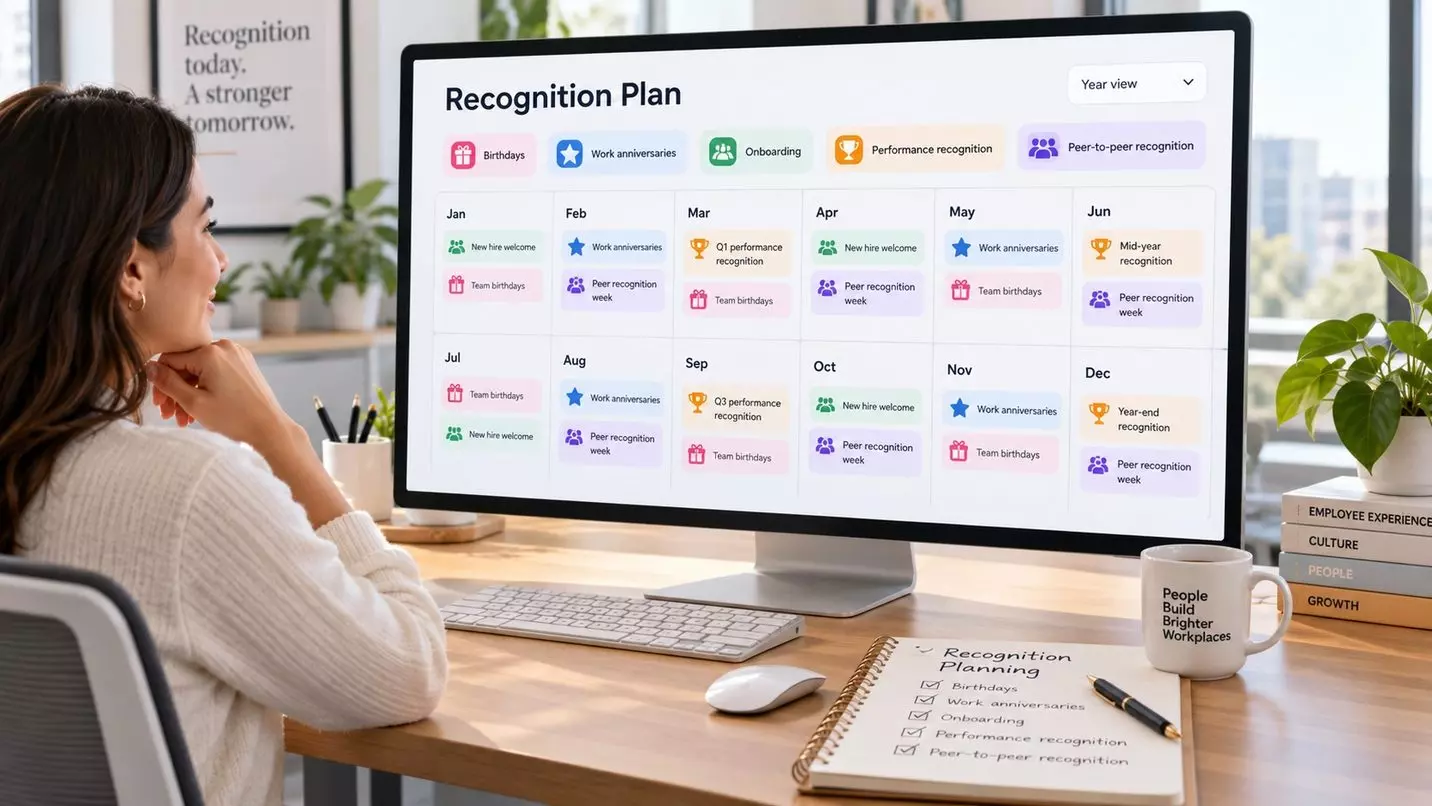
January is quiet in a useful way. The December deadline has passed, the 2027 budget is approved, and nobody is asking for a gift to be delivered by Friday. That makes it the natural month to launch, as long as recognition made it onto the list of HR priorities for 2027 during HR budget planning this autumn.
How to create an employee recognition strategy in 3 steps
Step 1: Audit 2026 while it’s fresh (right after the Christmas send-out)
Before you plan next year, write down what happened this year. The best moment is late December or the first week of January, once the Christmas gifts have gone out but before the details fade. Keep it to one page and answer six questions:
- Who did we recognize, and for what? List every occasion: Christmas, anniversaries, onboarding, performance, client gifts. Note which ones happened only because someone remembered.
- What did it cost per recipient? Include shipping, customs and rush fees, not just the gift itself.
- What was redeemed or used? If you can’t answer this, that’s a finding in itself.
- Who was missed? Late joiners, remote staff, people in countries shipping couldn’t reach.
- How much admin did it take? Rough hours spent on address collection, approvals, vendor back-and-forth and “where’s my gift” follow-ups.
- What did people say? Collect the feedback before it disappears into old Slack threads.
The goal isn’t a formal report. It’s an honest baseline for improving your employee recognition program and for defending next year’s budget.
Step 2: Build your employee recognition budget around moments (reserve it now, finalize in mid-January)
This is the core of the employee recognition plan. Reserve the total during this autumn’s 2027 budget cycle, then use your audit to finalize the split in January. Instead of a single Christmas figure, build a simple recognition calendar and budget each moment on it.
- Map the moments. Start with the fixed ones (Christmas, work anniversaries, birthdays, onboarding), then add the ones tied to performance: quarterly awards, sales incentives, project wins, peer-to-peer recognition. Add client and partner appreciation if HR and Marketing share the program.
- Set tiers, not a flat number. A standard tier for everyday recognition, a higher tier for milestones and top performers, and a client or VIP tier. The 2026 data points toward fewer, more meaningful rewards, so it’s better to fund one good reward per moment than spread the budget thin.
- Plan for frequency. Monthly recognition performs far better than annual-only recognition. Even a small monthly or quarterly allocation changes how the program feels to employees.
- Add a contingency line. New hires, late additions and unplanned wins will happen. A 5–10% buffer keeps you from going back for approval every time.
The result is one annual employee recognition program budget, split by occasion and tier, that Finance can approve once, instead of a string of one-off requests throughout the year.
Step 3: Set up the infrastructure once (end of January)
The best employee recognition programs in 2027 won’t be the ones with the biggest catalog. They’ll be the ones where nobody has to rebuild the process every time. By the end of January, aim to have:
- One platform and one employee list. Upload your people once, instead of rebuilding a recipient spreadsheet for every occasion.
- Automated recurring moments. Birthdays, anniversaries and onboarding should send on their own once the rules are set.
- Recipient choice built in. Let each person pick their own reward within the budget you set, so HR stops guessing across hundreds or thousands of preferences.
- Branding and messages ready. Templates for each occasion, so a spot award takes minutes to send.
- Global delivery covered. If anyone on the team is outside your home country, choose a format that’s delivered digitally and redeemed locally, so customs and shipping never enter the picture.
- Reporting switched on. Know who received and redeemed their reward. That’s the data you’ll need for next December’s audit.
Do this in January and the first anniversary of the year gets recognized on the day, not three months late. That consistency is what turns recognition from a yearly gesture into part of your workplace culture and employee experience.

Where Tinggly fits
This is the shift Tinggly’s B2B platform was built for. It’s an automated rewards and recognition platform that runs both sides of an employee recognition strategy from one place:
- Always-on recognition programs. Set up birthdays, work anniversaries, onboarding, performance and peer-to-peer recognition once, and the platform sends each reward automatically when the moment arrives.
- Single events. Christmas gifts, sales incentives, event gifting or a one-off thank-you to clients and partners, sent to a whole list in one go.
Setup is simple: upload your employees once via CSV, choose the occasion and budget, add your branding and message, and the platform takes care of delivery and reporting. Each recipient then picks from 150,000+ experiences across 150+ countries, from a spa day nearby to a city break abroad, delivered as an instant eVoucher or a physical experience box. There’s no expiration date, and exchanges are free if plans change.
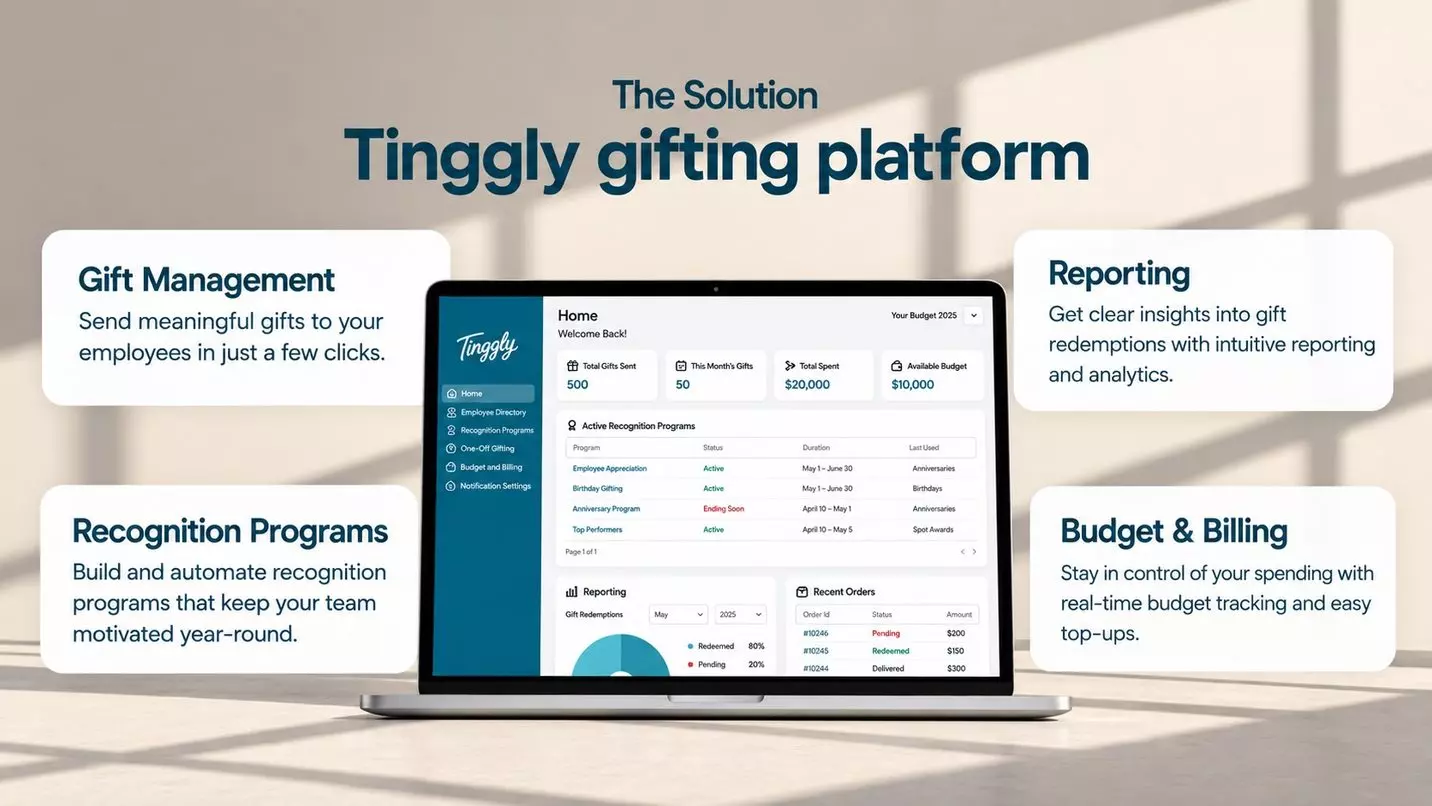
For HR teams, that means one platform, one invoice and one set of rules covering the whole year. You get the flexibility of a gift card with the emotional impact of a real gift, and you don’t have to collect a single address.
Frequently asked questions
How do you plan an employee recognition program for the year?
Start with an audit of last year: which occasions you recognized, what it cost per person, what was redeemed and who was missed. Then map every recognition moment for the coming year (anniversaries, birthdays, onboarding, performance and peer recognition, Christmas), assign a budget tier to each, and set up a platform that automates the recurring ones. January is the best time to do it, before Q1 moments start.
How do you budget for employee recognition?
Build the budget from moments rather than a single year-end figure. List each occasion, estimate how many people it covers, set a per-person value by tier (standard, milestone, VIP), and add a 5–10% contingency for new hires and unplanned wins. Getting one annual budget approved up front is far easier than approving individual requests all year.
How can you improve an existing employee recognition program?
Three changes make the biggest difference: let employees choose their own reward instead of guessing, recognize more often (monthly recognition gets a 51% positive response versus 29% for annual-only), and automate the admin so the program runs without someone chasing it. Tracking redemption also shows you which rewards people actually value.
What are the main employee recognition trends for 2027?
The main trends are recipient choice, year-round recognition instead of a single Christmas gift, platforms that remove admin work, fewer but more meaningful rewards, and experiences as an alternative to gift cards. Global delivery and sustainability are also becoming standard requirements, especially for larger and international companies.
Plan it before the confetti settles
2026 showed that corporate gifting is turning into year-round recognition infrastructure. Employees want to choose, buyers want the admin gone and budgets are going toward fewer, better rewards. The teams that build a stronger employee recognition strategy in 2027 will be the ones that act on those lessons in January, while they’re still fresh.

Audit 2026, budget around moments and set up the platform once. It takes three steps and a few focused weeks, and it means your employee recognition program is running before most teams have booked their first planning meeting.
If you’re planning your 2027 employee rewards and recognition now, book a demo with Tinggly to see how a year-round, choice-based program fits your headcount and budget.