



By the time most HR and procurement teams start thinking seriously about Christmas corporate gifting, it’s already late October – and the clock is a lot shorter than it looks. Between vendor evaluation, budget sign-off, recipient data collection, and shipping lead times for global teams, Christmas corporate gifting planning is a project with a lot more moving parts than “pick a gift and send it.” The companies who get this right aren’t the ones with the biggest budgets. They’re the ones who started in September, and often, the ones using a platform built to remove the parts of this process that don’t need to be hard.
Here’s the timeline nobody tells you about, what it actually costs to leave it late, a month-by-month plan to get ahead of it, and where a platform like Tinggly fits into each step.
The hidden timeline behind Christmas gifting
A single branded gift for a five-person team is simple. Christmas gifting for 200, 2,000, or 20,000 employees and clients is a different kind of project entirely, and most of the work happens well before anyone sees a gift.
Before a single item ships, someone has to: get budget approved and set a per-person spend that works across every seniority level and region; shortlist and compare vendors, because switching mid-November isn’t realistic; decide what “one gift” even means for a workforce spread across a dozen countries with different tastes, currencies, and gift-giving norms; collect and clean a recipient list – names, addresses, emails – that’s accurate enough not to generate a flood of “I never got my gift” messages in January; and plan for customs, carriers, and delivery windows if anyone on the list isn’t in the same country as the warehouse.
None of that is quick, and almost none of it is visible from the outside. It’s why “just order some gifts in December” quietly turns into the most stressful six weeks of an HR or marketing team’s year.
Some of that timeline is unavoidable – budget approval will always need a sign-off chain. But a good chunk of it exists only because of how physical, single-item gifting works: one warehouse, one product, one shipping puzzle per country. Tinggly’s B2B platform was built specifically to cut that part out. Instead of sourcing and shipping one physical item to every recipient, one order unlocks a catalog of 150,000+ experiences across 150+ countries, delivered as an instant eVoucher or a curated box – so “deciding what one gift means for a global, multi-generational workforce” stops being a research project and becomes a single setup step.
The real cost of leaving it to November or December
Delaying corporate gifting planning doesn’t just create a busier week – it shows up as three specific, avoidable costs.

Admin workload piles up all at once. Recipient lists, address corrections, approval chains, and vendor back-and-forth all land in the same few weeks as every other year-end deadline. What could have been spread across two calm months becomes a scramble squeezed into two frantic ones. This is the piece gifting automation is built to absorb: Tinggly’s platform turns a bulk order for 200 or 5,000 recipients into one setup, not hundreds of individual decisions – so the admin load doesn’t scale with headcount.
Last-minute planning forces generic decisions. Internal data shows that around 42% of companies end up planning their holiday gifts at the last minute – and it shows in what actually gets sent. Rushed timelines mean fewer options, less personalization, and a fallback to the safest, most forgettable choice available. That’s part of why so many corporate gifts go unused: nearly half end up in landfill each holiday season, because “whatever we could still get in time” rarely feels like a gift anyone actually wanted. A choice-based gift sidesteps this even under time pressure – with thousands of experiences to pick from and eVouchers delivered in seconds, there’s no “generic” fallback option, because every recipient still picks something they actually want.
Budget control gets harder, not easier. Late orders mean rush shipping fees, less room to negotiate, and less visibility into per-recipient cost until the invoices are already in. Planning early is what keeps gifting predictable – a known cost per employee, agreed up front, instead of a number that keeps moving as December closes in. A single consolidated order with one vendor and one invoice, rather than per-country shipping and customs fees stacking up separately, is what keeps that number from moving in the first place.
The good news: every one of these is a scheduling problem, not a budget problem. Solve the timeline – and lean on a platform that’s designed to shrink it – and the rest gets a lot easier.
Why September is the sweet spot
September sits in an unusually useful planning window. Summer is over, teams are back, Q4 priorities are becoming clearer, and holiday campaigns are starting to take shape – but the end-of-year rush hasn’t fully started yet. Vendor calendars are still open, pricing hasn’t tightened up for peak season, and there’s still enough runway to personalize gifting rather than defaulting to whatever’s fastest to ship.

That makes September one of the only months where you can answer the important questions without anyone breathing down your neck:
- Who are you gifting – employees, clients, partners, or all three?
- What’s the total budget, and what’s the per-recipient spend within it?
- Do different recipient groups need different reward values – a standard tier, a client tier, a VIP or executive tier?
- Are recipients based in one country or spread globally?
- Will gifts be physical, digital, or both?
- Do you need custom branding or packaging?
- Who needs to approve the spend?
- How will you distribute and track everything once it’s sent?
Answer those in September and the rest of the process gets dramatically easier: the total budget, the per-employee number, client and VIP gifting tiers, regional differences, branding or packaging costs, delivery costs, and a contingency line are all decided while there’s still room to think it through. Raise the same questions for the first time in late November, and every one of them becomes urgent at once – decided under deadline pressure instead of ahead of it.
It’s also why the choice-based model behind Tinggly’s platform pays off most for teams that start early: one employee picks a spa day two towns over, another picks a city break on the other side of the world, and both come out of the same September-approved order, with no per-recipient shipping puzzle and nothing that ends up unused in a drawer. The earlier that order is set up, the more of the catalog’s 150,000+ experiences your team gets to browse and personalize around – instead of settling for whatever’s fastest to configure in a rush.
September matters even more for global teams
The larger and more international a company is, the earlier its gifting should start. A physical gift that works cleanly for a US-based team can turn difficult or expensive the moment recipients are spread across Europe, Asia, or Australia. International gifting can quietly introduce customs, import restrictions, unpredictable regional delivery times, products that simply aren’t available in every market, local tax implications, different employee preferences by region, and an entirely different supplier network to manage per country – none of which shows up until someone actually tries to ship something.

This is exactly the problem experience gifting sidesteps. Because the value is delivered digitally and the recipient redeems locally – wherever “locally” happens to be, across Tinggly’s 150+ countries with no location limit on where a gift can be redeemed – most of that regional complexity simply doesn’t apply. One global order, no separate shipping problem per country.
A simple Christmas gifting timeline
Spread sensibly across four months rather than compressed into the last three weeks of the year, the planning window looks like this:
September – Strategy. Define recipients, total and per-recipient budget, gifting tiers, countries, and format (physical, digital, or both). This is the month to decide what the program is actually trying to achieve – employee appreciation, client retention, executive gifting, recognition, or some combination – and, with Tinggly, the easiest month to book a demo and see the catalog before locking in a budget.
October – Build. Finalize recipient groups, gift values by tier, messaging, and any custom collections or branding, and get internal approvals signed off. If physical boxes are involved, confirm production and delivery requirements now, while there’s still time to adjust. With Tinggly, this is one platform setup rather than one gift that fits nobody perfectly – recipients each choose their own experience from the same order.
November – Prepare. Upload final recipient data, test digital delivery, confirm shipping details – factoring in customs and carrier lead times for anyone outside your home country, or skipping that step entirely for eVoucher-based gifting – and schedule internal communications. By this point, the strategy should already be finished; November is execution, not decision-making.
December – Deliver. Send gifts, communicate appreciation, monitor redemption or delivery, and know the guaranteed-delivery cutoff for anything physical well before it arrives – most providers set one in mid-December, and it’s the single most common reason for a last-minute scramble. Keep a digital fallback ready for anyone added late or missed by a data update: a Tinggly eVoucher delivers in seconds with no expiration date, so nobody gets left out even at the last minute. December should be the easiest part of the process, and a significantly calmer month in the HR inbox – not the whole project compressed into it.

What if it’s already October or November?
Not everyone reading this is starting in September – and starting late doesn’t mean starting over.
If it’s October: You’ve missed the calmest window, but there’s still real runway. Compress the September and October phases into the same couple of weeks instead of spreading them across a month: lock the budget, recipient groups, and gift values together, then move straight into finalizing the vendor and personalization. Physical gift boxes are still realistic here, as long as recipient data collection starts now rather than drifting into November.
If it’s November: This is where the format decision matters most. Tinggly’s eVouchers become the practical default at this point – there’s no shipping lead time, no customs dependency, and delivery happens in seconds, so a November start doesn’t cost you anything on the format that matters most. Physical gift boxes are still on the table, but only if the order goes in no later than December 10 – after that, a realistic shot at guaranteed delivery before Christmas starts to disappear, and a late physical order risks becoming exactly the last-minute scramble this whole plan is meant to avoid. Splitting the list – eVouchers for anyone added late or based somewhere shipping can’t reliably reach, gift boxes for the rest – is a perfectly good middle ground rather than an all-or-nothing call.
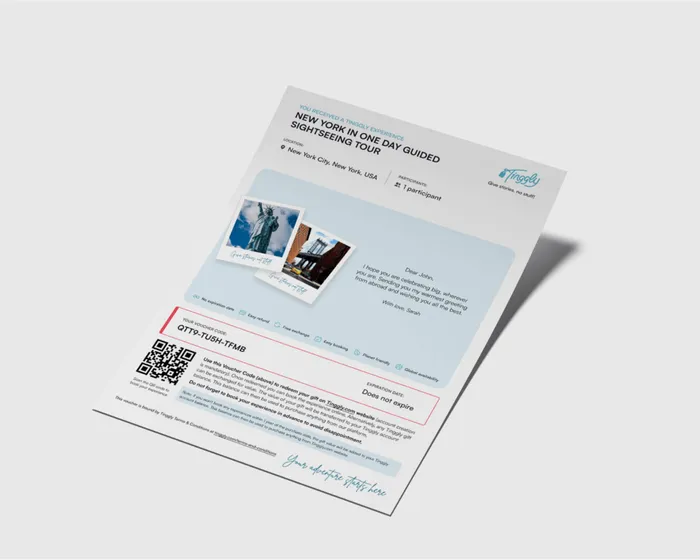
Whatever the month, two things don’t compress well no matter how late it is: the recipient list and the budget sign-off. Get those two settled first, and the rest of the plan above still applies – just faster.
Start the planning now, not the panic later
Christmas corporate gifting rewards the teams who treat it like the multi-month project it actually is. Get the budget, the vendor, and the recipient list settled while there’s still room to be thoughtful about it, and December becomes a formality instead of a fire drill.
That’s exactly the timeline Tinggly is built to support: one platform, one order, thousands of experiences across 150+ countries, so your team spends September making a handful of good decisions instead of December making a hundred rushed ones. If your team is still deciding on this year’s approach, now – not November – is the moment to book a demo and see how it fits your headcount and budget.