

No expiration date
Easy refund
Free exchange
Easy booking
1 Day Canopy walk way in Nyungwe Natioinal park
 Kigali, Rwanda
$685
This is an experience gift voucher. The recipient will book the experience after
they redeem the gift voucher.
Overview
Nyungwe National Park, one of Africa's oldest rain forests, boasts incredible biodiversity and breathtaking landscapes. This mountainous region is home to a small population of chimpanzees and 12 other primate species, including the endemic L’Hoest’s monkey.
- 🌳 Rich biodiversity and stunning landscapes await you in Nyungwe National Park.
- 🐒 Encounter a small population of chimpanzees as part of the park's diverse wildlife.
- 🦧 Spot 12 species of primates, including the unique L’Hoest’s monkey, endemic to the Albertine Rift.
- 🍃 Visit Rwanda's picturesque tea plantations, where you’ll learn about the tea-making process from planting to harvesting.
- 🏛️ Explore the King's Palace, a beautifully-crafted traditional residence shaped like a beehive, showcasing Rwanda's royal heritage.
- 🍽️ Your package includes breakfast, lunch, dinner, and bottled water, ensuring a delightful culinary experience.
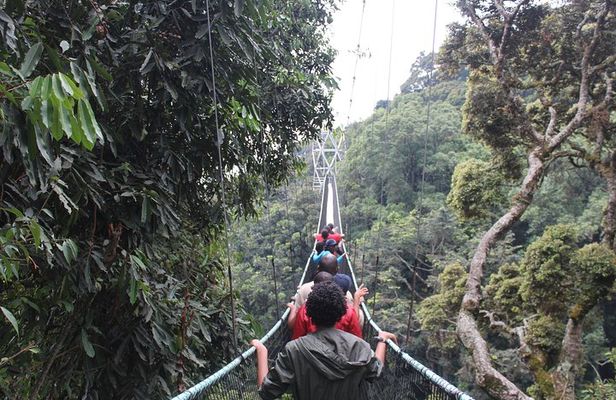
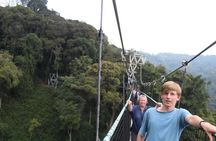
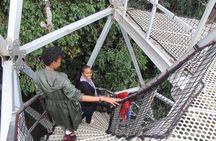
- 🌉 Experience the Canopy Walkway, a suspended bridge 70m above the forest, offering stunning views of the East African region.
- 🗓️ Canopy walk schedules are available at 8am, 10am, 1pm, and 3pm, starting from the Uwinka Reception Centre.
- 🚼 Specialized infant seats are available for families traveling with young children.
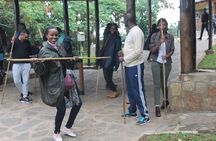
- 🧑🤝🧑 Guided tours ensure a safe and informative experience, with walking guides provided for the canopy walk.
Tinggly makes it easy to share the magic of this adventure through instant digital delivery, with no expiration on vouchers and a sustainable approach to gifting. Embrace the freedom of choice with Tinggly's global options for unforgettable experiences.
—
1 day to Nyungwe national park
attraction site fees
Duration: 15 hours
Meals and drinks inclusive
Depends of the group size
Pickup included
attraction site fees
Duration: 15 hours
Meals and drinks inclusive
Depends of the group size
Pickup included
Tour guide
Language: English
Human tour guide
- Lunch
- Bottled water
- Canopy walkway fees
- Other
- Dinner
- Breakfast
- Alcoholic Beverages
Meeting point
Our car is banded with silverbird tours LOGO and driver guide with Silverbird tours t-shart
Our car is banded with silverbird tours LOGO and driver guide with Silverbird tours t-shart
Return details
Our car is banded with silverbird tours LOGO and driver guide with Silverbird tours t-shart
Our car is banded with silverbird tours LOGO and driver guide with Silverbird tours t-shart
-
GisakuraRwanda tea plantation: Rwanda’s perfect soils and climates are responsible for creating Tea one of the world’s popular drinks. Tea Plantations can be seen covering the rolling hills of the Country, to create an excruciating contrast with the Blue skies, the clean dirt roads and sunshine. Trips to visit the tea plantations can be organized and they are appropriate for small, groups, families and also children. On the trips, you learn how tea is planted, maintained, harvested and processed to find its way on your table back home. Rwanda has a great number of tea plantations making Tea Rwanda’s largest export. Thus giving you a variety of plantation options to visist. However the ones that are commonly visited are closer to Nyungwe National park that is in Gisakura and Gisovu.
-
The Ethnographic MuseumKing's Palace A reconstruction of the traditional royal residence, the King’s Palace is a beautifully-crafted thatched dwelling shaped like a beehive. In olden times, Nyanza was the heart of Rwanda. According to oral tradition, it was the site of battles and power struggles. For a long time, the monarchy was mobile, moving the court between various locations. When it eventually settled in one place, Nyanza was the obvious choice. The capital of the kingdom had as many as 2,000 inhabitants, and huts built with the same methods as seen here. At the back live a few long-horned Inyambo cattle, descended from the king’s herd, whose keepers carefully tend and sing to them, keeping alive a unique tradition. The elegant cows, derived from the wider Ankole breed, played an important role during ceremonies in honour of the king. They were decorated with rich jewellery, and were taught to listen to a trainer’s songs and follow his movements in a stately parade.
How it works?
01
—
You choose from 10,000+ experience gifts
02
—
We deliver the eVoucher or the Physical box to the recipient
03
—
Recipient books the experience and creates unforgettable memories!
1 Day Canopy walk way in Nyungwe Natioinal park
Kigali, Rwanda
$685
This is an experience gift voucher. The recipient will book the experience after
they redeem the gift voucher.
How it works?
01
—
You choose from 10,000+ experience gifts
02
—
We deliver the eVoucher or the Physical box to the recipient
03
—
Recipient books the experience and creates unforgettable memories!