

No expiration date
Easy refund
Free exchange
Easy booking
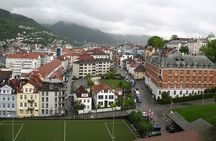
An amazing guided private walking tour of Stavanger.
 Stavanger, Western Norway, Norway, Europe
$400
This is an experience gift voucher. The recipient will book the experience after
they redeem the gift voucher.
Overview
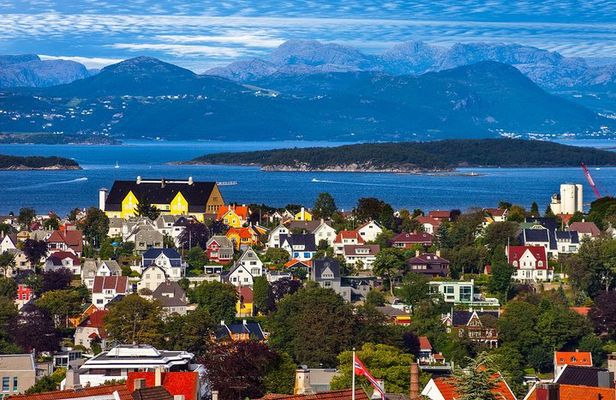
Stavanger, renowned for its natural attractions and historic wooden houses, is essential for nearly every visitor to Norway. Landmarks like Lysefjord, Sola beach, and Preikestolen (The Pulpit Rock) await your exploration.
- 🗺️ Your guide meets you at your hotel or cruise ship for a seamless start to your adventure.
- 🏛️ The tour begins outside the Norwegian Petroleum Museum, leading through the vibrant “Colourful Street” and up “Valberget,” the old fire watchtower.
- ⛪ A stop at Stavanger Cathedral allows you to hear its rich history before continuing past the old cathedral school and Breiavannet lake.
- 🚶♂️ Stroll through the charming streets of Old Stavanger and visit the new concert hall with your knowledgeable guide.
- 🚖 At the end of the tour, your guide will assist in calling a taxi or recommend a great dinner spot in the city.
- 🏛️ Discover the Norwegian Petroleum Museum, a landmark showcasing the history of offshore petroleum activities and innovative technology in the North Sea.
- 🌈 Walk along Øvre Holmegate, Stavanger's most colorful street, adorned with vibrant buildings and unique shops, cafés, and pubs.
- 🏰 Visit Stavanger Cathedral, a stunning 12th-century Romanesque basilica with a beautifully carved Baroque pulpit and Gothic elements.
- 🏡 Explore Gamle Stavanger, the largest surviving wooden house settlement in northern Europe, with its picturesque homes and meandering stone-paved streets.
- 🌳 Ledaal House, a preserved 19th-century mansion, offers insights into the lives of Norway's elite and features historic gardens connected by a scenic trail.
Tinggly makes it easy to gift this eco-friendly journey, with instant digital delivery, no expiration on vouchers, and the freedom to choose experiences globally.
—
An amazing guided private walking tour of Stavanger.
Pickup included
Pickup included
Tour guide
Language: English
Human tour guide
Duration: 4 hours
- Professional licensed guide
- Pick-up
- All fees and taxes
- Entrance tickets
- Food and drinks
- Drop-off
- Transportation
-
Norsk OljemuseumNorwegian Petroleum Museum was designed by the architectural firm of Lunde & Løvseth Arkitekter A/S and was opened on 20 May 1999. Seen from the sea the museum looks like a small oil platform. The unusual architecture has made the museum a landmark in the Port of Stavanger. The museum was built in stone, glass, and concrete and covers approximately 5,000 square meters. The museum focuses on offshore petroleum activity, especially in the North Sea. Original objects, models, films and interactive exhibits convey the history of oil operations on the Norwegian continental shelf. The museum shows the technological development from the beginning of the Norwegian oil history in the mid-1960s, from the first North Sea drilling platforms, through steel and concrete platforms developed and built in Norway, to modern, flexible production ships and subsea systems.
-
Ovre HolmegateA colourful street in the centre of Stavanger where all buildings have been painted in fresh and vibrant colours. This is perhaps the most colourful street in all of Norway, and is often referred to as Stavanger's 'Notting Hill'. The area experienced a renaissance in 2005 when hairdresser Tom Kjørsvik envisaged doing something totally unique with it. All the houses along the street were painted in different hues, in accordance with a colour scheme suggested by the artist Craig Flannagan. As you wander along Øvre Holmegate, you will find several niche shops as well as charming cafes and pubs.
-
ValbergtarnetAnother of Stavanger's well preserved older buildings, Valberget, can be found to the north of Market Square between Vågen and Østre Havn (East Harbor). Located in the Holmen peninsula, the oldest part of the town, Valberget is a watchtower built in 1853 on the highest point in the city. It was the home of the watchman, whose job it was to alert everyone when there was a fire. Today, it offers great views, and a little museum is on the first floor.
-
Stavanger CathedralLocated in the city center, Stavanger Cathedral was built in the 12th century by Englishman Reginald of Worcester (later known as Bishop Reinald) as a three-aisle Romanesque basilica. The choir was rebuilt in the Gothic style after a fire in 1272, and the whole church was renovated in the 19th century. Notable interior features include the richly carved Baroque pulpit (1658), a stone font of the Gothic period, and the stained glass in the east window depicting New Testament scenes.
-
Gamle StavangerOne of the most picturesque areas of the city is Gamle Stavanger, a historic area where a collection of quaint older homes lie along meandering stone-paved streets. This is, in fact, the largest surviving wooden house settlement in northern Europe. Its streets are well worth exploring, as are its galleries and museums.
-
LedaalBuilt as a summer residence for the Kielland family in 1799, Ledaal House is a perfectly preserved example of how Norway's elite lived in the early 19th century. The richly furnished mansion still functions as a royal residence, as well as a museum, and the entire property is owned by the state in trust. Its historic gardens are well worth seeing and are connected to three others via a historic garden trail.
How it works?
01
—
You choose from 10,000+ experience gifts
02
—
We deliver the eVoucher or the Physical box to the recipient
03
—
Recipient books the experience and creates unforgettable memories!
An amazing guided private walking tour of Stavanger.
Stavanger, Western Norway, Norway, Europe
$400
This is an experience gift voucher. The recipient will book the experience after
they redeem the gift voucher.
How it works?
01
—
You choose from 10,000+ experience gifts
02
—
We deliver the eVoucher or the Physical box to the recipient
03
—
Recipient books the experience and creates unforgettable memories!