

No expiration date
Easy refund
Free exchange
Easy booking
Ancient Corinth Half Day Private Tour 4seat
 Athens, Greece, Europe
$297.16
This is an experience gift voucher. The recipient will book the experience after
they redeem the gift voucher.
Overview
Ancient Corinth and the Corinth Canal showcase Greece's rich history, making this trip from Athens a remarkable experience. This half-day private tour offers an insightful journey through time with captivating sights and stories.
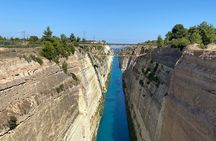
- 📸 Capture stunning photos at the Corinth Canal, a remarkable engineering feat completed in 1893, connecting the Gulf of Corinth and Saronic Gulf.
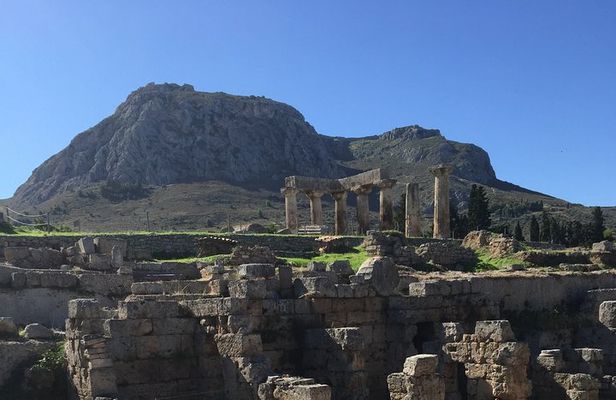
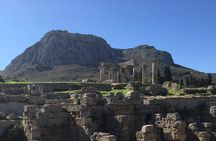
- 🏛️ Wander through the archaeological site of Ancient Corinth, where ancient ruins reveal the story of this once-prosperous city.
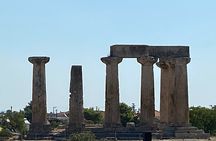
- 🕊️ Visit the Temple of Apollo, an iconic Doric temple dating back to around 560 BC, representing one of the earliest architectural marvels in the Peloponnese.
- 🏺 Discover artifacts at the Archaeological Museum of Ancient Corinth, established in 1932, showcasing the region's historical significance.
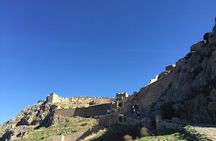
- ⛰️ Ascend to Acrocorinth, the impressive acropolis which stands 575 meters high, offering breathtaking views and insights into its historical importance.
- 🍽️ Savor a delicious lunch at a local eatery before returning to Athens, providing a taste of authentic Greek cuisine.
- 🚗 Enjoy a hassle-free experience with hotel pick-up and drop-off included, ensuring your comfort throughout the journey.
- 🚌 Travel in air-conditioned, luxury non-smoking vehicles equipped with WiFi, enhancing your travel experience.
- 🎟️ Admission tickets for museums and attractions are included, allowing for a seamless exploration of historical sites.
- 👶 Pram/stroller friendly, making this tour accessible for families with infants and small children.
Perfect for those who appreciate history and culture, Tinggly offers a sustainable way to share this adventure with loved ones. With instant e-delivery and no expiration on vouchers, you can gift global experiences that inspire exploration.
—
The experience offers several options. This price includes:
Ancient Corinth Half Day Private Tour 4seat
Pickup included
Pickup included
Tour guide
Language: English
Human tour guide
Availability depends on seasonality and number of participants. Bookings can not be made for the same day. Please read our TnC’s.
When giving as a gift, your recipient can choose a date at their convenience during a booking process. Otherwise, you can choose one after checkout and voucher redemption.
When giving as a gift, your recipient can choose a date at their convenience during a booking process. Otherwise, you can choose one after checkout and voucher redemption.
Check available dates by emailing us at [email protected]
The experience offers several options, check yours above
- Luggage service
- Hotel pick-up and drop off
- Transfer in new, luxury non-smoking cars
- Air-conditioned vehicle
- WiFi on board
- Admission ticket for museums & attractions
- Snacks
- Lunch
Meeting point
Return details
-
Corinth CanalThe Corinth Canal connects the Gulf of Corinth with the Saronic Gulf in the Aegean Sea and it cuts through the Isthmus of Corinth, separating the Peloponnese from the Greek mainland. It is 6.4 kilomotres in length and 21.4 meters wide, making the access impossible for modern ships. Currently, it is used mostly as a tourist attraction. The initial idea for constructing the Corinth Canal was tyrant Periander’s in the 7th century BC, who eventually abandoned that project and constructed Diolkos instead, an overland portage road where ships would be able to move overland across the Isthmus of Corinth. The first Governor of Greece, Ioannis Kapodistrias, revived the idea of the construction of the modern Canal after the formal independence of the country in 1830. The construction begaun in 1880, however, due to financial reasons, the construction was completed in 1893.
-
Ancient Corinth (Archaia Korinthos)The site of ancient Corinth was first inhabited in the Neolithic period (6500-3250 B.C.). It is located on the Isthmus of Corinth, the narrow stretch of land which connects the Peloponnese with the mainland of Greece, about halfway between Athens and Sparta. Its fertile soil, but mainly, its strategic location, offered a great potential for communication, growth and prosperity. Since the Mycenaean period, Corinth was called afneios [prosperous], as referred to by Homer in the Iliad, because of its exceptional fertile soil. The great output of the city in agricultural products largely expanded its trade activities mainly towards the Western Mediterranean. In the 8th century BC, the Corinthian colonies were founded, such as Corfu in the Ionian Sea and Syracuse in Sicily, and made an important contribution to the history of the ancient Mediterranean world. The economic prosperity of the city reached its peak in the 7th– 6th centuries BC under the administration of the tyrant Cypselus and his son Periander. The strength of Corinth made its mark with the construction of splendid buildings, such as the Temple of Apollo and the creation of the Isthmian Games, which were held at the Corinthian sanctuary of Poseidon, and this helped increase the fame and influence of the city. The acropolis of Ancient Corinth, called "Acrocorinth", lies 1 km to the southwest, located 575 meters high. It was already fortified in antiquity, but the walls and towers that we see today are mostly of Frankish and Venetian times. It is considered to be the largest, highest, and most spectacular acropolis of Ancient Greece. For Christians, Corinth is well known for the Epistles of St. Paul the Apostle to the Corinthians. He founded the Christian community in Corinth, Greece. The First and the Second Letter of Paul to the Corinthians are now respectively the seventh and eighth books of the New Testament canon. The first letter, probably written about 53–54 CE at Ephesus, Asia Minor, deals with problems that arose in the early years after Paul’s initial missionary visit to Corinth and his establishment of a Christian community. The Second Letter was written in Macedonia in about 55 CE and might have been written by Apostle Paul after an actual visit to Corinth.
-
The acropolis of Ancient Corinth, called "Acrocorinth", lies 1 km to the southwest, located 575 meters high. It was already fortified in antiquity, but the walls and towers that we see today are mostly of Frankish and Venetian times. It is considered to be the largest, highest, and most spectacular acropolis of Ancient Greece.
How it works?
01
—
You choose from 10,000+ experience gifts
02
—
We deliver the eVoucher or the Physical box to the recipient
03
—
Recipient books the experience and creates unforgettable memories!
Ancient Corinth Half Day Private Tour 4seat
Athens, Greece, Europe
$297.16
This is an experience gift voucher. The recipient will book the experience after
they redeem the gift voucher.
How it works?
01
—
You choose from 10,000+ experience gifts
02
—
We deliver the eVoucher or the Physical box to the recipient
03
—
Recipient books the experience and creates unforgettable memories!