

No expiration date
Easy refund
Free exchange
Easy booking
T1-THE GRAND TOUR (non-cruise visitors)
 Hanga Roa, Easter Island, Chile
$659.42
This is an experience gift voucher. The recipient will book the experience after
they redeem the gift voucher.
Overview
AROHA TOURS RAPA NUI presents a guided tour that highlights the island's main archaeological sites and breathtaking natural landscapes. Available from mid-November to the end of March, this excursion is perfect for those looking for an immersive experience.
- 🌄 Visit significant archaeological sites that showcase the megalithic civilization and its impressive constructions.
- 📅 Tours are available from mid-November to the end of March, aligning with summer hours at the sites.
- 👤 Experience personal attention with the private nature of the excursion, ensuring a tailored adventure.
- 🚶♂️ Explore at your own pace, avoiding tourist overcrowding while discovering the island's hidden gems.
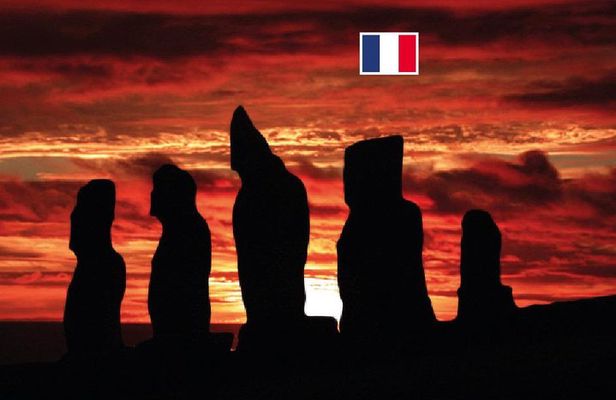
- 🏖️ Ahu Tahai features a beautifully restored ceremonial complex, perfect for sunset views with Moai in the foreground.
- 🏝️ Anakena Beach, known for its white sandy shores and coconut grove, marks the arrival point of the first Polynesian settlers.
- 🗿 Ahu Te Pito Kura is home to the largest Moai, a testament to the grandeur of Easter Island's ancient civilization.
- 📜 Papa Vaka showcases petroglyphs that highlight the importance of marine resources in Rapa Nui culture.
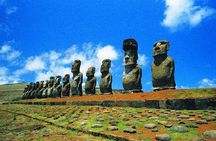
- 🌅 Ahu Tongariki, featuring 15 Moai, is one of Polynesia's architectural gems, offering a unique atmosphere during sunrise.
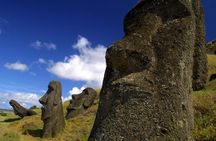
- 🏞️ Rano Raraku, the Moai quarry, captivates visitors with hundreds of unfinished statues still present at the site.
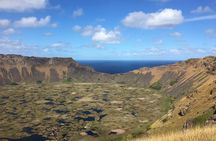
- 🌋 Rano Kau provides breathtaking views of the extinct volcano's crater, emphasizing the island's geographic isolation.
- 🐦 Orongo, the ceremonial village, offers insight into the Tangata Manu cult and its connection to the Bird Man tradition.
- 🍽️ Enjoy meals at a restaurant on-site or opt for a picnic in a developed area during your tour.
- 🎟️ Entrance ticket is $80 USD per person (ages 7-17: $40 USD), valid for 10 days and all sites.
By choosing Tinggly, you support sustainable travel while enjoying instant e-delivery of your experience. With no expiration on vouchers and a global freedom of choice, it’s the perfect way to share unforgettable adventures.
—
T1-THE GRAND TOUR (non-cruise visitors)
Pickup included
Pickup included
Tour guide
Language: English
Human tour guide
Availability depends on seasonality and number of participants. Bookings can not be made for the same day. Please read our TnC’s.
When giving as a gift, your recipient can choose a date at their convenience during a booking process. Otherwise, you can choose one after checkout and voucher redemption.
When giving as a gift, your recipient can choose a date at their convenience during a booking process. Otherwise, you can choose one after checkout and voucher redemption.
Check available dates by emailing us at [email protected]
- Private guided tours with French tour guide
- Private transportation
- Ahu Tahai
- Restaurant on site or picnic (developed area).
- entrance ticket, 80 USD / pers., (7-17 years, 40 USD), valid for 10 days and for all sites.
-
Ahu TahaiVery nice ceremonial complex restored in the village, nestled in the bay of Hanga Roa. This former royal residence is the ideal place to admire the sunsets with several platforms and Moai in the foreground. It is also an opportunity to understand the territorial arrangement characteristic of the ancient civilization and the way in which humans modify their environment to arrive at these surprising constructions.
-
Anakena BeachOn the other side of the island, opposite the only village, the white sandy beach of Rapa Nui: Anakena. This is where the first Polynesian settlers arrived. An idyllic place, worthy of the most beautiful postcards, bathed in translucent waters and sheltered in the only coconut grove of Easter Island. Here, too, the site has been completely restored, and its Moai are the best preserved that we can still admire today.
-
Ahu Te Pito KuraContinuing between Anakena beach and the Poike peninsula in the North East, you will discover the largest Moai which was raised on its altar. Knocked down in the 19th century and broken in two, it bears witness to the gigantism of this astonishing megalithic civilization. Next to the platform, a stone with magnetic anomalies seems to protect the giant stone.
-
Papa VakaShortly after, we stop on a basalt outcrop that houses petroglyphs, the other great expression of the Neolithic civilization of Easter Island. Concentrated on fishery resources, these representations remind us of the importance of the marine universe, an essential component of the Rapa Nui environment.
-
Pu o HiroA stop of a few minutes to appreciate the aerophone stone.
-
Ahu TongarikiThen we will arrive at one of the architectural gems of Polynesia: the Ahu Tongariki. It is the most important and undoubtedly the most remarkable restored site on the island. 15 Moai, these monoliths that have made Easter Island world famous, face visitors. Supposed to be astronomical, the sunrises give the place a special atmosphere.
-
Rano RarakuAlmost all the stone giants of Easter Island have been carved here. The Moai quarry is the site that most fascinates visitors. Hundreds of statues are still there and continue to captivate tourists from around the world who wander among them.
-
Puna PauRapa Nui's other career, that of hats and / or hairstyles and facings. The gigantism of the statues was no longer sufficient on its own: the red stone was then used for the sake of aesthetics. Superb panoramic view over the bay of Hanga Roa.
-
Rano KauHere too, one of the most beautiful panoramas of Rapa Nui. The large crater of the extinct volcano and its indentation on the vastness of the South Pacific reminds us of the geographic isolation of Easter Island.
-
OrongoTangata Manu, the cult of the Bird Man. The ceremonial village of Orongo, repeatedly restored, was built on the side of a cliff, facing the islets that shelter the seabirds that come to lay eggs there during the southern spring. The quest for the first egg designated the religious authority of the year.
How it works?
01
—
You choose from 10,000+ experience gifts
02
—
We deliver the eVoucher or the Physical box to the recipient
03
—
Recipient books the experience and creates unforgettable memories!
T1-THE GRAND TOUR (non-cruise visitors)
Hanga Roa, Easter Island, Chile
$659.42
This is an experience gift voucher. The recipient will book the experience after
they redeem the gift voucher.
How it works?
01
—
You choose from 10,000+ experience gifts
02
—
We deliver the eVoucher or the Physical box to the recipient
03
—
Recipient books the experience and creates unforgettable memories!