

No expiration date
Easy refund
Free exchange
Easy booking
From Warsaw to Auschwitz and Krakow tour fast train with pick up
 Warsaw, Poland, Europe
$269.22
This is an experience gift voucher. The recipient will book the experience after
they redeem the gift voucher.
Overview
Transfer from your accommodation to the train station begins your journey to Krakow, where a local English-speaking driver will assist with check-in. Following a train ride, shared transportation takes you to Auschwitz for a guided group tour.
- 🚆 The guided group tour of Auschwitz and Birkenau lasts approximately 3.5 hours, focusing on the tragic history of the Holocaust.
- 🕒 After visiting Auschwitz-Birkenau, enjoy a 1.5-hour journey to Krakow.
- 🏰 You will have three hours of free time in Krakow's Main Market Square, the largest Medieval town square in Europe.
- 📍 In the Old Town, visit notable sites such as Wawel Hill, the Cathedral, Royal Castle, Town Hall Tower, St. Mary’s Basilica, Krakow Barbican, and Sukiennice - the Cloth Hall.
- 🚉 After your exploration, you will board the train around 7:30 PM for your return trip and get picked up at the platform upon arrival back in Warsaw.
To keep footprints lighter, Tinggly offers instant digital delivery, a never-expiring benefit, and global options.
—
From Warsaw to Auschwitz and Krakow tour fast train with pick up
Pickup included
Pickup included
Tour guide
Language: English
Human tour guide
Duration: 16 hours
- Transportation via Train & Car is not private
- Air-conditioned vehicle
- All Fees and Taxes
Meeting point
main hall next to Paul Coffee Shop
Return details
main hall next to Paul Coffee Shop
-
KrakowYou will see the Main Market Square in Krakow, the biggest Medieval old town square in Europe. In the Old Town you can also find the Wawel Hill – with the Cathedral and the Royal Castle (until 1611 Wawel was the formal seat of Polish monarchy – it was the place of royal coronations ), Town Hall Tower, St. Mary’s Basilica, Krakow Barbican and Sukiennice (Cloth Hall), thousands of bars and delightful regional restaurants, many historic buildings and horse-driven cabs.
-
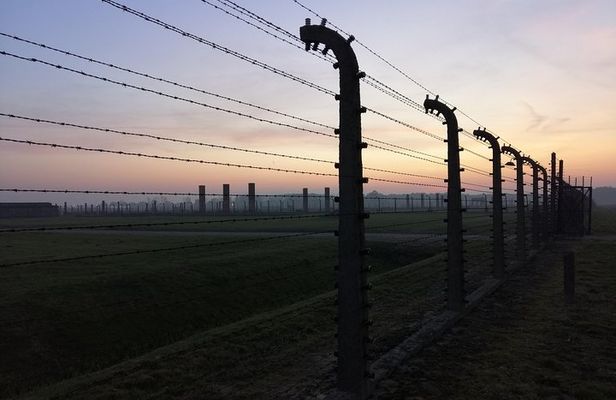
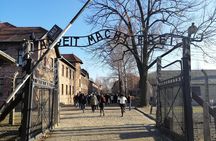
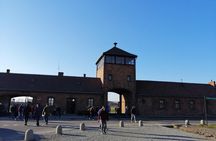
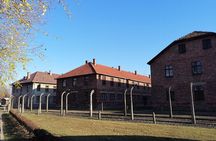
Panstwowe Muzeum Auschwitz-BirkenauThe concentration camp in Auschwitz was established by German Nazis on the outskirts of the town Oswiecim in 1940. After the war, the camp was turned into museum displaying evidence of the genocide. Block no. 11, known as the Death Block, was where people were murdered also at the “Wall of Death”. Outside the camp, there is a gas chamber, where 70,000 people were killed in 1940-1943. In 1941, 3 kilometres from Oswiecim, in the former village of Brzezinka, the German Nazis established a new camp called Auschwitz II Birkenau. In 1942-1945, approx. 1.5 million people lived and died here. Most of them (90%) were Jews, others were Poles, Gypsies, Russians and prisoners from 28 countries of Europe, people of all nationalities and political and religious persuasions. Since 1944, transports of prisoners from all over the continent entered directly through the “Gate of Death”. In 1979, Auschwitz – Birkenau Concentration Camp was listed a UNESCO World Culture and National Heritage Site.
How it works?
01
—
You choose from 10,000+ experience gifts
02
—
We deliver the eVoucher or the Physical box to the recipient
03
—
Recipient books the experience and creates unforgettable memories!
From Warsaw to Auschwitz and Krakow tour fast train with pick up
Warsaw, Poland, Europe
$269.22
This is an experience gift voucher. The recipient will book the experience after
they redeem the gift voucher.
How it works?
01
—
You choose from 10,000+ experience gifts
02
—
We deliver the eVoucher or the Physical box to the recipient
03
—
Recipient books the experience and creates unforgettable memories!