


No expiration date
Easy refund
Free exchange
Easy booking
Private Cu Chi Tunnels & Saigon City Tour - Half or Full Day 7% OFF
 Ho Chi Minh City, Southern Vietnam, Vietnam
$128.34
This is an experience gift voucher. The recipient will book the experience after
they redeem the gift voucher.
Overview
The Ho Chi Minh City Historical and Cultural Tour showcases iconic landmarks and rich history in a captivating 10-hour journey. This immersive experience takes you through the city's architectural marvels and cultural treasures.
- 📸 Visit the stunning Notre Dame Cathedral, a neo-Romanesque and Gothic architectural masterpiece, perfect for capturing memorable photos.
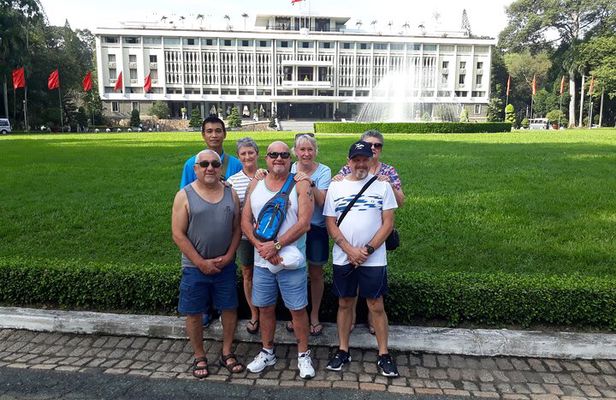
- 🏛️ Explore the Reunification Palace, the former residence of the South Vietnamese President, showcasing classic design and historical significance.
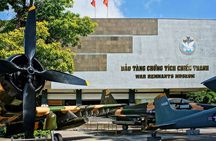
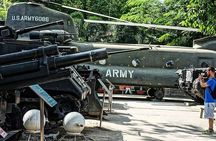
- 🖼️ Discover the War Remnants Museum, featuring powerful exhibits on the Vietnam War, including military equipment and poignant photographs.
- 🏮 Experience the Mariamman Hindu Temple, a vibrant place of worship reflecting the local spiritual heritage.
- 🎨 Visit a lacquerware factory to see artisans at work, creating beautiful handcrafted art products using traditional techniques.
- 🕌 Stop by the Ba Thien Hau Temple, one of the oldest Chinese temples in the city, known for its intricate architecture and serene atmosphere.
- 🛍️ Immerse yourself in the lively Binh Tay Market, the largest wholesale market in Ho Chi Minh City, offering an authentic glimpse of local trade.
- 🔦 Explore the Secret Weapon Cellar of the Saigon Rangers, a hidden gem revealing stories of bravery from the Vietnam War.
- 🚐 Enjoy the convenience of hotel pickup and drop-off within District 1, ensuring a hassle-free experience.
- 🌍 Benefit from an English-speaking tour guide who will enrich your understanding of Ho Chi Minh City's cultural sites and history.
Perfect for those wanting to gift unforgettable cultural experiences, Tinggly offers a sustainable choice with instant e-delivery, no expiration on vouchers, and the freedom to choose from a wide array of adventures around the globe.
—
The experience offers several options. This price includes:
Half Day: Saigon Highlights
Duration: 4 hours
Pickup included
Duration: 4 hours
Pickup included
Tour guide
Language: English
Human tour guide
Duration: 10 hours
The experience offers several options, check yours above
- Pick up & drop off within district 1 - Centre of City as mentioned
- English speaking tour guide
- Air-conditioned vehicle
- Entrance fees & Bottled water
- Tipping/ Gratuities for tour guide & driver or Personal Expenses
-
The Independence PalaceDuring the past war, this place functioned as South Vietnamese President Nguyen Van Thieu's residence and office. Having witnessed many significant changes in Saigon's history, the Independence Palace, which is called as Reunification Palace nowadays, is considered one of the most precious historical monuments in Vietnam. The Independence Palace possesses a classic design. It has hundreds of rooms with top-notch furnishings and decorations, and a spacious and beautiful exterior. It is the ideal place for travelers to learn about Vietnamese history, enjoy the fresh cool air, and explore one of Ho Chi Minh City's most spectacular constructions.
-
Saigon Central Post OfficeSaigon Central Post Office, situated in the center of Ho Chi Minh City, is unquestionably a must-see attraction for any traveler coming to this beautiful city. It was built during the French colonial period in Vietnam, has a stunning facade that feature the spectacular characteristics of French architecture with yellow walls, arched doors and windows, and decorative reliefs. Entering the post office, you will see a hanging huge portrait of President Ho Chi Minh in the center, who was the great leader of the Vietnamese revolution in the twentieth century. Covering the whole length of the post office is a dome roof created in a highly sophisticated arched structure and supported by a row of pillars on the two sides. On both sides of the post office’s walls, there are two large meticulously drawn maps, one depicts Saigon and its neighborhoods in 1892, while the other illustrates the network of telegraph lines across Vietnam and Cambodia in 1936.
-
Notre Dame Cathedral of SaigonStanding out in the heart of Ho Chi Minh City, is recognized as one of the world's 19 most majestic cathedrals and the only Southeast Asian representative on the list. This timeless masterpiece, regarded as an architectural icon of Ho Chi Minh City, attracts a large number of both domestic and foreign visitors every day, especially those who are in search of a magnificent background to take charming photos. Saigon Notre Dame Cathedral’s solemn and grand overlook is formed by a distinctive mix of neo-Romanesque and Gothic styles. Twin bell towers, stained-glass windows, and red-brick exterior are some prominent features that significantly contribute to the spectacular magnificence of the church.
-
Emperor Jade PagodaJade Emperor Pagoda (Chùa Ngọc Hoàng ) was built from 1892 to 1900 by a Chinese man named Luu Minh, who left China and went to Vietnam for living and doing business. He strongly believe in Buddhism, Taoism, and Confucianism, so he wanted to build a pagoda to worship Buddha and Jade Emperor. In 1982, Venerable Buddhist monk Thich Vinh Khuong came to live in the pagoda. From that, the pagoda has pertained to the Vietnam Buddhist Association.In 1984, Jade Emperor Pagoda was changed into Phuoc Hai Tu. However, local people still call ”Jade Emperor Pagoda” because the main chamber of Pagoda is a place to worship the Jade Emperor according to Chinese religious belief. Jade Emperor Pagoda is one of the most famous Buddhist Temples in Ho Chi Minh City, that is always busy with locals and foreign tourists daily. So the Best Time to visit Jade Emperor Temple is in the early morning to avoid the crowd and enjoy the peaceful and tranquil atmosphere here.
-
The art of lacquerware as a means of decorating objects was probably introduced from China during the first century CE. The lacquer itself is actually the resin of a tree which is mixed with coloured pigments and solvents and applied layer after layer to the object's surface, producing a shiny and durable finish. Other substances, such as eggshell and gold leaf, may be applied to the surface before the lacquer is applied, in which case the finished product is sanded down to reveal the decoration beneath. The high quality of resin from Vietnamese lacquer trees, notably those of Phú Thọ in the north, was a crucial factor in the rapid development of this art form, which became very popular at the court of Đại Việt during the feudal period. Decorated lacquer statues, panels, boxes and trays, some dating back to the Lê era (1428-1527), may still be seen at many temples and pagodas throughout the country.
-
War Remnants MuseumThe War Remnants Museum, located in the heart of Ho Chi Minh City, is a profound journey through Vietnam's turbulent history. Established in 1975, this museum offers a stark, compelling look at the impact of the Vietnam War. Its exhibits include haunting photographs, poignant personal artifacts, and military equipment like tanks, helicopters, and fighter jets. The museum's most gripping feature is the collection of graphic imagery and detailed accounts of wartime atrocities, highlighting the resilience and suffering of the Vietnamese people. The War Remnants Museum is more than a historical archive; it's a sobering reminder of the horrors of war and a powerful call for peace. Visitors leave with a deep sense of the war's lasting legacy and an enhanced appreciation for the human spirit's capacity to endure and overcome.
-
Ba Thien Hau TempleNestled in the bustling heart of Cholon (Chinatown), the Thien Hau Pagoda is a spiritual masterpiece and one of the oldest Chinese temples in Ho Chi Minh City. Built around 1760 by the Cantonese congregation, this architectural gem is dedicated to Thien Hau (Mazu), the "Lady of the Sea," revered for protecting sailors and fishermen from the perils of the ocean. As you step inside, you are transported into a mystical world of silence and smoke. The temple is famous for the hundreds of giant incense coils hanging from the ceiling of the open courtyard. These coils, lit by devotees, burn for weeks, carrying prayers and wishes heavenward in curling smoke, creating an atmosphere that is both ancient and holy. Be sure to look up at the roof ridges, which are adorned with incredibly detailed porcelain dioramas depicting dragons, phoenixes, and scenes from Chinese legends. Thien Hau Pagoda is not just a historic relic; it is the living spiritual heart of the local Chinese-Vietnamese community.
-
Binh Tay MarketImmerse yourself in the vibrant chaos of Cholon at Binh Tay Market, the largest wholesale trading center in Ho Chi Minh City. Unlike the tourist-centric Ben Thanh Market, Binh Tay offers a raw, authentic glimpse into local commerce where the city's real trading happens. Constructed in the 1920s by the wealthy Chinese merchant Quach Dam, the market is an architectural masterpiece blending French colonial techniques with traditional Chinese designs. The building features a distinctive "Bagua" (eight-sided) roof adorned with dragon motifs and a central clock tower. Inside, a peaceful open-air courtyard stands in contrast to the bustling aisles, providing a unique spot for photos. As you navigate the maze of over 2,300 stalls, your senses will be awakened by the rich aroma of exotic spices, dried seafood, and medicinal herbs. From colorful fabrics to candied fruits, Binh Tay is a sensory overload and a living symbol of the industrious spirit of Saigon's Chinese community.
-
Tucked away in a narrow alley of District 3 lies one of the most incredible "hidden gems" of the Vietnam War: The Secret Weapon Cellar of the Saigon Rangers. From the outside, the house looks like any ordinary local house. But beneath its tiled floor hides a story of unimaginable bravery and ingenuity. In 1966, a Viet Cong commando named Tran Van Lai (posing as a wealthy contractor) bought this house. While renovating it, he secretly dug a reinforced bunker by hand to prepare for the 1968 Tet Offensive. For years, he smuggled nearly 2 tons of weapons—including B-40 rocket launchers, AK-47s, and explosives—hiding them right under the noses of the enemy police stationed nearby. Today, you can step inside this living museum. Experience the thrill of lifting the camouflaged trapdoor and descending into the tiny, suffocating space where history was made. You will see the original weapons, secret escape routes connected to the city's drainage system, and vintage artifacts from the 60s.
How it works?
01
—
You choose from 10,000+ experience gifts
02
—
We deliver the eVoucher or the Physical box to the recipient
03
—
Recipient books the experience and creates unforgettable memories!
Private Cu Chi Tunnels & Saigon City Tour - Half or Full Day 7% OFF
Ho Chi Minh City, Southern Vietnam, Vietnam
$128.34
This is an experience gift voucher. The recipient will book the experience after
they redeem the gift voucher.
How it works?
01
—
You choose from 10,000+ experience gifts
02
—
We deliver the eVoucher or the Physical box to the recipient
03
—
Recipient books the experience and creates unforgettable memories!