

No expiration date
Easy refund
Free exchange
Easy booking
Day Tour To Desert Castles & Cave of the Seven Sleepers
 Amman, Jordan
$165
This is an experience gift voucher. The recipient will book the experience after
they redeem the gift voucher.
Overview
Jordan's remarkable desert castles and the legend of the Seven Sleepers offer a unique blend of history and culture. These ancient sites showcase early Islamic architecture and the intriguing tales that surround them.
- 🏰 Three impressive desert castles illustrate early Islamic buildings from the 7th and 8th centuries, showcasing the architectural brilliance of the Umayyad dynasty.
- 🎨 Fine frescoes, mosaics, and carvings depict life during this rich historical period, revealing the customs and traditions of the time.
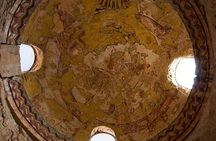
- 🌍 UNESCO-listed Qusayr Amra features famous 8th-century frescoes of hedonistic scenes, providing a stunning glimpse into early Islamic art.
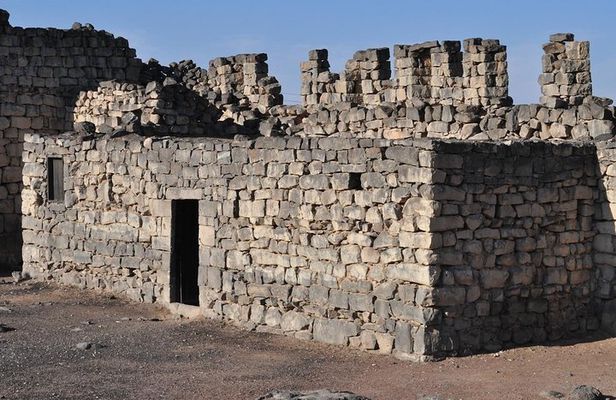
- 🕌 Visit Qasr al-Azraq and Qasr al-Kharrana, significant for their roles as caravan stations and trade centers, deeply rooted in Jordan's history.
- ⛰️ The Caves of Seven Sleepers tell the legend of seven Christian boys who slept for 309 years after escaping persecution, making it a significant religious site.
- 🚐 Travel in a climate-controlled vehicle with a private English-speaking driver, ensuring a comfortable journey across Jordan’s rugged countryside.
- 💧 Bottled water is available onboard to keep you refreshed during the tour.
- 🗺️ Wheelchair accessible and pram/stroller friendly, making it suitable for all visitors.
- 🔍 Optional local guide available at extra cost, allowing for a more tailored experience.
- ⏱️ The tour lasts for 8 hours, providing ample time to explore each site thoroughly.
Tinggly makes it easy to share the magic of this adventure with loved ones, offering instant digital delivery, no expiration on vouchers, and a sustainable choice that supports global exploration.
—
The experience offers several options. This price includes:
Transportation Only
Admission Fees: Entry fees are not included in the tour package.
Local Guide: A local guide is not included, but you can hire one on-site.
Hotel pickup and drop-off
Duration: 8 hours
Water Available onboard
Transportation Type: Transportation Tour
Vehicle Range: We offer options ranging from economy sedans to larger vans, catering to different needs.
Jordan Pass: The Jordan Pass is recommended for this option, providing discounted advance entry and access to other Jordanian attractions.
Pickup included
Admission Fees: Entry fees are not included in the tour package.
Local Guide: A local guide is not included, but you can hire one on-site.
Hotel pickup and drop-off
Duration: 8 hours
Water Available onboard
Transportation Type: Transportation Tour
Vehicle Range: We offer options ranging from economy sedans to larger vans, catering to different needs.
Jordan Pass: The Jordan Pass is recommended for this option, providing discounted advance entry and access to other Jordanian attractions.
Pickup included
Tour guide
Language: English
Human tour guide
The experience offers several options, check yours above
- Transportation (hotel pickup, air-conditioned vehicle, on-board WiFi, Fuel Surcharge .)
- Entry Fees ( If Selected)
- English speaking driver
- Bottled water
- Local Guide
- Lunch
- Gratuities
-
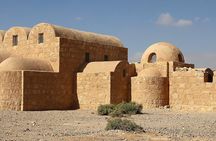
Qsar Al-AzraqSome of the most noteworthy remains of human habitation east in Jordan are the castles built by the Ummayad caliphates during the growing days of Islam (7th & 8th centuries CE). During the height of the Umayyad dynasty, architecture flourished due to the cultural exchange, which was also accompanied by major trade routes. The Umayyad dynasty was later overthrown by the Abbasids, in 750 CE, and architecture consequently changed and evolved which can also be exhibited in Jordan. Many relics and remains of the early and medieval Islamic periods still stand today in Jordan and are dotted around in the deserts of eastern Jordan. These ruins include castles, forts, baths, towers, and fortified ruins and are collectively known as the desert castles. The fine frescoes, mosaics, stone and stucco carvings, inspired by Persian and Greco-Roman traditions, unveil and portray life and customs during the 8th century. Begin the tour with a morning pick up from any hotel in Amman. Travel in a climate-controlled vehicle with a private English-speaking driver across Jordan’s rugged countryside. Journey out of Amman and into the arid landscape and observe the hot dry sand of Jordan spread out every direction. Pull up at Qasr Al-Azraq; a large fortress named after a nearby oasis. Built from black basalt rock, this fortress was once a hunting retreat for the Umayyad rulers and an important military base during the Byzantine period. This imposing castle was used by T.E Lawrence (the 20th-century British soldier and the Arab revolt leader) during the Arab Revolt against the Turks.
-
Quseir AmraProceed to Qusayr Amra, a UNESCO World Heritage site renowned for its stunning architecture. Located in the desert’s core, it features vibrant frescoes on the ceiling and walls, illustrating hunting scenes, animal and bird portraits, and other figures. The zodiac depicted on the domed ceiling of the hot room is among the earliest surviving map images. Originally part of a larger complex, today only a small, non-military country cabin remains. It stands as a significant and exceptional example of early Islamic art and architecture.
-
Qasr Al-HarranahAfter marveling at the frescoes and vaulted chambers, visit Qasr al Kharrana, a scenic square fortress featuring rounded turrets and a central courtyard. Its purpose remains a mystery to historians and archaeologists; some suggest it was a defensive structure, while others believe it served as a resting spot for travelers, a meeting point, or a caravanserai. Remarkably, it is located within one of Jordan’s most stunning and atmospheric ancient buildings. Enjoy the architecture and explore the rooms surrounding the courtyard, with their ornamental niches and pilasters.
-
The Cave of the Seven Sleepers (Ashabul Kahf)Return to your driver and proceed to the Cave of the Seven Sleepers. Legend says this cave (Ahl al Kahf) served as a hiding place for seven Christian men and their dog, fleeing persecution by Roman Emperor Trajan for their faith. They slept there for 309 years, awakening when their beliefs were no longer condemned. Today, the cave is a significant religious and historical site, surrounded by ruins, with tombs and some remains visible inside. After exploring these sites, reunite with your driver for the journey back, including a hotel drop-off in Amman.
How it works?
01
—
You choose from 10,000+ experience gifts
02
—
We deliver the eVoucher or the Physical box to the recipient
03
—
Recipient books the experience and creates unforgettable memories!
Day Tour To Desert Castles & Cave of the Seven Sleepers
Amman, Jordan
$165
This is an experience gift voucher. The recipient will book the experience after
they redeem the gift voucher.
How it works?
01
—
You choose from 10,000+ experience gifts
02
—
We deliver the eVoucher or the Physical box to the recipient
03
—
Recipient books the experience and creates unforgettable memories!