


No expiration date
Easy refund
Free exchange
Easy booking
Khujand Day Tour from Tashkent
 Tashkent, Uzbekistan
$270
This is an experience gift voucher. The recipient will book the experience after
they redeem the gift voucher.
Overview
Khujand Day Tour from Tashkent reveals the rich history of an ancient city founded by Cyrus and later rebuilt by Alexander the Great. With a history spanning approximately 2500 years, this tour immerses you in Khujand's vibrant culture and stunning architecture.
- 🕌 Visit the lively Paishanba bazaar, the largest market in Tajikistan, where you can find a variety of local goods and experience the bustling atmosphere.
- 🍏 Indulge in a selection of delicious fruits and enjoy the warm hospitality of the locals as you navigate through the market.
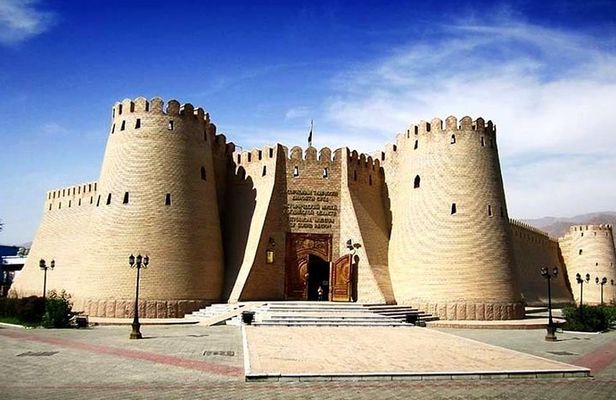
- 🏰 Explore the historical ruins of fortresses and architectural monuments dating back to the XVI century, each narrating stories of Khujand's storied past.
- 🌍 Learn about Khujand's pivotal role on the Silk Road, linking Samarkand with the Fergana Valley and China, and discover its strategic importance in trade.
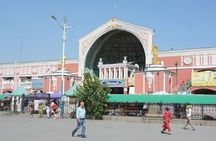
- 🏛️ Visit the Panjshanbe Covered Market, designed in the mid-20th century, showcasing an architectural blend of Eastern and Stalinist styles, completed in 1964.
- 🛡️ Discover the Khujand Fortress, which has expanded alongside the city for 2500 years, with remnants from the VI-V centuries BC and significant historical reconstructions.
- 🏺 Tour the Historical Local Lore Museum of Archeology and Fortification, featuring 1,200 exhibits, including ceramics and tools unearthed from archaeological excavations.
- 🕌 Marvel at the Mausoleum of Sheikh Muslihiddin, an architectural ensemble that includes a mosque and a 19th-century minaret, honoring the city’s revered poet and ruler.
- 🚍 Benefit from included professional certified guide services, transportation, and all necessary fees, ensuring a hassle-free experience.
- ♿ Enjoy the tour's accessibility, as all areas and surfaces are wheelchair accessible, and prams or strollers can easily be accommodated.
Perfect for those who cherish history and culture, Tinggly offers a sustainable gifting option with instant digital delivery, no expiration on vouchers, and a world of experiences to choose from.
—
Khujand Day Tour from Tashkent
Pickup included
Pickup included
Tour guide
Language: English
Human tour guide
- Professional Certified Guide
- Transportation
- Uzbekistan visa (at least double entry visa)
- All Fees and Taxes
- Personal Expenses
- Meals
- Tajikistan E-visa
Meeting point
Return details
-
Panjshanbe MarketPanjshanbe Covered Market is one of Khujand's famous attractions. Panjshanbe means Thursday. In Dushanbe they traded on Mondays, and in Khujand on Thursdays. The Panjshanbe bazaar is located in the very center of Khujand and in front of it is the mausoleum of Sheikh Muslihiddin. The bazaar consists of the main pavilion and many shops, tents, and shops adjacent to it. It is always very noisy here, as not only residents of the city come for shopping, but also guests from nearby villages. The main feature of the Panjshanbe market is its unique architecture and decor. The construction of the pavilion was carried out in the middle of the twentieth century and was completed in 1964. The bazaar building combines elements of oriental and the Stalinist empire, and the decoration is harmoniously performed using the Soviet and Eastern styles.
-
Khujand FortressThroughout the history of Khujand, in the centre of the city was its fortress. For 2500 years, the Khujand fortress expanded with the city, was destroyed by the conquerors, rebuilt again. After archaeological excavations, it was found that the first fortress was erected in the VI-V centuries BC, and consisted of an embankment rampart gradually converted into thick walls of raw clay. Moreover, in addition to the fortress, there was a city wall covering 20 hectares. During the heyday of the Great Silk Road, the Khujand fortress was rebuilt, as well as the city wall. However, the city grew even more, and was divided into three parts: the citadel, rabad and shahristan. At that time, the Khujand fortress was considered one of the most important city in Central Asia. However, the fortress was destroyed by Genghis Khan's army. In 1219-1220. In 1999, part of the eastern wall of the Khujan fortress, dating back to the 8th-10th centuries, was restored.
-
Historical Local Lore Museum of Archeology and FortificationIn 1999, part of the eastern wall of the Khujan fortress, dating back to the 8th-10th centuries, was restored and built the Museum of History and Local Lore of Archeology and Fortification adjoined it. This museum contains household items, ceramics and tools found at the excavation site of the fortress. In total, the museum’s fund contains 1,200 exhibits, most of which are available to visitors.
-
Mausoleum of Sheik MuslekheddinThis large memorial ensemble, located in the historical part of the city, was erected on the grave of Muslihiddin Khujandi - the ruler of the city of Khujand and poet who lived in the XII century. Sheikh Muslihiddin was a holy miracle worker. At first he was buried in the village of Unji (a suburb of Khujand), but his admirers moved the sheikh's ashes to the city and erected a mausoleum on this site. It was in the 12th century. Then the mausoleum was a small burial chamber of burnt bricks, decorated with terracotta. This tomb was destroyed during the Mongol invasion. In the XIV century, the mausoleum was rebuilt again. Today the Sheikh Muslikhiddin Mausoleum is an architectural ensemble consisting of a mosque, a minaret of the 19th century (height over 20 m) and sheikh Muslikhiddin's mausoleum.
If it’s canceled because the minimum isn’t met,
you’ll be offered a different date/experience or a full refund.
How it works?
01
—
You choose from 10,000+ experience gifts
02
—
We deliver the eVoucher or the Physical box to the recipient
03
—
Recipient books the experience and creates unforgettable memories!
Khujand Day Tour from Tashkent
Tashkent, Uzbekistan
$270
This is an experience gift voucher. The recipient will book the experience after
they redeem the gift voucher.
How it works?
01
—
You choose from 10,000+ experience gifts
02
—
We deliver the eVoucher or the Physical box to the recipient
03
—
Recipient books the experience and creates unforgettable memories!