




No expiration date
Easy refund
Free exchange
Easy booking
British Legacies: The Story of Chennai Walking Tour
 Chennai, Tamil Nadu, India
$125
This is an experience gift voucher. The recipient will book the experience after
they redeem the gift voucher.
Overview
Chennai's British Buildings tell a rich history through an immersive walking tour led by a cultural evangelist. This journey highlights the architectural styles that reflect Chennai's significance during British rule in India.
- 🏛️ Over 3 hours, admire the blend of Victorian Gothic, Indo-Saracenic, and Byzantine architectural styles.
- 🗣️ Our guide will share insights about the fate of these buildings and their masters.
- 🌍 Committed to community, we train and employ local guides while supporting local businesses.
- 📜 Learn about our community initiatives from your guide during the tour.
In favor of lower impact, Tinggly provides instant e-delivery, no expiration, and options across the globe.
—
The experience offers several options. This price includes:
Walk with pick and drop
Car
Pickup included
Car
Pickup included
Tour guide
Language: English
Human tour guide
Duration: 2 hours 30 minutes
The experience offers several options, check yours above
- Coffee and/or Tea
- Snacks
Meeting point
Meet out guide outside ticket counter near platform 4.
Return details
-
Chennai Central Railway StationThe Railways is a British Legacy left behind after the fall of imperialism. Today the Indian Railways binds this vast country together. The Central Railway Station was built in 1873 in Gothic Revival style by British architect George Harding handles more than 350000 passengers every day.
-
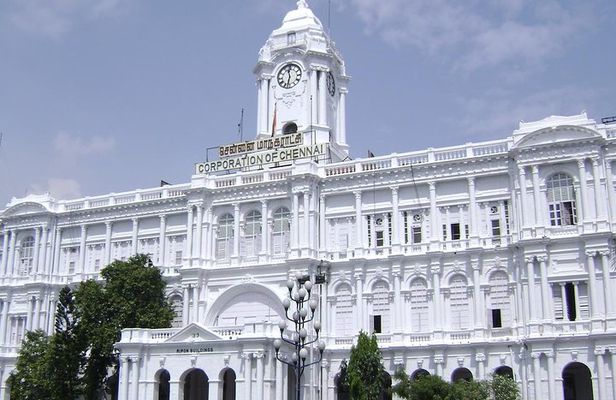
Built in the year 1913, the Ripon Building is the official seat of the Chennai Corporation and is painted white as a representation of Indo-Saracenic architecture. It is named after Lord Ripon, a Governor-General of British India. Our Cultural Evangelist will explain how Ripon introduced local self Government in India. Today this building is the office of Mayor of Chennai and features a charming Westminster Chiming Clock.
-
The Southern Railway headquarters was one of the earliest buildings in India to be built with reinforced concrete. Learn about how the British introduced Railways to hasten troop movement and helped keep the Colony under the control of the British Empire. After independence this symbol of colonialism became a unifying agent of Modern India with various provinces spread far away from each other.
-
Victory War MemorialThe Victory War Memorial, formerly called the Cupid’s bow, is a memorial constructed to commemorate the victory of the Allied Armies during World War I
-
Napier BridgeNapier Bridge was built in 1869 across the Coovum river and is named after the British governor of Fort St George. Before arriving iin India, Napier commanded the 50th Regiment of Foot during the Peninsular War in Iberia against Napoleon Bonaparte. He helped annex the SIndh province in North West India which was resisting the British Empire.
-
University of MadrasThe Senate House is the administrative center of the University of Madras. We part ways after appreciating this Indo Saracenic beauty.
If it’s canceled due to poor weather, you’ll be offered a different date or a full refund.
How it works?
01
—
You choose from 10,000+ experience gifts
02
—
We deliver the eVoucher or the Physical box to the recipient
03
—
Recipient books the experience and creates unforgettable memories!
British Legacies: The Story of Chennai Walking Tour
Chennai, Tamil Nadu, India
$125
This is an experience gift voucher. The recipient will book the experience after
they redeem the gift voucher.
How it works?
01
—
You choose from 10,000+ experience gifts
02
—
We deliver the eVoucher or the Physical box to the recipient
03
—
Recipient books the experience and creates unforgettable memories!