





No expiration date
Easy refund
Free exchange
Easy booking
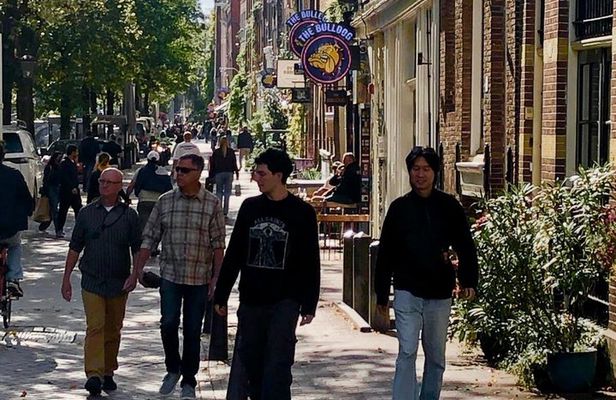
Walk Amsterdam with Groovy Tour with History Art and Culture
 Amsterdam, Netherlands, Europe
$44.68
This is an experience gift voucher. The recipient will book the experience after
they redeem the gift voucher.
Overview
The Groovy Tour in Amsterdam highlights the city’s bold cultural transformations through engaging storytelling. This walking tour weaves through hidden streets, vibrant canals, and multicultural neighborhoods, revealing the rich history of social change and artistic movements.
- 🌊 Explore the UNESCO-listed Canal Ring (Grachtengordel), a symbol of Amsterdam’s Golden Age, where grand canal houses once housed wealthy merchants and later became homes for artists and thinkers.
- 🏮 Visit Amsterdam's Chinatown, one of Europe’s oldest, showcasing the city's diverse cultural identity through colorful storefronts, cultural centers, and a Buddhist temple.
- 📍 Discover the Jewish Quarter, which tells a powerful story of resilience and cultural contribution, reflecting Amsterdam’s evolving ideas about tolerance and social equality.
- 🗳️ Stop at Nieuwmarkt, a historic square that became a hub for 20th-century citizen activism, where protests reshaped urban planning and community engagement.
- ⛪ Marvel at the Oude Kerk, Amsterdam's oldest building, which reflects the city’s religious shifts and now hosts contemporary art exhibitions, blending history with modern creativity.
- 👥 Enjoy a shared tour atmosphere, perfect for meeting new friends from around the world while discovering Amsterdam’s hidden gems.
- 🕒 Benefit from a 2-hour guided tour in English, led by a knowledgeable human tour guide who brings the city's spirit to life.
- ♿ Wheelchair accessible, ensuring that everyone can enjoy the tour, with public transportation options available nearby.
- 👶 Infants can ride in a pram or stroller, making it convenient for families to join the adventure.
With Tinggly, share the joy of cultural exploration through sustainable gifting. Enjoy instant e-delivery, no expiration on vouchers, and the freedom to choose from experiences around the globe, making it a perfect choice for those who love to learn and discover.
—
The experience offers several options. This price includes:
Shared tour
Meet new friends: A social, high-energy way to discover Amsterdam’s hidden gems while meeting people from around the world
Meet new friends: A social, high-energy way to discover Amsterdam’s hidden gems while meeting people from around the world
Tour guide
Language: English
Human tour guide
Duration: 2 hours
The experience offers several options, check yours above
- Historic Places and Monuments
Meeting point
Please meet us in front of the Barbizon Collection Hotel - 15 minutes early, if possible
Return details
Please meet us in front of the Barbizon Collection Hotel - 15 minutes early, if possible
-
Canal Ring (Grachtengordel)The UNESCO-listed Canal Belt is the architectural symbol of Amsterdam’s Golden Age prosperity. Built in the 17th century as a carefully planned expansion, these canals housed wealthy merchants whose global trade networks defined the city’s economic power. Over time, the grand canal houses became homes for artists, thinkers, and later creative communities that influenced 20th-century cultural movements. The canals reflect both structured urban planning and centuries of social transformation. Walking along these waterways reveals how wealth, art, civic planning, and evolving lifestyles intersected — providing the backdrop for Amsterdam’s later reputation as a center of innovation and progressive ideas.
-
Amsterdam ChinatownAmsterdam’s Chinatown represent the city’s long-standing global connections. As a major trading hub in the 17th century, Amsterdam attracted merchants and sailors from around the world. In the 20th century, migration from Asia further diversified the neighborhood, creating one of Europe’s oldest Chinatowns. Today, colorful storefronts, cultural centers, and the Buddhist temple reflect the city’s multicultural identity. This area illustrates how immigration, trade, and cultural exchange continuously shaped Amsterdam’s character. It also highlights how formerly neglected districts were revitalized through community cooperation and creative entrepreneurship.
-
The Jewish Quarter tells a powerful story of intellectual freedom, cultural contribution, and resilience. From the 17th century onward, Amsterdam became a refuge for Jewish communities fleeing persecution elsewhere in Europe. Scholars, printers, merchants, and philosophers contributed greatly to the city’s economic and intellectual life. During World War II, this neighborhood witnessed devastating loss, which profoundly shaped Dutch national memory. Today, preserved landmarks and memorials reflect both the vibrancy of past Jewish life and the importance of remembrance. This stop provides essential context for understanding Amsterdam’s evolving ideas about tolerance, civil responsibility, and social equality
-
NieuwmarktNieuwmarkt is one of Amsterdam’s most important symbols of 20th-century citizen activism. In the 1970s, local residents protested government demolition plans connected to metro construction, organizing demonstrations that reshaped Dutch urban planning policies. The square became a gathering point for students, artists, and community groups advocating for affordable housing and neighborhood preservation. Today, the historic Waag building stands at its center, reminding visitors of the city’s layered past — from medieval guild hall to modern social meeting place. This stop highlights how grassroots movements and public engagement helped shape Amsterdam’s reputation as a city where civic voices matter.
-
Oude KerkFounded in the 13th century, the Oude Kerk is Amsterdam’s oldest surviving building and a powerful starting point for understanding the city’s evolution. Originally a Catholic church serving fishermen and merchants, it later became Protestant during the Reformation, reflecting major religious and political shifts in Dutch society. Beneath its vast wooden vaulted ceiling lie thousands of gravestones, including notable citizens who shaped Amsterdam’s maritime and artistic history. Located in one of the city’s most debated districts, the church also symbolizes Amsterdam’s long relationship with tolerance, moral debate, and social change. Today it hosts contemporary art exhibitions, blending medieval architecture with modern creative expression — a perfect introduction to how old Amsterdam constantly reinvents itself.
How it works?
01
—
You choose from 10,000+ experience gifts
02
—
We deliver the eVoucher or the Physical box to the recipient
03
—
Recipient books the experience and creates unforgettable memories!
Walk Amsterdam with Groovy Tour with History Art and Culture
Amsterdam, Netherlands, Europe
$44.68
This is an experience gift voucher. The recipient will book the experience after
they redeem the gift voucher.
How it works?
01
—
You choose from 10,000+ experience gifts
02
—
We deliver the eVoucher or the Physical box to the recipient
03
—
Recipient books the experience and creates unforgettable memories!