

No expiration date
Easy refund
Free exchange
Easy booking
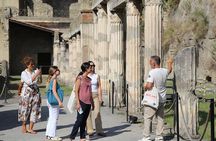
Day Tour of Pompeii & Herculaneum from Sorrento
 Sorrento, Amalfi Coast, Italy
$145.17
This is an experience gift voucher. The recipient will book the experience after
they redeem the gift voucher.
Overview
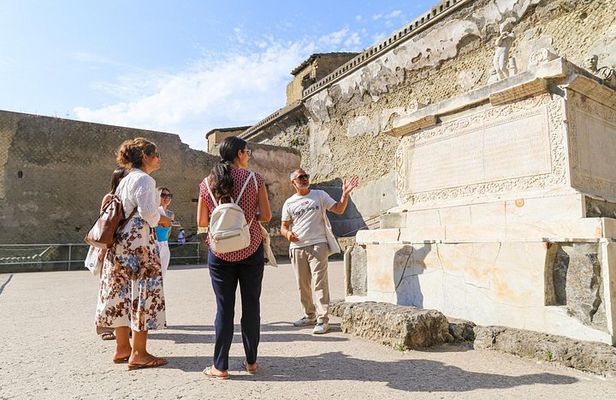
Travel back nearly 2,000 years on this full-day journey through two of the world's most extraordinary archaeological sites. Explore the vast ruins of Pompeii and the remarkably preserved city of Herculaneum with an expert local guide, discovering how two neighboring Roman towns met the same fate during the eruption of Mount Vesuvius in 79 AD—yet were preserved in remarkably different ways.
—
The experience offers several options. This price includes:
Shared English Tour
Tour guide
Language: English
Human tour guide
Duration: 8 hours
The experience offers several options, check yours above
- Priority access to Herculaneum Archaeological Park
- Audio headsets for a clear listening experience
- Priority access to Pompeii Archaeological Park
- Expert English-speaking guide throughout the day
- Round-trip transportation in a comfortable air-conditioned vehicle
- Food and drinks
Meeting point
Meet your guide at the IAMME IA! Gray Line office located behind the statue of Torquato Tasso, nearby the Bar Fauno, next to the Fattoria Terranova shop.
We suggest to arrive at meeting point 10 minutes prior to the departure.
Return details
Meet your guide at the IAMME IA! Gray Line office located behind the statue of Torquato Tasso, nearby the Bar Fauno, next to the Fattoria Terranova shop.
We suggest to arrive at meeting point 10 minutes prior to the departure.
- Meet your guide in Sorrento (pass by)
-
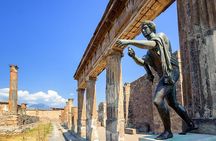
Archaeological Park of PompeiiPompeii is a vast archaeological site in southern Italy’s Campania region, near the coast of the Bay of Naples. Once a thriving and sophisticated Roman city, Pompeii was buried under meters of ash and pumice after the catastrophic eruption of Mount Vesuvius in 79 A.D.
-
Foro de PompeyaThe Civil Forum is the core of daily life of the city and is the focal point of all the main public buildings for city administration and justice, business management, and trade activities such as markets, as well as the main places of citizen worship.
-
Tempio di Giove CapitolinoThe Temple of Jupiter dominates the north side of the Forum, with Mount Vesuvius scenically rising behind. When the colony was founded (80 BC), the temple underwent a radical renovation and became a real Capitolium with the three cult statues of Jupiter, Juno and Minerva, which looked like those of the Capitolium in Rome, placed on a high base so as to make them visible to whoever passed in the Forum square.
-
MacellumThe Macellum consists of a tuff quadriporticus with a hall for worship in an elevated position on the eastern side, in line with the entrance. The copies of two marble statues, a female and a male armed, are found on the niches of the side wall, together with the fragment of a larger statue, probably pertaining to an emperor, Titus or Vespasian, indicating how this area was intended for the imperial cult. To its left is a room for meetings of a sacred board and to the right a large room with a masonry counter perhaps for fish to be sold.
-
Via dell’AbbondanzaVia dell'Abbondanza is the main commercial artery of Pompeii, stretching from the Forum to the Sarno Gate. As the city's longest thoroughfare, it offers a vivid glimpse into ancient daily life through its well-preserved shops, workshops, and vibrant electoral graffiti. Walking its basalt stones today, you can still see the iconic raised stepping stones and grand facades that once defined the heartbeat of this Roman city.
-
Stabian Baths (Terme Stabiane)The Stabian Baths (Terme Stabiane) are the oldest and largest public bathing complex in Pompeii, located at the intersection of Via dell'Abbondanza. They represent a masterpiece of Roman engineering, featuring a sophisticated underfloor heating system known as a hypocaust and distinct sections for men and women. Visitors can still admire the elegant stucco decorations, the open-air gymnasium (palaestra), and the large swimming pool that made this site the ultimate social and wellness hub of the city.
-
LupanarThe Lupanar of Pompeii is the most famous brothel in the ruined Roman city of Pompeii. It is of particular interest for the erotic paintings on its walls. Lupanar is Latin for "brothel". The Pompeii lupanar is also known as Lupanare Grande. The prostitutes in the brothel were mostly Greek and Oriental slaves who were paid between two and eight Asses (a glass of wine cost one As) for their services.
-
Casa del FaunoThe House of the Faun (Italian: Casa del Fauno), built during the 2nd century BC, was one of the largest and most impressive private residences in Pompeii, Italy, and housed many great pieces of art. It is one of the most luxurious aristocratic houses from the Roman republic, and reflects this period better than most archaeological evidence found even in Rome itself.
-
Teatro GrandeThe Teatro Grande is a majestic horseshoe-shaped auditorium built into a natural hillside, designed to hold roughly 5,000 spectators. Dating back to the 2nd century BC, it was the first Greek-style stone theater in Pompeii and served as the city's primary venue for comedies, tragedies, and pantomimes. The theater features a grand tiered seating area and a large stage background (scenae frons), offering a spectacular look at how the Roman elite and commoners alike enjoyed large-scale public entertainment.
-
BasilicaThe Basilica, with its extension of 1,500 square meters, was the most sumptuous building of the Forum, and its space was used to carry out business and for the administration of justice.
-
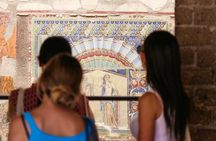
Archeological Park of HerculaneumLocated in the shadow of Mount Vesuvius, Herculaneum was an ancient Roman town destroyed by volcanic pyroclastic flows in 79 AD. Its ruins are located in the comune of Ercolano.
-
Casa dei CerviThe Casa dei Cervi is an imposing example of a Roman noble family's house that, before the volcanic mud slide, boasted a seafront address. Constructed around a central courtyard, the two-storey villa contains murals and some beautiful still-life paintings.
-
College of the AugustalesIt is thought that the building was a centre of the cult of the Emperor Augustus and the headquarters of the Collegium Augustalium (or possibly even the local curia).
-
House of the SkeletonThe House of the Skeleton probably the aggregation of three smaller buildings, derives its name from the discovery of human remains in a second floor room in 1831. Some inhabitants shut themselves in their homes and they died there either by suffocation or because of the extreme heat of the gases which hit the town.
-
Central ThermaeThe "thermae" were the city's public baths. There were relatively few private baths and these were limited to the most well-to-do families, given that the latter were the only ones who could afford to build rooms suited to the purpose. The thermal bath buildings were divided into two sections: one reserved for women and one reserved for men. Each of these contained a series of rooms with different functions: changing room cold bath room tepid bath room hot bath room all well preserved from the passing of the years
-
Partem Domus lignea - Casa del Tramezzo di LegnoThe Partem Domus Lignea, owes its name to a folding wooden door discovered here; it was used to separate the atrium from the tablinium (the studio of the owner). In front of the façade it's still possible to admire the benches where the clientes waited to be received from the host.
-
Salone della Barca di ErcolanoAfter the Eruption of the Volcano Vesuvius, many inhabitants fled for their lives reaching the beach. The men tried to protect women and children, but the fury of the Volcano was unstoppable and the waves, the sand and the lava destroyed the little port and the beach. The wooden boat, recovered from the ancient beach, was covered with a resinous material, which preserved it perfectly, and in 1982 it was bring back to lifeand put back in the right position, so travellers can admire it.
- Return transfer to Sorrento (pass by)
How it works?
01
—
You choose from 10,000+ experience gifts
02
—
We deliver the eVoucher or the Physical box to the recipient
03
—
Recipient books the experience and creates unforgettable memories!
Day Tour of Pompeii & Herculaneum from Sorrento
Sorrento, Amalfi Coast, Italy
$145.17
This is an experience gift voucher. The recipient will book the experience after
they redeem the gift voucher.
How it works?
01
—
You choose from 10,000+ experience gifts
02
—
We deliver the eVoucher or the Physical box to the recipient
03
—
Recipient books the experience and creates unforgettable memories!