

No expiration date
Easy refund
Free exchange
Easy booking
Luxor Full Day Private Tour from Hurghada with Lunch
 Hurghada, Red Sea, Egypt
$100
This is an experience gift voucher. The recipient will book the experience after
they redeem the gift voucher.
Overview
The full-day private guided tour from Hurghada to Luxor showcases the ancient wonders of Egypt. Travel in comfort with a private air-conditioned vehicle and an expert Egyptologist guide.
- 🚐 Full-day private tour from Hurghada to Luxor, featuring a delicious lunch included at a local restaurant.
- 🕵️♂️ Visit the Valley of Kings, where the tombs of renowned pharaohs like Ramses III, Ramses VI, and Merenptah await discovery.
- 🏺 Explore the magnificent Temple of Queen Hatshepsut, a stunning architectural marvel set against a dramatic cliff backdrop.
- 🗿 Marvel at the Colossi of Memnon, two massive statues that have stood for over 3,400 years, guarding the entrance to Amenhotep III's memorial temple.
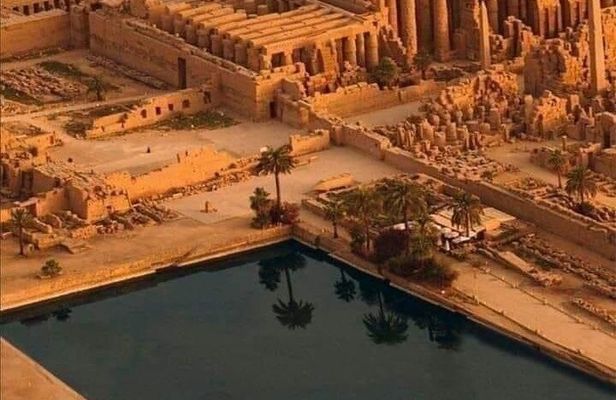
- 🏛️ Conclude your tour at Karnak Temple, the largest religious complex from ancient Egypt, renowned for its Hypostyle Hall and the Temple of Amun-Ra.
- 👑 Optional entrance to the tomb of Tutankhamun is available for an extra charge, allowing you to witness the treasures of this iconic site.
- ⏳ The tour lasts approximately 12 hours, including a scenic 4-hour drive from Hurghada to Luxor with a coffee break along the way.
- 🌊 Comfortable air-conditioned vehicle ensures a pleasant journey, with bottled water and soft drinks provided during transit.
- 📜 Expert Egyptology guide included, offering insights into ancient history and culture throughout the tour.
- 💰 Transfers from El Gouna, Sahl Hasheesh, Makadi Bay, and Soma Bay available for an extra charge of €15 per person.
Choosing Tinggly for this adventure means embracing sustainability while gifting unforgettable experiences. With instant e-delivery, no expiration on vouchers, and the freedom to choose from a variety of adventures worldwide, Tinggly makes sharing the magic of Luxor easier than ever.
—
The experience offers several options. This price includes:
Only Private Car
Private Car: This Option Includes Only Car No guide No entrance fees No Lunch
Pickup included
Private Car: This Option Includes Only Car No guide No entrance fees No Lunch
Pickup included
Tour guide
Language: English
Human tour guide
Duration: 12 hours
The experience offers several options, check yours above
- 1 Free for 15 Paying Guests
- Air-conditioned vehicle
- Tickets to the mention sightseeing if the option selected
- Cola or sprite in the car
- Lunch
- Egyptology Guide
- Bottled water
- Private transportation
- Government Fees
- Transfer from el gouna sahl hashesh makadi bay and soma bay extra charge 15€ per person
- Drinks while lunch in the restaurant
- Gratuities
- We will drive for 4 hours from hurghada to Luxor the distance it's about 300 km from Hurghada in the half of the way we will make a stop so you can have coffee or use tolits (pass by)
-
Valley of the KingsValley of the Kings Add Story Luxor The rulers of the Eighteenth, Nineteenth, and Twentieth Dynasties of Egypt’s prosperous New Kingdom (c.1550–1069 BC) were buried in a desolate dry river valley across the river from the ancient city of Thebes (modern Luxor), hence its modern name of the Valley of the Kings. This moniker is not entirely accurate, however, since some members of the royal family aside from the king were buried here as well, as were a few non-royal, albeit very high-ranking, individuals. The Valley of the Kings is divided into the East and West Valleys. The eastern is by far the more iconic of the two, as the western valley contains only a handful of tombs the tickets it's included 3 tombs not included king Tut .
-
The tomb of Ramses II (KV7) is located in the Valley of the Kings and is considered one of the larger tombs. The writing of Ramses’ coronation name in the cartouches of the first corridor of the tomb as Ouser Maat Re and not Ouser Maat Re Setep n Re leaves no doubt that the construction of the tomb was begun before the end of his second year on the throne, as this way of writing the coronation name was only attested during the co-regency with his father Seti I in the second year of his sole rule.
-
Tomb of Ramses IVThis tomb was begun by King Ramesses V (c.1147–1143 BC) of the Twentieth Dynasty. Although it is uncertain whether he was ultimately buried here, it is clear that his uncle Ramesses VI (c.1143–1136 BC) enlarged the tomb and used it for his burial. The tomb is simple in plan, essentially consisting of a series of descending corridors that lead deep underground, in a straight line to the burial chamber. The exquisitely painted sunk relief walls are very well preserved.
-
Tomb of MerenptahAmenemhat was the last to hold the title of nomarch (governor) of the Oryx nome. He held this position for around 25 years, during the reign of the 12th Dynasty king, Senusret I (c.1965–1920 BC). Similar to Khnumhotep II’s tomb, the entrance into Amenemhat’s tomb chapel is in the form of a portico with two columns and surrounded by a forecourt reached by way of a causeway running up the hill. Hence, its course can still be seen thanks to the boulders on either side of it. Inside the tomb chapel, a shrine cut into the east wall, facing the doorway, contains a statue of Amenemhat, his wife Hetepet, and his mother Henu. The tomb of Amenemhat has some of the finest decorations of all the tombs at Beni Hasan. This includes scenes depicting activities of daily life such as agriculture, fishing, and fowling, and the practicing of various crafts and professions including carpentry, sandal making, pottery, bows and arrows.
-
Tomb of King Tutankhamun (KV62)Tutankhamun (c.1336–1327 BC) is world-famous because it is the only royal tomb from the Valley of the Kings that was discovered relatively intact. Its discovery in 1922 by Howard Carter made headlines worldwide, and continued to do so as the golden artifacts and other luxurious objects discovered in this tomb were being brought out. The tomb and its treasures are iconic of Egypt, and the discovery of the tomb is still considered one of the most important archaeological discoveries to date. Despite the riches it contained, the tomb of Tutankhamun, number 62 in the Valley of the Kings, is in fact quite modest compared to the other tombs on this site, in both size and decoration. This is most likely due to Tutankhamun having come to the throne very young, and even then ruling for only around nine years in total. One can wonder at what riches the much larger tombs of the most powerful kings of the New Kingdom, such as Hatshepsut, Thutmose III Amenhotep III, and Ramesses II once contained.
-
Temple of HatshepsutThe celebrated temple of Hatshepsut (c.1473–1458 BC), the queen who became pharaoh, is located here, in Deir al-Bahari, on the west bank of Luxor. Composed of three man-made terraces that gradually rise up toward the sheer cliff face, this structure is truly a sight to behold. The site of Deir al-Bahari was sacred to Hathor, the goddess who nursed and reared every king, including their mythological ancestor, the god Horus, in Egypt’s primordial past. A manifestation of this goddess was believed to reside in the very hills under whose shadow lies the temple of Hatshepsut, and just on the other side of which is the site of the tombs of some of ancient Egypt’s most famous rulers, the Valley of the Kings. Stelae bearing prayers to Hathor depict her, in cow form, emerging from these mountains. This impressive geological formation features a summit that is naturally pyramid-shaped.
-
Colossi of MemnonThe Colossi of Memnon are two massive stone statues of Pharaoh Amenhotep III. For 3,400 years they have sat in the Theban necropolis, across the River Nile from the city of Luxor. History of the Colossi of Memnon The original function of the Colossi was to stand guard at the entrance to Amenhotep's memorial temple (or mortuary temple): a massive cult center built during the pharaoh's lifetime, where he was worshipped as a god-on-earth both before and after his departure from this world.
-
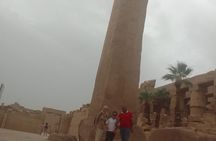
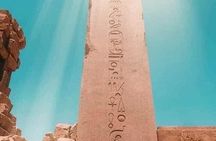
The Karnak TempleThe Karnak temple complex at Luxor developed over more than 1,000 years, principally between the Twelfth and Twentieth Dynasties. It was, at its peak, the largest and most important religious complex in ancient Egypt. The most significant structure, and the largest religious building ever built, is the Temple of Amun-Ra, considered to be where that god lived on earth with his wife, Mut, and son, Khonsu, who also have temples at the site. The Temple of Amun-Ra is particularly famous for the vast Hypostyle Hall constructed during the reign of Seti I. After Memphis became the new dynastic capital, many of Luxor’s temples declined in importance. In later centuries, Ptolemaic rulers and Coptic Christians altered parts of the complex for their own uses.
-
LuxorDrive back to your hotel after you learn about the Egyptian great history in your confiratble Air-conditioned Car back to your stay in red sea
How it works?
01
—
You choose from 10,000+ experience gifts
02
—
We deliver the eVoucher or the Physical box to the recipient
03
—
Recipient books the experience and creates unforgettable memories!
Luxor Full Day Private Tour from Hurghada with Lunch
Hurghada, Red Sea, Egypt
$100
This is an experience gift voucher. The recipient will book the experience after
they redeem the gift voucher.
How it works?
01
—
You choose from 10,000+ experience gifts
02
—
We deliver the eVoucher or the Physical box to the recipient
03
—
Recipient books the experience and creates unforgettable memories!