

No expiration date
Easy refund
Free exchange
Easy booking
Private Half Day Tour in Orkney
 Scotland, United Kingdom
Kirkwall, Scotland, United Kingdom
Scotland, United Kingdom
Kirkwall, Scotland, United Kingdom
$215.75
This is an experience gift voucher. The recipient will book the experience after
they redeem the gift voucher.
Overview
These tours, which include sites like the Italian Chapel, Yesnaby Cliffs, Skara Brae, Ring of Brodgar, Standing Stones of Stenness, and the Unstan Burial Tomb are unique for several reasons.
These sites collectively offer a blend of historical, archaeological, natural, and cultural significance.
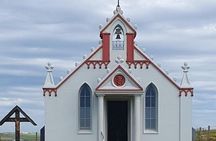
The Italian Chapel is a remarkable example of resilience and creativity. Built by Italian prisoners of war (War II).
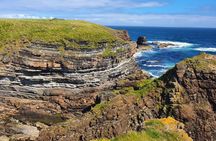
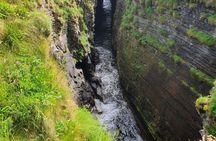
Yesnaby Cliffs are famous for their dramatic sea cliffs and rugged coastline.
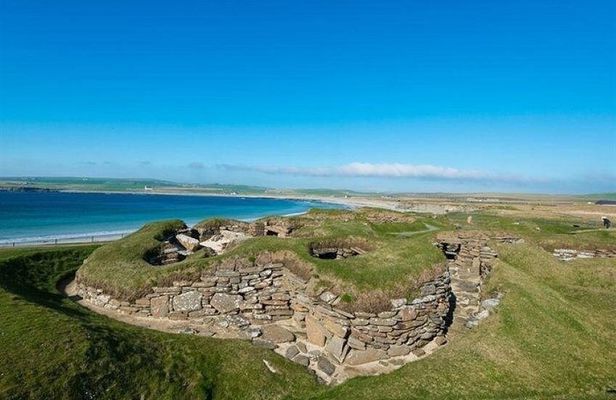
Skara Brae is one of the most complete and well-preserved prehistoric villages in Europe, dating back over 5,000 years.
The Ring of Brodgar is a Neolithic stone circle and part of the UNESCO-listed Heart of Neolithic Orkney.
The Standing Stones of Stenness are part of an ancient ritual complex and are among the oldest stone circles in Britain, dating back to around 3,000 BCE.
The Unstan Burial Tomb is a Neolithic chambered cairn and one of several burial sites found on Orkney and the oldest of all.
These sites collectively offer a blend of historical, archaeological, natural, and cultural significance.
The Italian Chapel is a remarkable example of resilience and creativity. Built by Italian prisoners of war (War II).
Yesnaby Cliffs are famous for their dramatic sea cliffs and rugged coastline.
Skara Brae is one of the most complete and well-preserved prehistoric villages in Europe, dating back over 5,000 years.
The Ring of Brodgar is a Neolithic stone circle and part of the UNESCO-listed Heart of Neolithic Orkney.
The Standing Stones of Stenness are part of an ancient ritual complex and are among the oldest stone circles in Britain, dating back to around 3,000 BCE.
The Unstan Burial Tomb is a Neolithic chambered cairn and one of several burial sites found on Orkney and the oldest of all.
—
Private Half Day Tour in Orkney
Tour guide
Language: English
Human tour guide
Duration: 6 hours
- Skarabrae Entry Fee
- Driver Guide
- Italian Chapel Entry Fee
- Bottled water
- Private transportation
- WiFi on board
- Breakfast
- Dinner
- Alcoholic Beverages
Meeting point
Bus Station Stand 5 or Cruise Terminal at Hatston Pier
Return details
Bus Station Stand 5 or Cruise Terminal at Hatston Pier
-
The Italian ChapelThe Italian Chapel is a small but famous church built during the Second World War by Italian prisoners of war held on the Orkney island of Lamb Holm. Constructed in 1943, the chapel was made from two simple Nissen huts that the prisoners transformed using scrap materials while working on the nearby Churchill Barriers. Despite limited resources, they decorated the interior with detailed paintings and features to resemble a traditional Catholic church, led by artist Domenico Chiocchetti. Today, it is seen as a powerful symbol of creativity, faith, and hope in difficult circumstances, and is one of Orkney’s most popular historic sites.
-
Scapa FlowScapa Flow is a large natural harbour in the Orkney Islands in northern Scotland. It is one of the biggest and most sheltered natural harbours in the world. Historically, it is best known as a major British naval base, especially during both the First and Second World Wars. The British Royal Navy used it as its main anchorage due to its strategic location and protection from rough seas. One of the most famous events associated with Scapa Flow is the Scuttling of the German Fleet at Scapa Flow, when German warships were deliberately sunk by their crews after World War I to prevent them from being seized by the Allies. Today, Scapa Flow is also popular for diving, as many of the sunken wrecks remain on the seabed, attracting divers from around the world.
-
Yesnaby CliffsYesnaby Cliffs are dramatic coastal cliffs on the west coast of Orkney’s Mainland, facing the Atlantic Ocean. They are known for their striking red sandstone formations, sea stacks, and natural rock arches, shaped by powerful waves and winds over thousands of years. One of the most famous features is a tall sea stack called the “Yesnaby Castle.” The cliffs are also rich in wildlife, especially seabirds such as puffins, fulmars, and kittiwakes, making them a great spot for birdwatching. Today, Yesnaby Cliffs are popular with walkers and photographers, offering spectacular views, especially at sunset, and a vivid sense of Orkney’s rugged natural beauty.
-
Skara Brae is a remarkably well-preserved prehistoric village on the west coast of Orkney’s Mainland. Dating back over 5,000 years (around 3100 BCE), it is older than both the Stonehenge and the Great Pyramid of Giza. The settlement was discovered in 1850 after a storm exposed its stone structures. Skara Brae consists of a cluster of small stone houses connected by passageways. Each home had built-in furniture such as beds, shelves, and a central hearth, giving a clear picture of daily life in the Neolithic period. It is often called the “best-preserved Neolithic village in Europe” and is part of the Heart of Neolithic Orkney UNESCO World Heritage Site.
-
Ring of BrodgarRing of Brodgar is a large prehistoric stone circle located on Orkney’s Mainland, dating to around 2500–2000 BCE. It originally consisted of about 60 standing stones arranged in a perfect circle, though around 30 remain today. The circle is set within a wide circular ditch (a henge), making it one of the most impressive ceremonial monuments in Britain. The exact purpose of the Ring of Brodgar is unknown, but it is believed to have been used for rituals or gatherings by Neolithic people. Its location—between the lochs of Stenness and Harray—adds to its dramatic setting. It is part of the Heart of Neolithic Orkney UNESCO World Heritage Site and is often linked with nearby sites like the Stones of Stenness.
-
Standing Stones of StennessStones of Stenness are one of the oldest stone circles in Britain, dating to around 3100 BCE. Originally made up of about 12 large standing stones set in a circular arrangement, only four stones remain today, along with a central hearth. The stones are tall, thin slabs of stone, giving the site a striking and dramatic appearance. The circle is surrounded by a ditch, suggesting it was an important ceremonial or ritual site for Neolithic people. Its exact purpose is unknown, but it was likely used for gatherings, religious practices, or community events. The Stones of Stenness are part of the Heart of Neolithic Orkney UNESCO World Heritage Site and lie close to other famous sites such as the Ring of Brodgar and Skara Brae, forming a rich prehistoric landscape.
-
Unstan Chambered CairnUnstan Chambered Cairn (often called Unstan Tomb) is a Neolithic burial monument located on Orkney’s Mainland, dating to around 3200 BCE. It is a chambered cairn, meaning a stone-built tomb with a central passage leading to burial chambers. Inside, there are small side cells where human remains and grave goods were placed. The tomb is especially important because it gave its name to the “Unstan Ware” style of pottery—distinctive round-bottomed bowls decorated with simple patterns—found at the site. Unstan Cairn provides valuable insight into burial practices and beliefs of Neolithic communities in Orkney and is part of the wider prehistoric landscape that includes sites like the Skara Brae and Stones of Stenness.
How it works?
01
—
You choose from 10,000+ experience gifts
02
—
We deliver the eVoucher or the Physical box to the recipient
03
—
Recipient books the experience and creates unforgettable memories!
Private Half Day Tour in Orkney
Scotland, United Kingdom
Kirkwall, Scotland, United Kingdom
$215.75
This is an experience gift voucher. The recipient will book the experience after
they redeem the gift voucher.
How it works?
01
—
You choose from 10,000+ experience gifts
02
—
We deliver the eVoucher or the Physical box to the recipient
03
—
Recipient books the experience and creates unforgettable memories!