

No expiration date
Easy refund
Free exchange
Easy booking
Auschwitz-Birkenau Guided Historical Experience
 Krakow, Poland, Europe
$51.43
This is an experience gift voucher. The recipient will book the experience after
they redeem the gift voucher.
Overview
Gain profound insights into World War II history and Holocaust remembrance on this day trip from Krakow to the Auschwitz-Birkenau Memorial and Museum. Led by a licensed guide, this tour provides a respectful exploration of significant historical sites.
- 🚌 Full-day Auschwitz tour from Krakow with an official museum guide
- 🏛️ Explore both Auschwitz I and Birkenau (Auschwitz II) camps
- 📚 Learn about the Holocaust through verified facts, stories, and historical context
- 🎧 Hassle-free experience with round-trip transport, tickets, and headset included
To keep footprints lighter, Tinggly offers instant digital delivery, a never-expiring benefit, and global options.
—
Auschwitz Outdoor Guided Tour
Bus: Transportation by bus to and from Krakow
Bus: Transportation by bus to and from Krakow
Tour guide
Language: English
Human tour guide
- Licensed, English speaking local guide
- High quality, friendly and helpful English-speaking tour leaders
- Round-trip transportation from and to Krakow by air-conditioned vehicle (van or mini-bus)
- Professional assistance in case of any issue
- Entry to Auschwitz & Birkenau Museum Camp Grounds
- Food and drinks
Meeting point
Kiss and Ride Park (Opposite Mercure Hotel)
Return details
Kiss and Ride Park (Opposite Mercure Hotel)
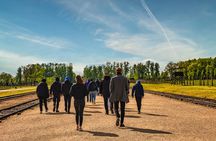
- Start your tour with easy transportation from Krakow. During the trip, a friendly English-speaking leader will be there to help. When you get to Oswiecim, take a quick break for coffee or to check out some outdoor exhibits. Then, meet your local guide. They're officially approved by the Auschwitz-Birkenau Museum and will show you around. (pass by)
-
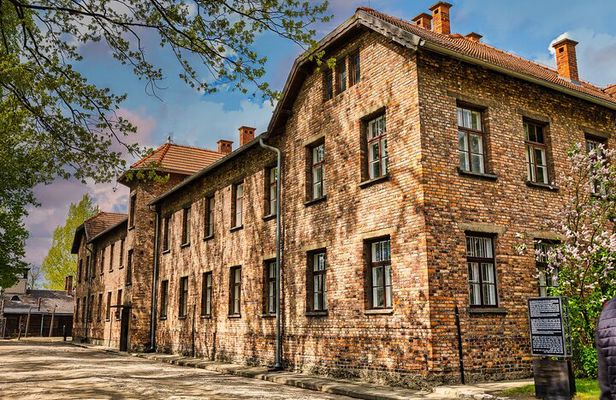
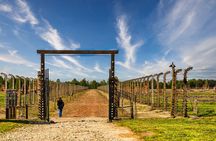
Panstwowe Muzeum Auschwitz-BirkenauGuided tours of Auschwitz I Museum provide visitors with a profound and educational experience, as knowledgeable guides lead them through the haunting remnants of the camp. Explore the barracks, watchtowers, and infamous "Arbeit Macht Frei" gate while learning about the systematic oppression and unimaginable suffering endured by prisoners. Witness the chilling exhibits, including personal belongings, photographs, and documents, which serve as powerful reminders of the human cost of hatred and intolerance. Pay your respects at the memorials and monuments dedicated to the victims of the Holocaust, and take a moment for quiet reflection at this hallowed ground. A visit to Auschwitz I Museum is not only a historical journey but also a solemn reminder of the importance of remembrance and the ongoing commitment to ensuring that the atrocities of the past are never forgotten.
-
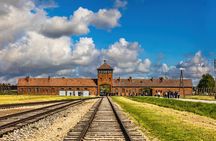
BrzezinkaAfter the 1st camp short break up to 15 minutes is planned. You will be taken by us to visit the second part of the tour - Birkenau (Auschwitz II), only 3 minutes away, which is the largest camp built and operated for the specific purpose of making Europe ''Judenrein'' (free of Jews). The same guide continues a poignant lecture about the camp in the village Brzezinka (Birkenau) which was constructed in 1941 on the order of Heinrich Himmler (SS commander) and could hold some 90 000 prisoners. You will be told about terrible stories of unimaginable living conditions as well as cruel selection and pseudo-scientific medical experiments made by prominent Nazi doctors including Josef Mengele. A history about soldiers of the 60th Army of the First Ukrainian Front opened the gates of Auschwitz on January 27, 1945, which meant the final liberation, ends your tour with a feeling, both this genocide should never have happened and it can not happen again.
- At the end of the tour, there's no hurry from our side. You'll have at least a 20-minute break where you can visit a bookstore, grab some groceries, or simply relax. Then, after another 1 hour and 15 minutes on the road, we'll drop you off at your chosen address in Krakow. (pass by)
-
The Judenrampe, also known as the old unloading ramp, is one of the most significant historical locations connected with the Auschwitz-Birkenau camp complex. Situated between Auschwitz I and Auschwitz II-Birkenau, this was the place where many transports of deported people arrived before being taken further into the camp system.
If it’s canceled due to poor weather, you’ll be offered a different date or a full refund.
If it’s canceled because the minimum isn’t met,
you’ll be offered a different date/experience or a full refund.
How it works?
01
—
You choose from 10,000+ experience gifts
02
—
We deliver the eVoucher or the Physical box to the recipient
03
—
Recipient books the experience and creates unforgettable memories!
Auschwitz-Birkenau Guided Historical Experience
Krakow, Poland, Europe
$51.43
This is an experience gift voucher. The recipient will book the experience after
they redeem the gift voucher.
How it works?
01
—
You choose from 10,000+ experience gifts
02
—
We deliver the eVoucher or the Physical box to the recipient
03
—
Recipient books the experience and creates unforgettable memories!