

No expiration date
Easy refund
Free exchange
Easy booking
Highlight of Saigon Shore Excursion from Saigon Port
 Ho Chi Minh City, Southern Vietnam, Vietnam
$150.00
This is an experience gift voucher. The recipient will book the experience after
they redeem the gift voucher.
Overview
Ho Chi Minh City, often referred to as Saigon, is a vibrant hub of commerce and culture in Vietnam. This engaging tour showcases the city's rich history, delicious cuisine, and stunning architecture.
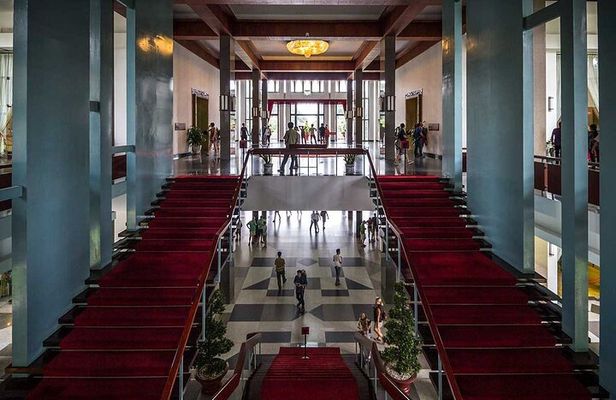
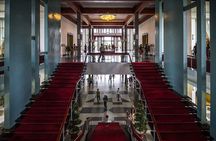
- 🏛️ The Independence Palace: This landmark building features unique 1960s architecture and is historically significant as the site where the first Communist tanks arrived in Saigon on April 30, 1975.
- 📬 Saigon Central Post Office: Designed by Marie-Alfred Foulhoux, this French-era post office boasts a striking yellow façade and impressive interior, showcasing historical maps and elegant architecture.
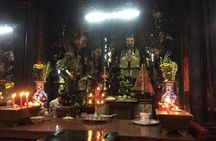
- 🕌 Emperor Jade Pagoda: Built in 1909, this atmospheric temple is filled with intricate woodcarvings and statues representing Buddhist and Taoist deities, surrounded by fragrant incense.
- 🖼️ War Remnants Museum: This unique museum displays exhibits on war crimes and their impact on Vietnam, aiming to promote peace and solidarity among nations.
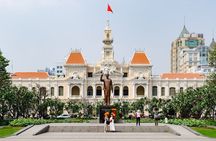
- 🏛️ Ho Chi Minh City Hall: This ornate French-style building, originally the Hotel de Ville, is a popular photo spot, especially when illuminated at night.
- 🚐 Comfortable Transport: Enjoy an air-conditioned vehicle for a comfortable ride throughout your tour.
- 💧 Bottled Water Included: Stay refreshed with complimentary bottled water provided during your excursion.
- 👥 English-Speaking Tour Guide: Benefit from expert insights as you explore the city with a knowledgeable English-speaking guide.
- 🕒 Duration of 4 hours 30 minutes: This comprehensive tour allows ample time to immerse yourself in the sights and history of Ho Chi Minh City.
- 💵 Optional Pickup Fee: For an additional $30 USD, enjoy pickup and drop-off at Hiep Phuoc JSC or SPTC.
Choosing Tinggly allows you to share the joy of exploring Ho Chi Minh City with loved ones. This eco-friendly gift option features instant e-delivery, no expiration on vouchers, and a wide array of experiences for recipients to choose from globally.
—
The experience offers several options. This price includes:
Highlight of Saigon Shore Excursion from Saigon Port
Pickup included
Pickup included
Tour guide
Language: English
Human tour guide
Duration: 4 hours 30 minutes
The experience offers several options, check yours above
- Picking up & dropping off at Saigon Port No.05 Nguyen Tat Thanh street, district 4
- English speaking tour guide
- Bottled water
- Air-conditioned vehicle
- All entrance fees
- Extra charge $30 USD/ each by cash on tour for picking up & dropping off at Hiep Phuoc JSC or SPTC
- Tipping/ gratuities, personal expenses
-
The Independence PalaceSurrounded by royal palm trees, the dissonant 1960s architecture of this landmark government building and the eerie ambience of its deserted halls make it an intriguing spectacle. The first Communist tanks to arrive in Saigon rumbled here on 30 April 1975 and it’s as if time has stood still since then. The building is deeply associated with the fall of the city in 1975, yet it's the kitsch detailing and period motifs that steal the show. It's also known as the Independence Palace. The building was named Independence Palace and was home to the succeeding South Vietnamese president, Nguyen Van Thieu, until his hasty departure in 1975. Designed by Paris-trained Vietnamese architect Ngo Viet Thu, it is an outstanding example of 1960s architecture, with an airy and open atmosphere. The Reunification Palace, also known as Independence Palace, is a landmark building located in the heart of Ho Chi Minh City. And it is known as a must see National Monument once you are in Ho Chi Minh City.
-
Saigon Central Post OfficeThe city's landmark French-era post office is a period classic, designed by Marie-Alfred Foulhoux (though often credited to Gustave Eiffel) and built between 1886 and 1891. A mosaic of Ho Chi Minh takes pride of place at the end of its barrel-vaulted hall. The post office features a unique, bright yellow exterior framed with white trim. Curved windows are elegantly framed with green shutters and a large clock is featured prominently at the building’s main entrance. The stunning, spacious interior has tall, domed ceilings with metal arches and a gorgeous patterned tile floor. There are two painted maps inside the office – Lignes télégraphiques du Sud Vietnamet du Cambodge 1892 (Telegraphic lines of southern Vietnam and Cambodia 1892) depicts the postal route from southern Vietnam to Cambodia, and on the right side of the building is Saigon et ses environs, 1892 (Saigon and its surroundings), a local map.
-
Emperor Jade PagodaBuilt in 1909 in honour of the supreme Jade Emperor (King of Heaven), this is one of the most atmospheric temples in Ho Chi Minh City, stuffed with statues of phantasmal divinities and grotesque heroes. The pungent smoke of incense fills the air, obscuring the exquisite woodcarvings. Its roof is encrusted with elaborate tile work, and the temple's statues, depicting characters from both Buddhist and Taoist lore, are made from reinforced papier mâché. The multifaith nature of the temple is echoed in the shrine's alternative name Phuoc Hai Tu, whose message is clearly Buddhist. Similarly, the Chinese character in the main temple hall mean 'The light of Buddha shines on all. Over 100 years old went by with many changes, Jade Emperor Pagoda remains the timeless charm. Its beauty is a harmonious combination among 3 main religions in the Orient: Taoism, Buddha, and Confucianism. Thanks to the impressive & unique beauty with sacred legend, this is one of the most wonderful destinations.
-
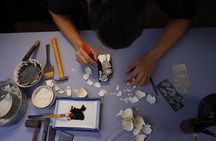
The lacquer itself is actually the resin of a tree which is mixed with coloured pigments and solvents and applied layer after layer to the object's surface, producing a shiny and durable finish. Eggshell and mother of pearl may be applied to the surface before the lacquer is applied, in which the finished product is sanded down to reveal the decoration beneath. The high quality of resin from Vietnamese lacquer trees, notably those of Phu Tho, was a crucial factor in the rapid development of this art form during the feudal period. Decorated lacquer statues, panels, boxes and trays (1428-1527), may still be seen at many temples and pagodas. In subsequent centuries the use of lacquerware was extended to larger items such as wooden chairs and tables. Since that time lacquerware has continued to develop into one of the mainstays of the Vietnamese handicraft industry, both at home and abroad. Today's most popular items include vases, jewel cases, desk sets, trays and vertical blinds.
-
War Remnants MuseumFounded on September 4, 1975, The War Remnants Museum is a member of the International Network of Museums for Peace (INMP) and the International Council of Museums (ICOM). It is the unique museum in Vietnam to systematically study, collect, conserve and display exhibits on war crimes and consequences inflicted on the Vietnamese people by foreign aggressive forces. Simultaneously, the Museum appeals to everybody to oppose unjust wars, preserve global peace, promote friendship and solidarity among nations. The Museum is endowed with 9 permanent thematic exhibitions and various special collections. All year round, a wide range of activities are organized, including conferences, meetings with war witnesses, temporary and itinerant exhibitions. With nearly one million domestic and international visitors per year, The War Remnants Museum is one of Ho Chi Minh City's most enticing cultural and tourist sites.
-
The Ho Chi Minh City Hall is the present name of the former Hotel de Ville or City Hall of Saigon. The ornate yellow French style building is located on the Le Thanh Ton Street at the end of the Nguyen Hue Boulevard. The building was designed by the French architect P. Gardes and built between 1898 and 1908. It was called the Hotel de Ville until 1954. Between 1954 and 1975, it was called the City Hall of Saigon under the then South Vietnam Government. After the reunification of the country in 1975, it was given its present name, the Ho Chi Minh City People’s Committee Head Office. This is a popular spot where locals and tourists get their photographs taken. The City Hall has a renaissance style that was inspired by the design of town halls in France. It has a main hall and rectangular wings. A notable feature of the building is the bell tower that stands on a pyramid-shaped pedestal. The City Hall is spectacular when lighted up at night.
How it works?
01
—
You choose from 10,000+ experience gifts
02
—
We deliver the eVoucher or the Physical box to the recipient
03
—
Recipient books the experience and creates unforgettable memories!
Highlight of Saigon Shore Excursion from Saigon Port
Ho Chi Minh City, Southern Vietnam, Vietnam
$150.00
This is an experience gift voucher. The recipient will book the experience after
they redeem the gift voucher.
How it works?
01
—
You choose from 10,000+ experience gifts
02
—
We deliver the eVoucher or the Physical box to the recipient
03
—
Recipient books the experience and creates unforgettable memories!