


No expiration date
Easy refund
Free exchange
Easy booking
Historical Day Tour to River Kwai in Bangkok
 Bangkok, Thailand
$48.84
This is an experience gift voucher. The recipient will book the experience after
they redeem the gift voucher.
Overview
The "River Kwai" tour offers a deep dive into Thailand's historical and cultural landscape. This immersive journey takes you through the significant sites related to the Burma Railway and its poignant history during World War II.
- 🗺️ Meet your group at River City Bangkok and enjoy a convenient drop-off at MBK Center.
- ⏳ Experience a full-day adventure with a total duration of 10 hours, including travel time.
- 🚗 Travel approximately 3 hours from Bangkok to Kanchanaburi, witnessing the scenic landscapes along the way.
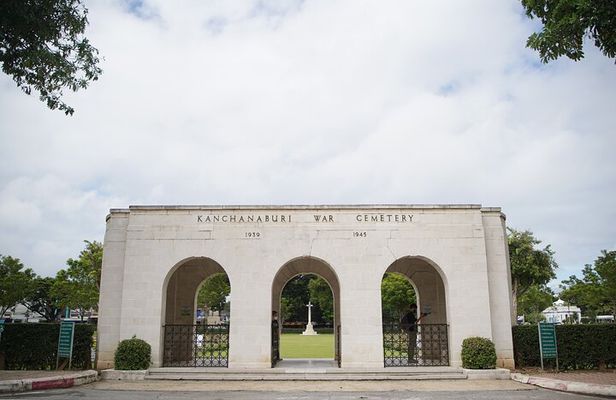
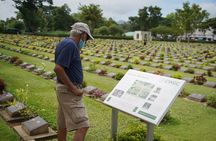
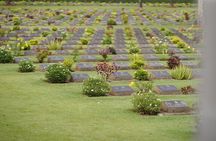
- 🏰 Visit the Kanchanaburi War Cemetery, the resting place for 6,982 victims of the Burma Railway, including British, Australian, and Dutch POWs.
- 🏛️ Explore the Thailand-Burma Railway Centre, a museum dedicated to the history of the railway, run by an expert in the field.
- 🚆 Discover the Death Railway Museum, which details the construction of the railway and the experiences of those who built it.
- 🌉 Walk across the iconic River Kwai Bridge, a famous landmark featured in numerous films, with platforms for stunning views.
- 🚉 Visit Krasae Cave Railway Station, a popular spot to watch tourist trains and learn about the area’s WWII history.
- 🥗 Enjoy a delicious street food lunch, with vegetarian options available upon request.
- 🚌 Travel in comfort with an air-conditioned vehicle, ensuring a pleasant journey throughout your tour.
For a thoughtful gift that supports sustainable adventures, Tinggly offers instant e-delivery of experiences with no expiration date, allowing your loved ones the freedom to choose their own journey around the globe.
—
The experience offers several options. This price includes:
Meet the group at River City
Meeting point: Meet the group at River City Bangkok. Drop-off at MBK Center.
Meeting point: Meet the group at River City Bangkok. Drop-off at MBK Center.
Tour guide
Language: English
Human tour guide
Duration: 10 hours
The experience offers several options, check yours above
- Air-conditioned vehicle
- All Fees and Taxes
- English speaking guide
- Lunch serve as street food , can request for vegetarian.
- Alcoholic Beverages
Meeting point
Our staff will wait for you to check-in in front of River City Bangkok with Bigcountry Uniform.
Return details
Drop off at MBK Mall
-
KanchanaburiDrive 3 hours from Bangkok to Kanchanaburi. In 1942 Kanchanaburi was under Japanese control. It was here that Asian forced laborers and Allied POWs, building the infamous Burma Railway, constructed a bridge, an event fictionalized in the films The Bridge on the River Kwai (1957), Return from the River Kwai (1989) and The Railway Man (2013). Almost half of the prisoners working on the project died from disease, maltreatment, or accidents. There were four POW camps in or near the city, including Tamarkan which was used as a work camp to construct the bridge. After the completion of the railway line, most prisoners were concentrated in the Kanchanaburi area and often sent on to Japan or French Indo-China.
-
Kanchanaburi War CemeteryDrive 3 hours from Bangkok to Kanchanaburi and the first stop The Kanchanaburi War Cemetery (known locally as the Don-Rak War Cemetery is the main prisoner of war (POW) cemetery for victims of Japanese imprisonment while building the Burma Railway. It is on the main road, Saeng Chuto Road, through the town of Kanchanaburi, Thailand, adjacent to an older Chinese cemetery. The cemetery contains 6,982 graves of British, Australian, and Dutch prisoners of war of which 6,858 have been identified.
-
The Thailand-Burma Railway CentreThe Thailand–Burma Railway Centre is a museum and research centre in Kanchanaburi, Thailand. It is privately funded and is run by Rod Beattie, an Australian who is an expert in the history of the Thailand–Burma Railway. The centre is located to the west of the Kanchanaburi War Cemetery and is housed in the former headquarters of the Imperial Japanese Army which was constructed by prisoners of war and Asian forced labourers.
-
Death Railway Museum and Research CentreThe Burma Railway, also known as the Siam–Burma Railway, Thai–Burma Railway, and similar names, or as the Death Railway, is a 415 km (258 mi) railway between Ban Pong, Thailand, and Thanbyuzayat, Burma (now called Myanmar). It was built from 1940 to 1943 by civilian laborers impressed or recruited by the Japanese and prisoners of war taken by the Japanese, to supply troops and weapons in the Burma campaign of World War II. It completed the rail link between Bangkok, Thailand, and Rangoon, Burma. The name used by the Japanese Government was Tai–Men Rensetsu Tetsudō, which means Thailand-Burma-Link-Railway. Between 180,000 and 250,000 Southeast Asian civilians and over 60,000 Allied prisoners of war were subjected to forced labor during its construction. Around 90,000 civilians died, as did more than 12,000 Allied prisoners. Most of the railway was dismantled shortly after the war. Only the first 130 kilometers (81 mi) of the line in Thailand remained.
-
River Khwae BridgeThe Bridge River Kwai became famous all over the world when it was featured in movies and books. The cliff-hugging tracks and the natural beauty of the surrounding mountains and valleys are well captured in the David Lean movie. Bridge River Kwai is a tourist destination now. The track is developed into a walkway with side platforms. This allows crossing the railway bridge on foot. These platforms are useful as viewpoints and for avoiding trains. A small tourist train runs back and forth across the bridge.
-
Krasae Cave Railway Station is a popular train station for viewing the Death Railway. Tourists will wait for the trains that pass by on Saturdays and Sundays as special trains for tourists. Krasae Cave is a short distance from this station, located on the edge of a cliff near the railway. It used to be the accommodation of prisoners of war during the construction of the Thai-Myanmar Death Railway. Then drive back to Bangkok for 3 hours
How it works?
01
—
You choose from 10,000+ experience gifts
02
—
We deliver the eVoucher or the Physical box to the recipient
03
—
Recipient books the experience and creates unforgettable memories!
Historical Day Tour to River Kwai in Bangkok
Bangkok, Thailand
$48.84
This is an experience gift voucher. The recipient will book the experience after
they redeem the gift voucher.
How it works?
01
—
You choose from 10,000+ experience gifts
02
—
We deliver the eVoucher or the Physical box to the recipient
03
—
Recipient books the experience and creates unforgettable memories!