

No expiration date
Easy refund
Free exchange
Easy booking
Luxor: East & West Bank - Private Full Day Tour
 Luxor, Egypt
$240
This is an experience gift voucher. The recipient will book the experience after
they redeem the gift voucher.
Overview
Luxor's beautiful highlights include both the East and West banks, showcasing rich history through a unique perspective. A knowledgeable Egyptology guide will accompany you to enhance your understanding of this ancient city.
- 🏺 Visit iconic sites across both banks of Luxor for a comprehensive experience.
- 📚 Gain insights from one of the best Egyptology guides available.
- 🕌 Explore historical landmarks that tell the story of ancient Egypt.
- ⚠️ Ensure to adhere to any site-specific regulations during your visit.
To keep footprints lighter, Tinggly offers instant digital delivery, a never-expiring benefit, and global options.
—
Starting From
Pickup included
Pickup included
Tour guide
Language: English
Human tour guide
- Bottled water
- All Fees and Taxes
- Lunch
-
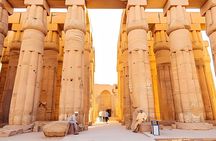
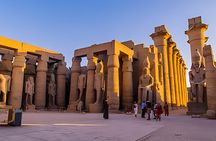
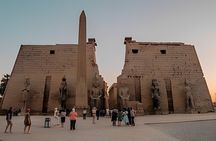
Luxor TempleThe Luxor Temple is a large and complex ancient Egyptian temple located on the east bank of the Nile River in the modern-day city of Luxor, formerly known as Thebes. It was founded around 1400 BC. The temple was dedicated to the worship of Amun-Ra, his wife Mut, and their son Khonsu; these deities are also known as the Theban Triad. The temple was constructed during the reigns of the 18th and 19th Dynasties. The most significant additions to the temple complex were those built by Amenhotep III (1397–1360 BC) and Ramses II (1290–1223 BC), who added the open courtyard, the pylon, and two obelisks.
-
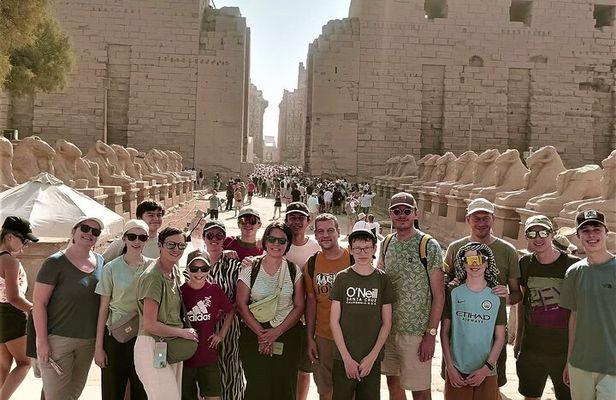
The Karnak TempleThe Karnak Temple Complex, commonly known as Karnak, is one of the largest religious complexes of the ancient world, encompassing a vast array of temples, monumental gateways, chapels, and other structures. It is located near Luxor, Egypt. Construction of the complex began during the reign of Senusret I (1971–1926 BCE) in the Middle Kingdom (c. 2000–1700 BCE) and continued through the Ptolemaic Kingdom (305–30 BCE). However, most of the existing structures date from the New Kingdom. The area surrounding Karnak was known in ancient Egypt as Ipet-Isut, meaning "the chosen holy place," and was the principal center of worship for the Theban Triad during the Eighteenth Dynasty, consisting of the god Amun, the goddess Mut, and the god Khonsu.
-
Valley of the KingsThe renowned archaeological site near Luxor, where the kings, queens, and nobles of the New Kingdom (c. 1539–1075 BC) were buried in rock-cut tombs, the most famous being that of Tutankhamun (KV62). The valley is divided into east and west sections and contains approximately 63 numbered tombs, beginning with Thutmose I and including the tombs of Seti I (KV17) and Ramses II, distinguished by their stunning reliefs and vibrant colors. This was the designated burial ground for the pharaohs and contains the tombs of kings such as Thutmose I, Amenhotep I, Seti I, and Ramses II. The tombs feature paintings and religious texts from the Book of the Underworld, intended to aid the deceased on their journey, while their ceilings represent the sky. In short, the Valley of the Kings is where the practice of burying the kings of the New Kingdom began and is considered one of the most important archaeological sites in the world.
-
Temple of HatshepsutThe Temple of Hatshepsut was built during the 18th Dynasty next to the Temple of Mentuhotep. It is distinguished by its size and continues to amaze visitors with its beauty and unique design, unlike the temples built in Thebes on the east bank of the Nile. At the dawn of Christianity, the Copts established a monastery for worship on the Temple of Hatshepsut. This monastery remained in existence until the 11th century. In the 19th century, the archaeologists Auguste Mariette and Edward Navey discovered the remains of the monastery and worked to remove the ruins to reveal the temple beneath. Navey documented his work extensively in seven books titled "The Temple of Deir el-Bahari" between 1894 and 1898.
How it works?
01
—
You choose from 10,000+ experience gifts
02
—
We deliver the eVoucher or the Physical box to the recipient
03
—
Recipient books the experience and creates unforgettable memories!
Luxor: East & West Bank - Private Full Day Tour
Luxor, Egypt
$240
This is an experience gift voucher. The recipient will book the experience after
they redeem the gift voucher.
How it works?
01
—
You choose from 10,000+ experience gifts
02
—
We deliver the eVoucher or the Physical box to the recipient
03
—
Recipient books the experience and creates unforgettable memories!