

No expiration date
Easy refund
Free exchange
Easy booking
Kyoto, Osaka and Nara Customized Private Car tour
 Kyoto, Kyoto Prefecture, Kansai, Japan
Nara, Nara Prefecture, Kansai, Japan
$513.77
This is an experience gift voucher. The recipient will book the experience after
they redeem the gift voucher.
Overview
Kyoto and Nara offer a captivating glimpse into Japan's rich cultural tapestry, blending history with breathtaking landscapes. This full-day private tour invites you to immerse yourself in the serene beauty of these iconic destinations, all while enjoying the comfort of personalized transportation.
- 🏷️ Customized Private Car Tour: Enjoy a full-day private tour with convenient pickup from Kyoto, Osaka, or Nara, ensuring a seamless journey.
- 🗺️ 8-Hour Guided Experience: Benefit from an expert English-speaking guide who will enrich your experience with insights into Japan's history and culture.
- 🍱 Savor a delectable lunch upgrade featuring either a buffet or a traditional Beef Shabu Shabu set, allowing you to indulge in local flavors.
- 🐾 Visit Nara Park, where you can interact with over 1,200 free-roaming deer and explore historical landmarks like Todai-ji Temple and Kasuga Taisha Shrine.
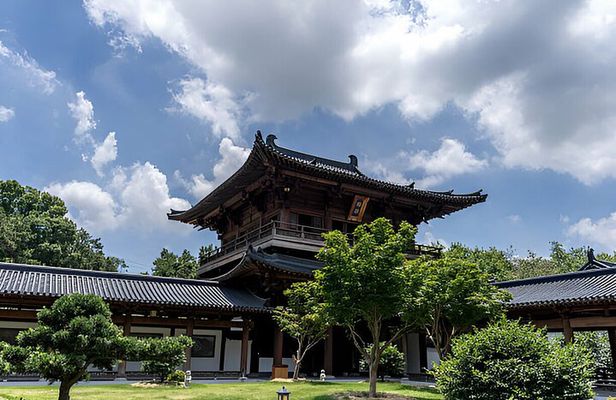
- 🏯 Marvel at the stunning Kinkaku-ji, also known as the Golden Pavilion, whose upper floors are adorned with shimmering gold leaf, reflecting beautifully in the surrounding pond.
- 🌸 Stroll through the enchanting Arashiyama district, crossing the iconic Togetsukyo Bridge and wandering along picturesque paths lined with cherry trees.
- ⛩️ Discover the spiritual allure of Fushimi Inari-taisha Shrine, famous for its thousands of vibrant red torii gates that lead you through serene forest trails.
- 💧 Experience the tranquility of Kiyomizu-dera, where you can take in breathtaking views from its wooden stage, surrounded by seasonal blossoms.
- 🕊️ Explore the grandeur of the Kyoto Imperial Palace, once the residence of Japan's Imperial Family, set within the lush Kyoto Imperial Park.
With Tinggly, enjoy sustainable travel options delivered instantly via e-gift, with no expiration date and a world of experiences to choose from.
—
Kyoto, Osaka and Nara Customized Private Car tour
Pickup included
Tour guide
Language: English
Human tour guide
Duration: 8 hours
- Fuel surcharge
- Parking Fees
- Private transportation
- Air-conditioned vehicle
- Complimentary pickup is available from three cities: Kyoto, Osaka, And Nara.
- Any Special Ride or Cruise not Included in this Package
-
Nara ParkNara Park is a beautiful place where Japan's history and nature blend seamlessly, attracting many tourists. Spanning approximately 660 hectares, the park is home to around 1,200 freely roaming deer, which visitors can feed with special deer crackers. The park features numerous historical buildings, such as the Great Buddha Hall of Todai-ji Temple, the five-story pagoda of Kofuku-ji Temple, and Kasuga Taisha Shrine, offering a wealth of sights to explore. Additionally, the park's seasonal natural beauty is captivating, with cherry blossoms in spring and vibrant autumn leaves being particularly popular. Nara Park is a unique place where history and nature harmonize, allowing visitors to fully enjoy Japan's traditional culture and beautiful landscapes. Be sure to visit and experience its charm for yourself.
-
Nara National MuseumThe Nara National Museum Nara Kokuritsu Hakubutsukan), located in Nara Park, is an art museum which primarily displays Japanese Buddhist art. Established in 1889, the museum retains its original building and is joined by a new wing that is connected to the original building by an underground passage. Both wings display the museum's permanent collection, which includes Buddhist statues, paintings, scrolls and ceremonial objects mainly from Japan. The new wing also houses temporary exhibitions, including an annual exhibition every autumn of treasures from Todaiji Temple. A ticket to the museum gives access to both wings, and English explanations are available throughout the museum.
-
Kinkakuji TempleThe upper two floors of the Zen temple Kinkakuji (Golden Pavilion), located in northern Kyoto, are entirely coated with gold leaf. Originally called Rokuonji, the temple served as Ashikaga Yoshimitsu's retirement residence. Following his death in 1408, the shogun left it as a Zen temple belonging to the Rinzai sect. Ashikaga Yoshimasa, the grandson of Yoshimitsu, erected Ginkakuji (Silver Pavilion) on the opposite side of the city a few decades after seeing Kinkakuji. The only remaining building from Yoshimitsu's former retirement community is Kinkakuji, an elegant temple erected overlooking a big pond Throughout its history, it has burned down multiple times, twice during the Onin War, a civil war that devastated a great deal of
-
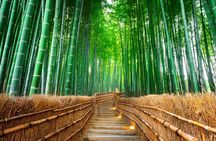
ArashiyamaArashiyama is the Togetsukyo Bridge, also known as the "Moon Crossing Bridge". It was most recently rebuilt in the 1930s after being created during the Heian Period (794-1185). The bridge appears especially lovely against the backdrop of the wooded slope. Adjacent to the bridge is a riverbank park dotted with scores of cherry trees. HAMMOOSE GROVES Nice walks and bicycle rides can be had along the walking routes that go through the bamboo trees. When there is a light wind and the long bamboo stalks softly move back and forth, the woods become very picturesque. Bamboo has been utilized for generations in local workshops to make a variety of goods, including mats, cups, boxes, and baskets.
-
Fushimi Inari-taisha ShrineA significant Shinto shrine located in southern Kyoto is called Fushimi Inari Shrine (Fushimi Inari Taisha). It is well-known for the thousands of red torii gates that cross a system of paths that run behind the major structures. The paths lead into the forested area of the holy Mount Inari, which is located on the shrine grounds and rises to a height of 233 meters. Of the thousands of shrines devoted to Inari, the Shinto god of rice, Fushimi Inari is the most significant. Since foxes are believed to be Inari's messengers, there are numerous fox statues scattered across the shrine grounds. The history of Fushimi Inari Shrine dates back to a time before Kyoto became the capital in 794. While exploring the mountain paths is the main reason most international visitors come to Fushimi Inari Shrine,
-
Kiyomizu-dera TempleOne of Japan's most well-known temples is Kiyomizudera, which translates to "Pure Water Temple". It got its name from the pristine waters of the Otowa Waterfall, which is located on the forested hillsides east of Kyoto, where it was established in 780. The temple established the Kita Hosso sect in 1965 after first being connected to the Hosso sect, one of the oldest schools of Japanese Buddhism. The temple was included as a UNESCO World Heritage Site in 1994. The most notable feature of Kiyomizudera is its wooden stage, which protrudes 13 meters over the surrounding hillside from the main hall. Visitors can enjoy a pleasant view of the many cherry and maple trees below, which burst into a sea of color, from the stage.
-
Todai-ji TempleTodaiji Tōdaiji, "Great Eastern Temple") is one of Japan's most famous and historically significant temples and a landmark of Nara. The temple was constructed in 752 as the head temple of all provincial Buddhist temples of Japan and grew so powerful that the capital was moved from Nara to Nagaoka in 784 in order to lower the temple's influence on government affairs. Until recently, Todaiji's main hall, the Daibutsuden (Big Buddha Hall), held the record as the world's largest wooden building, despite the fact that the present reconstruction of 1692 is only two thirds of the original temple hall's size. The massive building houses one of Japan's largest bronze statues of Buddha (Daibutsu). The 15 meters tall, seated Buddha represents Vairocana and is flanked by two Bodhisattvas.
-
Kyoto Imperial PalaceThe Kyoto Imperial Palace (Kyoto Gosho) used to be the residence of Japan's Imperial Family until 1868, when the emperor and capital were moved from Kyoto to Tokyo. It is located in the spacious Kyoto Imperial Park (Kyõto Gyoen), an attractive park in the center of the city that also encompasses the Sento Imperial Palace and a few other attractions. The current Imperial Palace was reconstructed in 1855 after it had burnt down and moved around town repeatedly over the centuries. The complex is enclosed by long walls and consists of several gates, halls and gardens. The enthronement ceremonies of Emperors Taisho and Showa were still held in the palace's main hall. Tokyo Imperial Palace is now used for enthronement ceremonies.
If it’s canceled due to poor weather, you’ll be offered a different date or a full refund.
If it’s canceled because the minimum isn’t met,
you’ll be offered a different date/experience or a full refund.
How it works?
01
—
You choose from 10,000+ experience gifts
02
—
We deliver the eVoucher or the Physical box to the recipient
03
—
Recipient books the experience and creates unforgettable memories!
Kyoto, Osaka and Nara Customized Private Car tour
Kyoto, Kyoto Prefecture, Kansai, Japan
Nara, Nara Prefecture, Kansai, Japan
$513.77
This is an experience gift voucher. The recipient will book the experience after
they redeem the gift voucher.
How it works?
01
—
You choose from 10,000+ experience gifts
02
—
We deliver the eVoucher or the Physical box to the recipient
03
—
Recipient books the experience and creates unforgettable memories!